It’s time for the world’s cinemas to see an African Blockbuster
by Nick van der Leek
Filmmaking in South Africa has been on the boil for some time now. Tsotsi is our most recent success, but South African talent in the film industry has been around for a while now. And it’s gone global. On my last trip to Singapore Leon Schuster’s flick, Mr. Bones, was on one of the giant posters standing alongside a lineup that included The Two Towers, a story originally penned by JRR Tolkien, who was born in Bloemfontein. Our leading lady from Benoni, Charlize, is one of South Africa’s sexiest exports. All we need is a leading man from South Africa, to take over Hollywood. And why stop there? Isn’t it time Africa exported a major film, like Out of Africa, or something like the worldwide hit The God’s Must Be Crazy, way back when?
Charlize isn’t the only made-in-Africa actor to take Hollywood by storm. Djimon Hounsou, with his French accent, has been very successful, starring in huge movies like Gladiator, and memorably in The Island and Amistad.
Let’s not forget about Boetie. Arnold Vosloo has been out there for a few years, achieving some success in films like The Mummy and its second episode. We’ve made some good films like Ian Gabriel’s Forgiveness and Jock of the Bushveld, but we really need a new film about Africa to shake the world.
Now that films like Fahrenheit 911, The Constant Gardener and Syriana have piqued the interests of entertainment audiences everywhere in matters of serious concern, and particularly Africa, it’s time we told the world our story once more. Local is lekker, and the Cape is especially lekker, having seeing a number of films shot in the city and surrounding land and seascapes. I for one was dumbstruck and bewildered – transported right out of the plot in fact – when I watched Lord of War and recognized Llandudno, Hout Bay and other local scenery. I don’t believe our story needs to be political, like The Power of One, or even The Long Walk to Freedom. I’m sure, in the right hands, both these stories could be represented as major films, but there is far more power and majesty, and subtlety lying deeper – in our own indigenous tribes.
Other countries have recently been showcasing their ethnic talents, like Nikki Caro, the New Zealand director who brought us Whale Rider. Memoirs of a Geisha, set in Japan, ushers in a new awareness of Asia, and from those quarters we are seeing plenty of good cinema, including Old Boy (from Korea), and Crouching Tiger, Hidden Dragon and Hero from China. Oscar winning Brokeback Mountain was sensitively filmed by Chinese director, Ang Lee.
The last film from South Africa that really took the world by storm was The God’s Must Be Crazy. I believe, taking the cue from that film, and observing Nikki Caro’s success, we ought to concentrate our efforts on filming what is unique about Africa, and possibly South Africa, and demonstrate what is so unique and special about the people who live here. It would be a pity if all that South Africa could represent was politically charged. Films about whites versus blacks seem to me to be useful, but not ideal. I mean, is that who we are? Is that how we want to portray who we are?
To my mind, as Carro focused on the indigenous people of New Zealand, the Maori’s, and their culture, we ought to, as Jamie Uys did, focus on our most precious, indigenous and endangered people – the Bushmen. These people do not only represent South Africa, but Africa, and the beginning of all the world’s people. The Bushmen live in a beautiful and terrible world. They live in a Thirstland with no possessions, save their extraordinary faculties and mastery of the environment. They are a charming people, who sgare everything, and their existence at times is intensely magical. But the reality is that their lives are today, more desperate than ever. We could learn from their story once more, and love and appreciate our land for what it is, and ourselves, for where we come from, once again.
We ought to aim for a film about them. A film that is the quintessential story of people in Africa. Perhaps South Africans should pool their talents. Writers tackle the subject in books and scripts. Directors and actors should come together and collaborate on an ultimate project. There ought to be a competition, and the winner, the winning film, wins for all of us.
Friday, March 24, 2006


South Africans not Saving for a Rainy Day
South Africans are getting themselves into debt at a terrific rate
by Nick van der Leek
Most of the debt we’re getting into, is not to finance consumer spending, but involves the paying off of mortgages. In January alone, South Africans owed R580 million to banks after making loans last year totaling R141 000 000 000. Over the last year, house buyers took out loans for R102 billion (R102 thousand million) and owed banks a total of R406 billion on home loans. Home loans now make out 70.2% of total debt owed by South Africans, an increase of almost 1% on the previous year.*
The rate at which South Africans are generating debt places tremendous pressure on purchasing price inflation, which stimulates interest rates. Since credit is currently more freely available in South Africa, greater and greater pressure is brought to bear on interest rates, preventing them from going down, and stimulating an increase. An increase in the interest rate makes the debt burden so much greater.
South African house buyers are purchasing properties that were valued at perhaps half current prices only a few years ago. The prices offered need to be carefully compared to the buyer’s actual perception of value. Does it make sense to buy a can of Coke that costs R30, or R50?
One estimate places an individual’s credit at about 65% of disposable income. At present, banks are not reporting any problems with customers unable to meet their obligations.
But people are operating from a psychology of previous investment. The extraordinary stability and strong global growth we’ve experienced, especially since the Asian Financial Crisis in 1997, is guaranteed, or so it seems. Much of this has been predicated on strong growth coming out of China and India. South Africa, like both these countries, is pursuing further growth which is predicated on having enough energy to drive the industrial complex.
Consuming like there is no tomorrow does not guarantee that there will be a viable economic apparatus at the end of the day – especially when such consumption assumes limitless growth, and is built on, is in fact based on currently cheap, but finite fossil fuels.
*Information from the DI900 monthly reports, which banks provide to the Reserve Bank
by Nick van der Leek
Most of the debt we’re getting into, is not to finance consumer spending, but involves the paying off of mortgages. In January alone, South Africans owed R580 million to banks after making loans last year totaling R141 000 000 000. Over the last year, house buyers took out loans for R102 billion (R102 thousand million) and owed banks a total of R406 billion on home loans. Home loans now make out 70.2% of total debt owed by South Africans, an increase of almost 1% on the previous year.*
The rate at which South Africans are generating debt places tremendous pressure on purchasing price inflation, which stimulates interest rates. Since credit is currently more freely available in South Africa, greater and greater pressure is brought to bear on interest rates, preventing them from going down, and stimulating an increase. An increase in the interest rate makes the debt burden so much greater.
South African house buyers are purchasing properties that were valued at perhaps half current prices only a few years ago. The prices offered need to be carefully compared to the buyer’s actual perception of value. Does it make sense to buy a can of Coke that costs R30, or R50?
One estimate places an individual’s credit at about 65% of disposable income. At present, banks are not reporting any problems with customers unable to meet their obligations.
But people are operating from a psychology of previous investment. The extraordinary stability and strong global growth we’ve experienced, especially since the Asian Financial Crisis in 1997, is guaranteed, or so it seems. Much of this has been predicated on strong growth coming out of China and India. South Africa, like both these countries, is pursuing further growth which is predicated on having enough energy to drive the industrial complex.
Consuming like there is no tomorrow does not guarantee that there will be a viable economic apparatus at the end of the day – especially when such consumption assumes limitless growth, and is built on, is in fact based on currently cheap, but finite fossil fuels.
*Information from the DI900 monthly reports, which banks provide to the Reserve Bank
Thursday, March 23, 2006
Beyond Belief

Is There Life After Death?
by Nick van der Leek
Believe it or not, you’ve been dead already. Well, lifeless, anyway. Think of the time before you were born. Where were you? Were you a ghost in the darkness? Were you seeing life as a snail? Where were you? If we follow your family tree, we might be able to provide all the branches and twigs, but can you really suggest that you were a matrix of existence, waiting in the wings, or rather, hanging in the branches? It’s uncertain. But before you were alive, you were dead. The question emerges then, after life, what happens?
I know there are plenty of people who can quote bible or other texts. These texts describe heaven as a city, and hell as a lake of fire. Well, if they can be described, how could we get there right now? Do we really believe in these symbolic representations? There are a few variations, but essentially we’re talking about being in paradise, or nothing.
Instead of looking to secondary sources, I wonder if we might use our own experience. I mean, as soon as you read something, it’s not firsthand knowledge; it’s secondhand, or thirdhand, or in the case of the bible, a few thousandhand. The most powerful reality is firsthand experience. An original thought, an original word, our lives, firsthand, is the most powerful reality, and it is exactly that: real. It doesn’t have to be described, just known. Just lived.
So, using your being, go back as far as you can, to the very first memory, the very first inklings of existence. For all practical purposes, the period before consciousness is, in my case, and I’m guessing in yours too, a lot like sleep. A lot like, unconsciousness.
And in our daily lives, we practice life and death as part of our existence. We’re active and living in the day, and then, as night falls, our bodies and minds shutdown. We lie thoughtless and motionless for hours, and then, when we’ve rested, we’re reanimated. Of course, we have some memories of yesterday, so there is an appearance of not quite eternal life, but day to day existence, which sometimes seems eternal.
Of course, it isn’t. Have you ever seen anything dead? I’ve buried one or two pets, and it is hard to imagine that a parrot ghost is twittering away in heaven. I once saw a cyclist lying on a road, a black stream of blood flowing down from his body. The body lies there, broken, and unconscious, and it was plain to see, it would never wake up again. In that very moment, where, I wondered, was this person, while I pedaled past. It was hard to really believe then, that people are different from parrots and lower life, like mosquitoes and flies, that we bludgeon and squish on a daily basis. But there is asubtle sense, when someone dies, that their spirit has joined a greater consciousness.
Nobody knows what really happens after we die. People who have died and come back have reported seeing lights and tunnels. It’s compelling, but it could never really have been a decent death if they managed to make it back. I suppose, it is our best hope that something happens when we die. It’s very difficult to know that what we believe about death is not guided by wishing and longing, and a deep yearning for comfort in the face of extinction.
I believe it is entirely possible that when we die, that’s it. This is all our lives are, and all we’ll ever be. To an extent we live on, in our children, in the memories we made and sowed upon the Earth, but our identities, our names, our clothes, all these die when we die. For how can our energies maintain their identities when they flow back into the currents of the universe? How can we, with nothing at all, no phones, no cars, no money, no name, no address, no home, and still be who we are?
At the end of the movie 21 Grams, Sean Penn provides the following voiceover for a dying character:
How many lives do we live?
How many times do we die?
They say we all lose 21 grams at the exact moment of our death.
Everyone.
How much fits into 21 grams?
How much is lost?
When do we lose 21 grams?
How much goes with them?
How much is gained?
How much…is gained?
21 grams: the weight of a stack of 5 nickels.
The weight of hummingbird.
A chocolate bar.
How much does 21 grams weigh?
Author-sage Eckhart Tolle takes readers to a place beyond words in his brilliant book, The Power of Now. In a section titled Conscious Death, he suggests that, if we have experienced enough of what he calls the ‘Unmanifested’ in our lives, if our spiritual identities are not tied to sensory experiences and things, if we have more love than fear in our being, if the light inside is strong, then the end of life ushers you into a new dimension where there is deep peace, and your inner light is added to it.
Tolle describes death as the end of our illusions, and painful, only when we cling, out of a sense of fear, to our bodies, and to things. But we are not our bodies, and this part begins to make sense. We have all experienced that sense of an ancient spirit within us, that does not grow old, that is within our bodies, but does not change as our bodies change.
People have compared life to the flickering flame of a candle, a flickering, fiery burst of heat and warmth. Visible light though is only a small proportion, a narrow band of light – with fairly mediocre energy – in the spectrum. On the far end, is infrared light. This light is quite close to visible light, and has very little energy. On the other end, is ultraviolet, and as the name suggests, the energy here is rich and dynamic. Ultra violet is also invisible to our faculties. Much of the energies of the universe and outer space is hidden in this realm. It is in this dimension that I believe we disappear when we die. When our form loses its power, we fly out. Nothing that is of value, Tolle writes, nothing that is real, is ever lost. The desert of the real is that place I mentioned at the end of the third paragraph. It is the firsthand experience of life. Being awake. Being connected and conscious. If we live this way, we will not lose consciousness when we die. We get to go to a place of higher consciousness, and Earth will seem like kindergarten by comparison. Being awake is how we get to live forever.
Preview: Superman Returns

by Nick van der Leek
Jerry Siegel and Joe Schuster created the Superman character. The man of steel first appeared in Action Comics in 1938. It’s a sad irony that after years of grubbing for money, they gave up on Superman, selling the idea and then watching their idea fly, generating millions and millions to the new beneficiary.
I was 6 years old when the first Superman movie came out in 1978. Even after Star Wars, Superman was simply breathtaking to watch. I’ve never forgotten Superman’s father either. Just recently, while waiting for my movie, I caught a preview of Superman Returns playing on the flatscreen above the popcorn kiosk at a cinema at Fourways Mall. Even more exciting was hearing Jor-el speaking again. Marlon Brando’s godlike voice, and effusive wisdom; what a great idea to use some of the classic, original material in what will be the fifth episode.
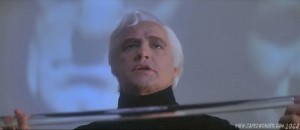
Even as a young child I wondered why, after Superman, they didn’t overhaul the movie industry and concentrate on superhero movies. Even then, there were plenty of action figures to choose from: Spiderman, Green Lantern, the Hulk, Captain America, the Flash, Fantastic Four, Thor, Wonder Woman, and obviously, Batman. Nearly three decades later, Hollywood has learnt that a gritty, superhero-in-the-real-world approach works better than a Tim Burtonesque creepy, campy, corny film, like the terrible Batman Returns (with Danny deVito) and the awful follow ups that temporarily buried the Batman franchise.
Spiderman, X-Men and recently, Batman Begins show that comic book heroes can attract massive audiences and rake in the big bucks. Bryan Singer directed X-Men (and Kevin Spacey, in The Usual Suspects) and he will do the honors for Superman Returns, but very much according to the ‘authentic’ style applied so cleverly by Christopher Nolan in Batman Begins. It will be interesting if Warner Bros offer Nolan a chance to do a follow up on Superman Returns, but perhaps, he’s not much of a fan of Superman, or, for the time being, too preoccupied with Batman.
When Superman Returns, he takes himself as seriously as the dark knight did, in Batman Begins. The story starts where Superman 2 ends, with Superman (Brendan Routh) visiting his home planet Krypton, and returning even more lost and bewildered, and unsure of his place in the universe. The world seems to not need saving, and if anything, Superman has his own problems, especially dealing with his arch enemy, Lex Luxor (played by Kevin Spacey). Jor-el provides Supes with much needed inspiration – courtesy of stock footage from Richard Donner’s original Superman.
Things have changed since 1978. We’ve survived a bunch of calamities, including 9/11 and some incredibly bad weather. We became so nihilistic at one stage that comics depicted Superman’s death, and the antihero emerged as the hero for our brave and somewhat cynical new world. But the success of Smallville, and a world that seems increasingly brittle, and in danger of imploding, suggests that we’ve shed our cynicism and are now observably lost. We need Superman, now, more than ever. Superman Returns to South African cinemas in July.
Dink Bietjie
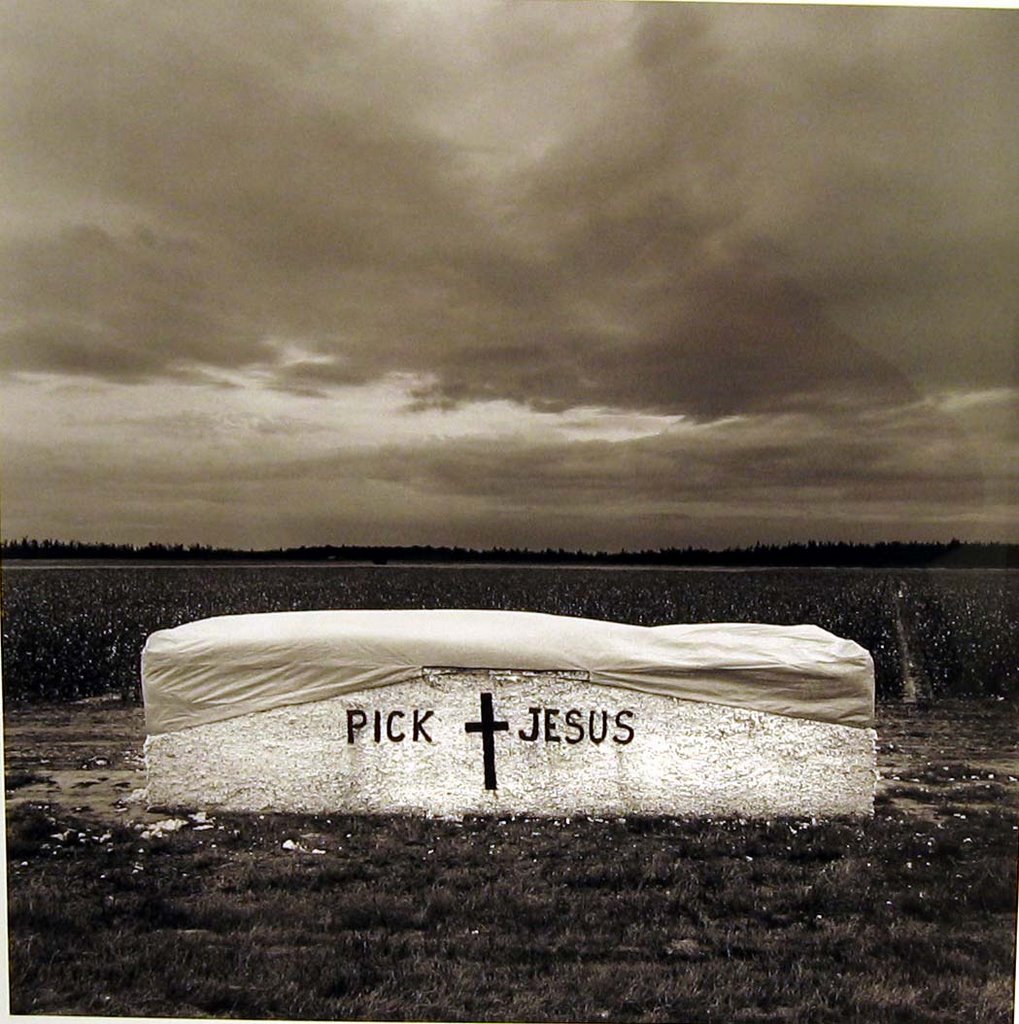
Letter to a local Afrikaans newspaper, called Die Volksblad
by/deur Nick van der Leek
Ek is verbaas om te lees dat mense soos Martha Dean nogsteeds briewe aan die Volksblad stuur oor Wim Botha se uitstalling by Oliewenhuis. In haar brief, Uitstalling breek hart (22 Maart) gebruik sy die word ‘Godslaterlik’ vyf keer om die installasies te beskryf.
Martha Dean se dan sy het self na Oliewenhuis toe gegaan, en was selfs daar voordat die uitstalling oopgemaak het, nog voor die openingsaand. Daarna skryf sy hoe ‘seer’ die uitstallings haar gemmak het, en dat die kunstenaar geen verskonings het nie.
Dit is interessant dat Christene so optree. As iemand vir jou se, “Daardie koek proe baie sleg,” maak dit sin om dan die koek te eet, daaroor te kla en dan ook die kok te kritiseer? Nee, bly liewers weg, los dit uit. Dit klink my Martha Dean en baie ander kyk, en glo, maar hulle dink nie. Die boehaai oor Botha se werk lok eintlik meer belangstelling daarin. Ek dink die uitstalling bied vir Christene iets om oor te gesels, iets om te wys hoe sterk is hulle geloof. Maar, as Christene werklik so onsteld is soos wat hulle getuig, het hulle ander maniere gesoek as om die uitstallings self te gaan sien, veral as hulle wou gehad het dit moes misluk. Hulle sou immers probeer het om nie aandag daaraan te lok nie. Hoekom hou Christene in Bloemfontein dan nie ‘n uitstalling wat se wat hulle wil se nie?
Botha, se Dean, is ‘n produk van Christlelike nasionale onderwys wat verkeerd geloop het. Is hy die engiste een? Ek self het groot geword in die Apartheidsjare, toe die NG kerk en Godsdiens gebruik was om onChristelike beginsels in die wit bevolking te indoktrineer. By my skool ook, was daar baie gebid en gesing, en ons was baie Godsdienstig, maar daar was ook gese: “By hierdie skool sal daar nooit swart studente wees nie.” En dit kort nadat gebid en gesing is. Dit is Godslasterlik, maar almal is natuurlik tjoepstil daaroor, want baie Christene in daardie jare was openlik rassisties. Baie glo rassissme – nou nog – is ‘n Christelike beginsel. In die bybel is ons gevra om selfs ons vyande life te he, om nie eers te praat van ander rasse nie. Die storie van die Samaritaan is ‘n goeie voorbeeld wat wys hoe mense van ander rasse vir mekaar moet omsien.
Selfs die mees suksesvolle Christen film ooit, The Passion of the Christ – wat seker Dean en ander se goedkeuring dra – is een van die mees geweldadigste en bloeddorstige films wat bestaan. Trouens, dit het verreweg die meeste geld verdien as enige van die ander ‘Jesus’ films. Oor $370 miljoen. As mens deur elke minuut van Passion gaan en ‘n nota maak van elke keer waar daar bloed, lyding, of geweld gewys word, dan gebeur die volgende:* Die eerste 10 minute gaan verby, maar in die volgende 109 minute, is daar net 6 minute sonder geweld, bloedvergieting of lyding. En Christene kies Passion as die film wat hulle Godsdiens die beste beskryf.
Dit se iets van ons ne? Die manieer hoe mense maandelank histeries geraak het oor kuns, in Bloemfontein in elkgeval, wys dat min mense, insluitende Christene, al wakker geword het.
*Inligting verkry uit Brian Flemming se: The God Who Wasn’t There.
Towards a New Urbanism
How to live in the 21st century
by Nick van der Leek
New Urbanism is the best option for sustainable living in the 21st century, irrespective of whether we choose to live according to its principles or not, and when we make that choice. And, as has been pointed out in several earlier articles, it’s likely that in time we won’t have a choice. Suburbia, such as it is – an energy intensive project – has no future.
A good example of a building that won’t work in the future is the simple skyscraper. Simply because they require far too much energy to run and too many people are accommodated on too small a parcel of land for local resources to meet their needs. Buildings that will work are some of the older buildings, especially the very old buildings that served a multiple role, often housing shops and offices in close proximity to each other and the ground.
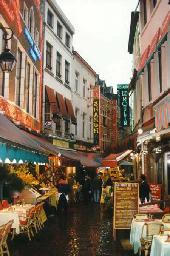
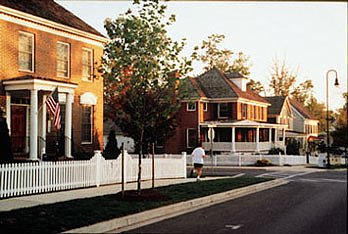
New Urbanism is a movement that started in the 80’s, and was really a response to cold, disconnected, inefficient, and often ugly edifices that went up along the highways and byways, like fast food boxes and shiny steel and glass shopping warehouses. New Urbanism tries to recreate a more traditional way of living, bringing beauty and functionality back into urban living. Much of old Europe, with its 6 and 7 storey buildings, its compact cobbled streets filled with a multitude of stores walkable distances from residences, reflect this style.
New Urbanism then, offers a return to streets that are quieter, more pedestrianised and friendlier. This is an arrangement that has a population density greater than that of suburbia (its stand alone homes), but less than apetment blocks. It basically seeks to accommodate an adequate amount of people without overpowering local resources and farming capacities. In other words, New Urbanism attempts to connect people once again to organic systems in an area, for example streams and forests and nearby cultivated fields and small factories. It allows housing mixed with offices and other functional spaces that are also energy efficient, or even produce their own electricity. These will not include stand alone housing, or any large complex filled with single occupant spaces. Parking bays are replaced with sidewalks, parks, fountains or vegetable markets. Bicycles and in some areas, trams or streetcars, will make a comeback, along with local shoemakers.
The current setup is not only ugly, but quite sterile and dysfunctional. Especially in Johannesburg, there are miles of sprawl interspersed with factory showrooms and corporate palaces. From the comfort of an Audi, these may make sense, but on foot or on a bicycle, it’s a ludicrous waste of space. Why have offices an hours drive from home when you could walk to them in 5 or 10 or 20 minutes? Same with schools and shops. In South Africa, where we don’t have a subway system, big shopping centres that require people to get into their cars in large numbers will be replaced by much smaller shops specializing in produce, baking and other cottage industries. The corner café will return, but their offerings may be quite different from what we’ve been used to.
In Bloemfontein there are very few traditional, walkable urban spaces left, but, if we can carry some of our affluence into the future, the original city centre may be revived, and fountains in the square may be appreciated once more, and derelict buildings may well be resurrected as people flee faraway townhouses and homes on the city limits, in favor of locations closer (walking distance) from markets and functioning urban water and perhaps power supplies. More than likely, we won’t see prudent investment, but desperate people very quickly creating new urban slums. Flats close to the city, especially where there are many close together, will first fill up, and then empty. Bloemfontein’s Preller Square is a modern addition that seems – perchance perhaps – to come out of the New Urbanist’s manual, except for the massive parking lots surrounding it on all sides, and to some extent, limited accommodation in the central section.
It’s likely that as depletion sets in, there will be a large scale upheaval in suburbia everywhere. The author James Howard Kunstler calls it a meltdown, as people fall over themselves to get out of the cul de sacs, and closer to some kind of local infrastructure. It’s likely to be chaotic, possibly even violent. There may be long queues at service stations, and plenty of fistfights in supermarkets over loaves of bread and bottles of milk. Meanwhile, some people may organize themselves into groups, trying to address local scarcities as best they can. Having access to borehole water will help. Front gardens may turn into vegetable gardens, but it won’t be enough. Those who have already made preparations to power their homes (using solar for example) will handle the transition better, but of course, those who haven’t will soon find those better off than themselves.
The current era is likely to be filled with seriousness and appalling uncertainty. If we are able to invest our energies in projects like New Urbanism, we may be able to absorb the impact of imminent depletion better than most. If we simply function as we have done – simply reacting when conditions worsen, then we face an increasingly grim scenario. Remember, in a world where the gap between resources and demand is permanent, where the carrying capacity of the planet is completely out of whack, we face a long term decline, and after every crisis is another crisis, worse than its predecessor.
It remains a question whether people will continue with their psychology of previous investment, or whether they will awaken out of the consumer craze, not because they are forced to, but because they choose to.
If the gods are not to blame
One of the surest ways to insanity, is to be asked (or always asking) questions, and never provided with (never finding) the answers. Some questions we afflict on ourselves, like:
Am I beautiful? Is there a God? What happens after we die? These questions can allow us to gnaw on the bone for our entire lives, and we’ll never come up with a definitive answer.
Our whole lives are the long answers to the question: what is the meaning of life? Our entire lives represent our individual interpretations – but no single moment provides a definitive answer.
As a young teenager, I remember, when the burden of having perfectionists for parents became too great, I resorted to making lists of the things they had done to injure me, both physically, but more often psychologically.
One of the best books that addressed my personal agony, being one of three children in a bizarre and dysfunctional family, was The Prince of Tides. Unlike Tom, I did not suffer any kind of sexual abuse, except that, given the circumstances of how the family came into being, sex was also an almost taboo subject. It was, after all, what had gotten my parents into trouble in the first place, and marriage exacerbated the original mistake.
I have a friend who married under the same circumstances, but divorced nine years later. My parents stayed married, at least half of it miserably, for 19 years. Their marriage ended not in divorce, but in the suicide of my mother.
Recently, having explored similar themes (delusion, death, objective reality) in plays like Death of a Salesman and Cat on a Hot Tin Roof (the latter shows off how money motivates certain behavior within a family), I find myself, absurdly, inside similar dramas. Only mine are not make believe, even though much of the power comes from the refusal of those around me to be honest with themselves, or with me.
I’d considered writing a play, but it would almost all have to be voiceover, because where I live, now, the most dialogue by far is with four dogs and a cat, and although the dialogue between father and son is colorful, and dramatic, they are too few and far between to knit together into any useable kind of dramatic pullover.
I feel compelled to report on these privacies because, like Tom’s sister Savannah in Prince of Tides, I am susceptible to memory loss, when it comes to the deepest and essential emotional twists in the family saga. Virginia Woolf wrote that until something is written down, it hasn’t happened. Mostly I would disagree with that. A private sense of being can provide a satisfactory sense of actuality – unless of course, reality slips from you, and madness stalks around in the background and back alleys. Thus, in this instance, where a family is not a family, behavior needs to be policed, and evaluated, and antidotes applied against the poison to prevent an infection of the mind.
Like many writers, I am aware of my own madness, and the intense pace of thinking and analysis means that madness has to be countered – with exercise, with tributes to truth, with an active sense of consciousness and a solemn determination. A parent who behaves like a child – with selfishness, vindictiveness, and spite – creates a pussy vessel, a cloud of doubt, in the mind of a child, even an adult child. It must be lanced, its poisons and fabrications removed. A writer that intends to live a reasonably happy life needs to balance perfection (in his work) with imperfections (in his heart).
Before I forget, and before I am tempted to blame the gods, I have to wonder, as a son, as a man, why any man would use:
Cardura XL
Cipralex 10mg
Risperdal 0.5mg
I don’t know because it is never talked about. Life is apparently perfectly fine, except that it isn’t.
I have to verify, when I am told by a motherly figure who is not my mother, that my mother was not a weak, sick person. That depression simply overwhelmed her, despite the good intentions of all around her.
In fact, the last year or two of her life, and ours, while she was alive, was exhausting. Each person seemed to be distracted by their particular burden – and I remember mine the best. Part of my reality, running up to my mother’s death was a high school experience welded shut by an exterior orthodontic apparatus. It did not render me mute, but it certainly managed to change a sunny 12 year old into a cloudy, troubled teenager, for a number of years. My mother was hyper vigilant when it came to discipline, when it came to what not to do. Prevention ranked high on her list of things to do. But doing, experience, finding and testing one’s ability in the world does not happen by avoiding the world, or by placing certain impediments to experience (like obsessive churchgoing and religiousness).
There are some glaring inconsistencies which continue to this day. When we were children, my mother insisted we go to church, and we did, almost every Sunday of the year. I only realized the hypocrisy of this, when she started going to church, and seemed to know a lot, before she’d spent even a few weeks in the bosom of Christianity. I doubted that she even understood God – but was only using him for rescue. Worse, I realized that what had been foisted upon us as children, was understood by neither parent, and for the most part, not practiced by either. Parents who impose beliefs on children that they don’t even subscribe to, are obviously operating from a place of transferring guilt, and imposing controls that they themselves violated.
In my current situation, living (temporarily)in my childhood home, with my father, I am keenly aware of this disjointedness. I’m aware how money is God, and more important than relationships or decency. My brother has learnt to serve this God, by buying an expensive car and otherwise living a showy existence, beyond his means, in order to impress an invisible flock of adulating fans. My sister too – choosing to love a much older man, a violent alcoholic, who has the means to buy her things and accommodate her as it might suit her. The buying seemed, for a while, to matter more to her than the beatings. Her contacts with me were only based around settling a debt, and one, through a combination of her laziness, and my being far away, eventually became quite onerous.
There are more specific details, and I mention them only so that I will have a memory, and not wash over reality with soothing pink and purple paint, and flowery, romantic words.
- Dishonesty: telling a romantic friend that he’d never planned to divorce his wife, when, in fact, he had sued her for divorce prior to her suicide, and this was possibly the underlying force behind her desperate and unsolvable unhappiness. It also begs the question, how would she accommodate herself because the chances are they’d married without a prenuptial agreement, meaning she would be left with nothing. My father also continued to live in the house he’d always lived in, and still does, which suggests he had intended to all along. The divorce papers were confirmed by my mother’s sister, who found these in a file when unpacking her cupboard after her death.
- Hypocrisy: behaving in a friendly, social way while in the company of friends, but in the privacy of the home, being constantly standoffish, self-centered and closed. Examples: 1). Favors for friends by contempt for family. A) Computer has two users, indicating long term use, but may not be used by family members. B) The domestic worker gets taken to the dentist, her treatment paid for, yet a possible hospitalization of a family member for a suspected hernia is ignored, not even discussed, even after it is noted that the scans to diagnose are expensive. 2) Playacting. A)After a long trip, embracing and engaging when a girlfriend or friend are around to witness the reunion, or farewell, but in their absence, when arriving leaving or arriving home, no greetings, just television or reading and a process of ignoring and actually closing and locking the front door to prevent the dog from getting out when I am trying to get in – without so much as a greeting. This is understandable as a singular event perhaps, but not as a general rule, and smacks of schizophrenia, or a gross kind of megalomania where one seeks to be seen as important, and worthy of respect, and perfectly lovable and endearing and wonderful around friends and strangers.
- Contempt: This merely exists as a way of always having the answers, of ridiculing ideas, of running down achievements and being generally full of scorn. It manifests also in a perfectionistic attitude where no mistakes are allowed, but it is of course, a one way street. The instances of contempt are of course too many to mention.
- Threats: I won’t expand on these, except to say they demonstrate a passive/aggressive persona, a sort of on/off attitude to live which is very disjointed and haphazard
- Disinterest: I’m not going to provide details, but confirms a mental malaise
The sad thing about communicating dissension in a family is that it is an indictment of oneself. Or it can be. When one reaches a greater degree of disconnectedness, then the family is not seen as a relationship but a stigma. And when it reaches a certain point, to maintain health and sanity, the family stigma needs to be set aside, because what is a stigma other than undeserved shame, and unearned disgrace, This also means that the act of laying it bare, is an act of independence, a means of freeing oneself from a burden, a sticky, choked up yoke that one no longer accepts or is willing to endorse.
This is to be encouraged from children who have been harmed, and need to separate themselves from their parents, in order to live a life that respects itself, and finds itself valuable in its own right, not because it needs the backing of the negligent, dysfunctional parent.
If the gods are not to blame, then the responsibility lies with us. Make all those who are accountable, accountable, and then take up your life and live it, leaving the corrupt minds to madden and fool themselves, if they cannot love us.
Am I beautiful? Is there a God? What happens after we die? These questions can allow us to gnaw on the bone for our entire lives, and we’ll never come up with a definitive answer.
Our whole lives are the long answers to the question: what is the meaning of life? Our entire lives represent our individual interpretations – but no single moment provides a definitive answer.
As a young teenager, I remember, when the burden of having perfectionists for parents became too great, I resorted to making lists of the things they had done to injure me, both physically, but more often psychologically.
One of the best books that addressed my personal agony, being one of three children in a bizarre and dysfunctional family, was The Prince of Tides. Unlike Tom, I did not suffer any kind of sexual abuse, except that, given the circumstances of how the family came into being, sex was also an almost taboo subject. It was, after all, what had gotten my parents into trouble in the first place, and marriage exacerbated the original mistake.
I have a friend who married under the same circumstances, but divorced nine years later. My parents stayed married, at least half of it miserably, for 19 years. Their marriage ended not in divorce, but in the suicide of my mother.
Recently, having explored similar themes (delusion, death, objective reality) in plays like Death of a Salesman and Cat on a Hot Tin Roof (the latter shows off how money motivates certain behavior within a family), I find myself, absurdly, inside similar dramas. Only mine are not make believe, even though much of the power comes from the refusal of those around me to be honest with themselves, or with me.
I’d considered writing a play, but it would almost all have to be voiceover, because where I live, now, the most dialogue by far is with four dogs and a cat, and although the dialogue between father and son is colorful, and dramatic, they are too few and far between to knit together into any useable kind of dramatic pullover.
I feel compelled to report on these privacies because, like Tom’s sister Savannah in Prince of Tides, I am susceptible to memory loss, when it comes to the deepest and essential emotional twists in the family saga. Virginia Woolf wrote that until something is written down, it hasn’t happened. Mostly I would disagree with that. A private sense of being can provide a satisfactory sense of actuality – unless of course, reality slips from you, and madness stalks around in the background and back alleys. Thus, in this instance, where a family is not a family, behavior needs to be policed, and evaluated, and antidotes applied against the poison to prevent an infection of the mind.
Like many writers, I am aware of my own madness, and the intense pace of thinking and analysis means that madness has to be countered – with exercise, with tributes to truth, with an active sense of consciousness and a solemn determination. A parent who behaves like a child – with selfishness, vindictiveness, and spite – creates a pussy vessel, a cloud of doubt, in the mind of a child, even an adult child. It must be lanced, its poisons and fabrications removed. A writer that intends to live a reasonably happy life needs to balance perfection (in his work) with imperfections (in his heart).
Before I forget, and before I am tempted to blame the gods, I have to wonder, as a son, as a man, why any man would use:
Cardura XL
Cipralex 10mg
Risperdal 0.5mg
I don’t know because it is never talked about. Life is apparently perfectly fine, except that it isn’t.
I have to verify, when I am told by a motherly figure who is not my mother, that my mother was not a weak, sick person. That depression simply overwhelmed her, despite the good intentions of all around her.
In fact, the last year or two of her life, and ours, while she was alive, was exhausting. Each person seemed to be distracted by their particular burden – and I remember mine the best. Part of my reality, running up to my mother’s death was a high school experience welded shut by an exterior orthodontic apparatus. It did not render me mute, but it certainly managed to change a sunny 12 year old into a cloudy, troubled teenager, for a number of years. My mother was hyper vigilant when it came to discipline, when it came to what not to do. Prevention ranked high on her list of things to do. But doing, experience, finding and testing one’s ability in the world does not happen by avoiding the world, or by placing certain impediments to experience (like obsessive churchgoing and religiousness).
There are some glaring inconsistencies which continue to this day. When we were children, my mother insisted we go to church, and we did, almost every Sunday of the year. I only realized the hypocrisy of this, when she started going to church, and seemed to know a lot, before she’d spent even a few weeks in the bosom of Christianity. I doubted that she even understood God – but was only using him for rescue. Worse, I realized that what had been foisted upon us as children, was understood by neither parent, and for the most part, not practiced by either. Parents who impose beliefs on children that they don’t even subscribe to, are obviously operating from a place of transferring guilt, and imposing controls that they themselves violated.
In my current situation, living (temporarily)in my childhood home, with my father, I am keenly aware of this disjointedness. I’m aware how money is God, and more important than relationships or decency. My brother has learnt to serve this God, by buying an expensive car and otherwise living a showy existence, beyond his means, in order to impress an invisible flock of adulating fans. My sister too – choosing to love a much older man, a violent alcoholic, who has the means to buy her things and accommodate her as it might suit her. The buying seemed, for a while, to matter more to her than the beatings. Her contacts with me were only based around settling a debt, and one, through a combination of her laziness, and my being far away, eventually became quite onerous.
There are more specific details, and I mention them only so that I will have a memory, and not wash over reality with soothing pink and purple paint, and flowery, romantic words.
- Dishonesty: telling a romantic friend that he’d never planned to divorce his wife, when, in fact, he had sued her for divorce prior to her suicide, and this was possibly the underlying force behind her desperate and unsolvable unhappiness. It also begs the question, how would she accommodate herself because the chances are they’d married without a prenuptial agreement, meaning she would be left with nothing. My father also continued to live in the house he’d always lived in, and still does, which suggests he had intended to all along. The divorce papers were confirmed by my mother’s sister, who found these in a file when unpacking her cupboard after her death.
- Hypocrisy: behaving in a friendly, social way while in the company of friends, but in the privacy of the home, being constantly standoffish, self-centered and closed. Examples: 1). Favors for friends by contempt for family. A) Computer has two users, indicating long term use, but may not be used by family members. B) The domestic worker gets taken to the dentist, her treatment paid for, yet a possible hospitalization of a family member for a suspected hernia is ignored, not even discussed, even after it is noted that the scans to diagnose are expensive. 2) Playacting. A)After a long trip, embracing and engaging when a girlfriend or friend are around to witness the reunion, or farewell, but in their absence, when arriving leaving or arriving home, no greetings, just television or reading and a process of ignoring and actually closing and locking the front door to prevent the dog from getting out when I am trying to get in – without so much as a greeting. This is understandable as a singular event perhaps, but not as a general rule, and smacks of schizophrenia, or a gross kind of megalomania where one seeks to be seen as important, and worthy of respect, and perfectly lovable and endearing and wonderful around friends and strangers.
- Contempt: This merely exists as a way of always having the answers, of ridiculing ideas, of running down achievements and being generally full of scorn. It manifests also in a perfectionistic attitude where no mistakes are allowed, but it is of course, a one way street. The instances of contempt are of course too many to mention.
- Threats: I won’t expand on these, except to say they demonstrate a passive/aggressive persona, a sort of on/off attitude to live which is very disjointed and haphazard
- Disinterest: I’m not going to provide details, but confirms a mental malaise
The sad thing about communicating dissension in a family is that it is an indictment of oneself. Or it can be. When one reaches a greater degree of disconnectedness, then the family is not seen as a relationship but a stigma. And when it reaches a certain point, to maintain health and sanity, the family stigma needs to be set aside, because what is a stigma other than undeserved shame, and unearned disgrace, This also means that the act of laying it bare, is an act of independence, a means of freeing oneself from a burden, a sticky, choked up yoke that one no longer accepts or is willing to endorse.
This is to be encouraged from children who have been harmed, and need to separate themselves from their parents, in order to live a life that respects itself, and finds itself valuable in its own right, not because it needs the backing of the negligent, dysfunctional parent.
If the gods are not to blame, then the responsibility lies with us. Make all those who are accountable, accountable, and then take up your life and live it, leaving the corrupt minds to madden and fool themselves, if they cannot love us.
Wednesday, March 22, 2006
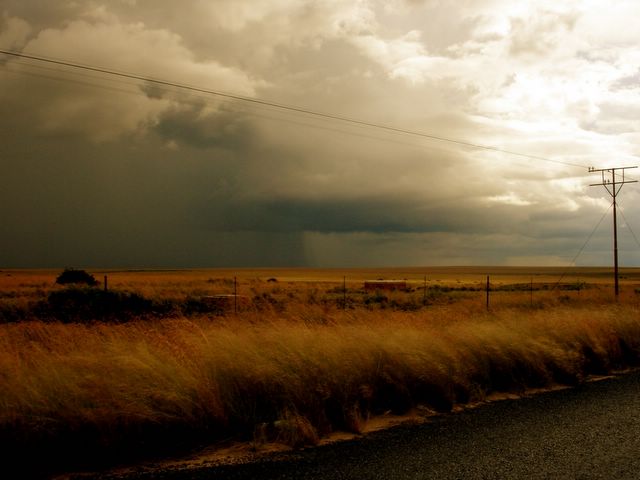
Lego
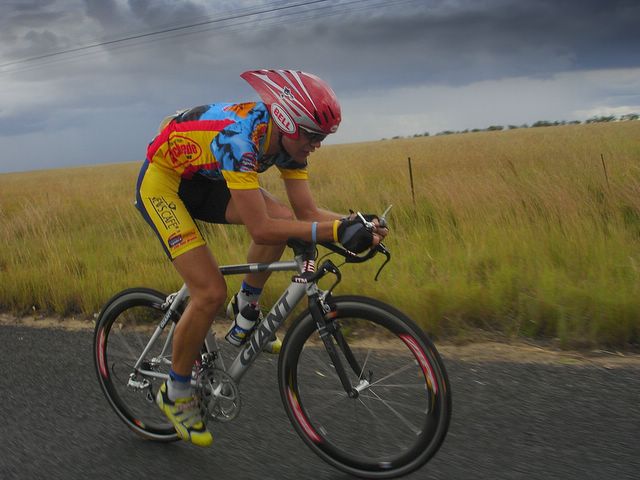
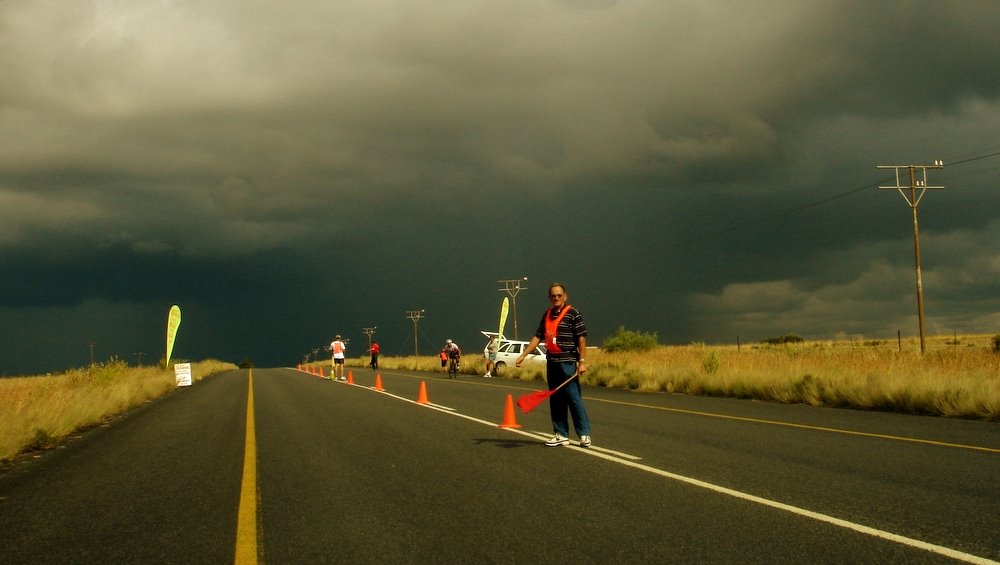
(The photo above was taken during a timetrial over the weekend on the Dewetsdorp Road. It's not me).
My legs are still aching from a light (I thought)workout at Virgin Active on Sunday. I did a few leg raises (while lying on my back) and it seemed like my leg muscles have atrophied quite a lot - because I was only lifting about 30kg.
Did some other stuff as well, maybe I didn't realise how hard I was pushing myself. Cycled today with Vic. Felt pretty hard to me. A few times he settled on his tribars and simply pulled away from me.
Cycle: 1:21
Distance: 43.6km
Speed (ave): 32.3km/h (same as Argus)
1335 kcal
Time per km: 1:51
Yesterday I cycled 1:09, and just 28km, but with a few climbs thrown in. Benedictus got a flat early on and then I headed to varsity for two classes that didn't exist.
It's raining now. Just had coffee with Fransa, quite enjoyable, and over a cuppa Corneli called. She's bought a Corsa lite for herself.
Life at home is not so great. Feeling fairly stressed, but trying to get the urgent things done. Am considering starting up my own newspaper, a rival for The Friend. Will start working on that plan. A few assignments to do for tomorrows tutorials. Will get started on those later tonight.

The Truth about cats and dogs
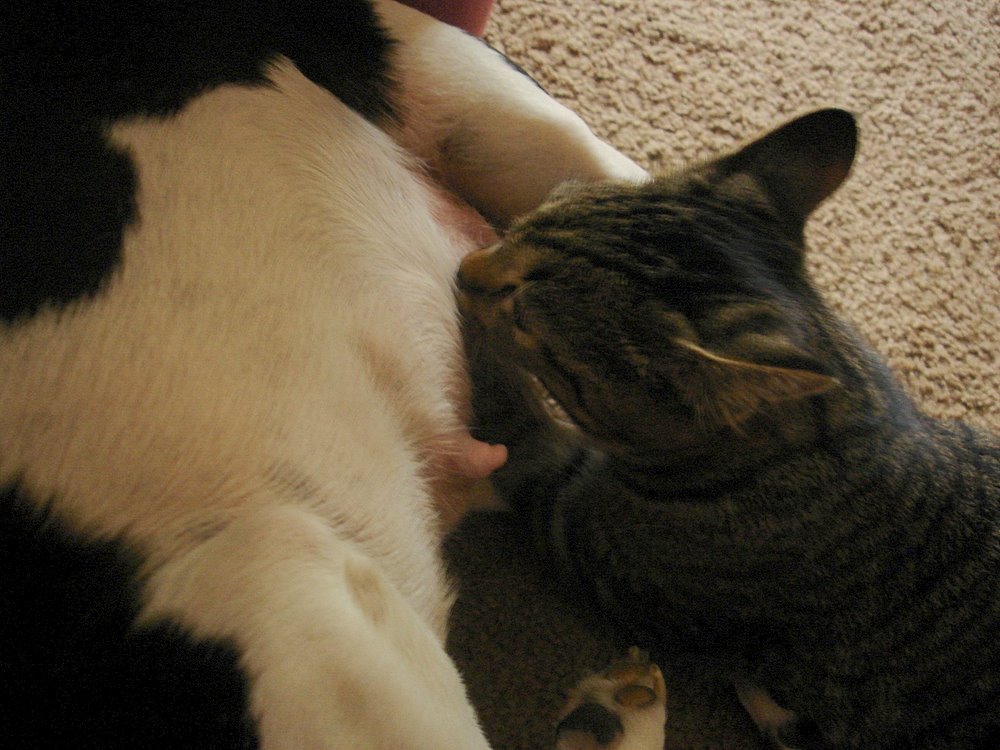
Which one is really the king of the castle?
by Nick van der Leek
Over a birthday dinner, someone said that dogs, if they could talk would say: “You shelter me, you feed me – you must be gods.” Cats on other hand say, “You shelter me, you feed me – I must be a god.” Well, which is it?
I like dogs. They’re friendly, they’re simple, and they’re playful. Somehow, in the world of domestic pets, good looks are not enough. A sound strategy is just as important.
Dogs have obviously developed a winning psychology, which is why they’ve made it as far as we have. They’re boisterous, they work in a group, they’re not very subtle, and tail wagging is key. There are people like that. I know a big lumbering fella who has a big slobbering dog. He plays rugby, or used to, and his dog greets you by first plunging his snout into your crotch and then trying to wrestle you to the ground.
But dogs are different. We have a beautiful Jack Russell with a muscular body. On a walk, she is absolutely fearless; in fact, she becomes a terrifying little demon, as she digs and shrieks, and disappears for hours, on the spoor of a poor, hapless meerkat or some other critter. Her name is Jodie, and she takes no prisoners. Yet, off the field, she will follow you around hopefully (even into the loo), and jump off the ground, into your arms at the slightest invitation. She likes to lie close to you, seeking warmth, and when she does, she lies meekly and quietly. She’s a perfect little lady when she wants to be.
But I know another Jack Russell that is rotund, and neurotic. Her owner is into Yoga and New Age. Her woofie is a whiny, overweight, pathetic creature who lives under the shadow of the past. Perhaps she was kicked as a pup, who knows, but she’s never gotten over it. She’s a whimpering, individual, prone to weeing on carpets, and a blight on her species.
Cats on the other hand, are all about stealth, subtlety and a carefully crafted strategy. You’ll find a bounty of the smaller wild cats in the wilderness of the West Coast, Botswana, especially the close cousins of the domestic cat. Hunting dogs like the Australian dingo and Cape Hunting Dog are out there too, but struggling to survive as farmland encroaches further and further into the wild. Wolves on the other hand are doing well in the woods of Canada, Alaska and parts of Russia. But their big mouths call far too much attention on farms, and wild wolves and dogs often end up getting themselves shot. But who rules the roost at home?
Our cat, Booger, shares space with Jodie, our feisty Jack Russell, and 3 energetic, large and loud Labrador collies. That’s 4 dogs versus 1 cat. How it works is the cat maintains all the best territory – the front lawn and driveway (giving her face to face access to all the comings and goings), the kitchen counter (where handouts abound), and when the lights go out, the lounge. The dogs have to sniff around at ground level, and they get to frolic in a large back garden, often in pursuit of tossed tennis balls. The dogs do get special treatment though – they get taken for walks, even taken on holiday and to the beach, whereas the cat never goes anywhere.
She mostly avoids the pack of hounds, but when transferring from kitchen to lounge she sometimes has to square off with them. When that happens, she puts on a Garfield ‘in absentia’ gaze, and despite a little bit of mayhem, she moves on unruffled, so that the dogs begin to beg desperately for a ball – something, anything – to chase.
In the mornings, Jodie and Booger both love to lie inside the curtains, soaking up the morning sun. Often, she co-ordinates a move to someone’s bedroom by simply sticking close to a human that is wandering through the house. Jodie, ironically, does the same thing, but for different reasons. She wants first dab at the breakfast bowl because she’s also in competition with 3 bigger Collies.
Living in South Africa means you eventually get used to beggars. Your kindness is called upon when stopping at an intersection, when you park your car, and often, in the driveway, before you’ve even left your home. For many, begging starts in the home, where every meal presents an opportunity for mutts and cats to imbibe in lekker kos. The dogs have a simple strategy: stare hopefully. At lunch and dinner the cat is by far the most successful at scoring morsels of meat. She positions herself quietly beside her chosen patron, and when she feels like she’s being ignored, she’ll dab her paw at you. If that doesn’t work she either leaps onto your lap, or worse, jumps onto your shoulder, using her nails to hold on.
In our house, Booger – a cat – has pride of place. And not because we say so, because she makes it so. With calm precision, she gets her way. But she suffers from that most feline of afflictions – the hairball. It’s not pretty, and the dogs, I imagine, cackle like hyenas when they hear her coughing and retching, and finally gagging out a nasty grey gob all over the carpet. So much for style and etiquette.
Now, I know of another house where the odds are even – two dogs and two cats. One of the dogs is about as big as a brown T-Rex. The Jack Russell there looks like a tiny cow. One of the cats arrived as a young kitten, and the Jack Russell responded by bulging, and now she is almost bursting her mammary banks. In cat years, Maya is a teenager now, but she’s still milking the dog and taking the cake. It’s sad but true: cats, hairballs notwithstanding, do rule, and dogs definitely do drool, but we can’t help loving both.
The Housing Bubble
by Nick van der Leek
The way we live is all wrong
Suburbia may seem normal, and twenty and thirty-somethings may expect to one day own their own stand alone houses, just as their parents did. There’s a strong sense of entitlement. But suburbia is actually quite new. It’s based on getting away from the industrial city, with its pollution, in exchange for the ideal of country living. But of course, as we all know, except for a small artificial lawn that has to be watered and maintained, suburbia has none of the benefits of country living. It doesn’t have any amenities of the city either because it is separated from the city, disconnected except for an essential highway system.
The writer, James Howard Kunstler, calls the suburban dream a cartoon, a caricature of what we hoped it would mean for us and our children. Suburban life really means we are not connected to what Kunstler calls ‘organic systems’. There are no forests or streams, and there is no sense of community. Of course once you’ve invested yourself into suburbia, and you realize how few benefits there are, it’s too late.
Suburbia as we know it is really just a little more than a generation old; we started seeing a quaint precursor to suburbia (based on streetcars) at the beginning of the 20th century. In the 1920’s mass motoring ushered in the first really suburban projects, and after the Second World War, suburbia emerged as the American Dream. The dream of owning a home in suburbia has obviously sprawled beyond America. South Africa and Australia and beyond also provide useful analogies to what is now, a familiar living arrangement. Our affluence – suburbia – has been based over the years on cheap energy. The world economy is based on a limited supply of oil. When depletion sets in, the middle class will simply be wiped out, and where does the middle class live? The only reason suburbia is possible at all, is because of something else that happened this century – the automobile.
Before the automobile, there were trains and ships, some horse drawn carriages too, and a fairly even spread of towns and medium sized cities. The only stand alone houses were part of large farms, with direct access to plenty of fresh water and produce. The rest were hovels and usually filled to capacity. The question emerges: is suburbia sustainable?
My situation is, having returned from living abroad for several years, I am temporarily living with my father in a house, but the expectation is that I must soon leave to get my own house. It doesn’t matter that there are three empty bedrooms; the emphasis is that a young man must go and get his own. His own house, his own car. How you do that is by getting a job. Getting a job means using your car to drive from your house, to your work, every day, and repeating this process thousands of times. Meanwhile, you use your savings, if you have any, to fill your house with stuff, and people (possibly in that order) much of which you never see because all your time is spent on your way to work, at work, or stuck in traffic on your way home.
A recent study by the Public Transport Users Association (PTUA) based in Australia published a credible report on how the automobile has diminished our freedom, and made our choices far more limited.
For example, in many countries, but especially South Africa, it’s hardly possible to live without a car. I have chosen to do so for a number of weeks, and it is frightening trying to get around in one piece on a bicycle, and difficult and tiresome to walk. The world outside of a car – and I mean, on the road – is extremely loud, dangerous and unfriendly. It’s also often unsightly, and in many places, downright ugly. People tolerate hideous urban eyesores because they can easily be ignored when the airconditioner is on, and the music is playing. Once there was a certain romance associated with maintaining a vehicle. Drive-in cinemas, camper vans, Sunday drives, picnics, candy floss and fishing rods. The cities were still fairly walkable then, and filled with two storey stores and friendly markets. Now, with the advent of speed, there is drive-by shopping (shopping for a house) drive-thru fast food, shopping malls stuffed with cinemas and gymnasiums, supermarkets, parking lots and parking garages (entire buildings dedicated to housing cars), toll gates, and endless roads bristling with traffic.
I read recently on Jim Kunstler’s blog that the housing bubble in America is close to bursting. Sales are down around 20% in a number of states, and many high-end Americans are living hand to mouth – mortgage payment to mortgage payment. It’s been said that the American economy, now that they have outsourced almost all their production to India and Asia, consists merely of Americans selling houses to each other, and money is ‘created’ by taking a second mortgage on a house. Kunstler, author of The Geography of Nowhere, asserts not only that the housing bubble (which underpins the American economy and the world economy) is about to burst, but that suburbia – a way of life for many of us – has no future.
It’s important to remember that suburbia, as we know it, is predicated on supply lines running between homes and malls, and homes and jobs (usually in cities). Another word for supply lines are commutes, and in global terms we might call them shipping lanes. Shipping lanes are what allow supermarkets to function, and supermarkets allow suburbia to feed and arm, and supply itself.
Our iPod’s are made in China, flatscreen TV’s in Korea, clothes like Nike from Vietnam, cameras and digistuff is made in Japan and so on. If those supply lines don’t work, there are no factories closer to home to turn to. Similarly, those countries import food from us. If supply lines shut down, countries will struggle to feed themselves or to function at all, simply because there has been such a high level of specialization at an industrial level, often outsourcing to faraway countries. In a world with unstable supply lines, Korea for example, the world’s fifth most densely populated country, is going to struggle to grow enough fruit and vegetables to feed a population as large as South Africa’s, but with a landmass that is just 10% of South Africa’s.
Shipping lanes are predicated on cheap energy. When oil prices rise, and they will, suburbia will begin to shut down. It will contract simply because those commutes become first unfeasible, then impossible. Supermarkets will fail, and suburbia will possibly invest in cultivation of gardens on a massive scale, because supermarkets killed local production – that means local farming surrounding big cities especially. Farming is likely to make an impressive comeback.
My brother recently bought himself a townhouse that he believes was a bargain for about R500 000. It’s tiny. Before spending a cent on his mortgage, he has to pay R1000 in fees to the body corporate fees and for gardening.
I wrote to Mr. Kunstler a few weeks ago, indicating I’d saved a bit overseas, and was considering buying a house. He advised me not to, saying cash in land, liquidity, is safer at the moment. He’s assuming a lot. For starters that the US bubble will burst. That may happen as early as this summer, in America, as a direct result of ever increasing fossil fuel prices. An imploding American economy will lead to a worldwide recession, and then you don’t want to be paying off a bargain nobody else wants, at a time when no one has any money. Meanwhile, between 2004 and 2005 we’ve enjoyed the strongest global growth since the 1970’s. Is the penny about to drop? I’m holding onto mine for a little bit longer, as least until the American summer and our winter, is over.
You can order the DVD ‘The End of Suburbia’ from Amazon.com
Tuesday, March 21, 2006
Tests
I did a fitness test yesterday and I have a rating of 59 with projected maximum of 184.
I also recieved my ENG 212 test result. 78% and the words: Excellent (underlined) discussion - subtle, pertimenent and well organised despite the time limit. A penetrating understanding of the play!
I've also recived word that a photo I took one the overall prize - there were 5 photos chosen and mine was featured as the best. It just showed a couple of kids playing in the mud near the Gariep Dam.
Meanwhile, I've just missed another lecture as the times have been reshuffled again. The organisation of the English Department is pretty shabby - with schedules being swapped, classes missed, times changing and tutorials slotted in while other courses are still running. Quite silly really.
I also recieved my ENG 212 test result. 78% and the words: Excellent (underlined) discussion - subtle, pertimenent and well organised despite the time limit. A penetrating understanding of the play!
I've also recived word that a photo I took one the overall prize - there were 5 photos chosen and mine was featured as the best. It just showed a couple of kids playing in the mud near the Gariep Dam.
Meanwhile, I've just missed another lecture as the times have been reshuffled again. The organisation of the English Department is pretty shabby - with schedules being swapped, classes missed, times changing and tutorials slotted in while other courses are still running. Quite silly really.
Monday, March 20, 2006
Living paycheck to paycheck in the American Dream
Jitters
by Jim Kunstler
March 20, 2006
An acquaintance told me a weird story yesterday. Let's call him "E." He runs an Internet consulting company here in Saratoga Springs. It employs about twenty-five people in a downtown building E put up a few years ago.
Last month a freak windstorm ripped through here and took down the electric power for three days. E lost communication with the payroll service (a separate company) that issues his employee's salaries. The storm happened in the middle of the day, Friday, payday.
The power came back on Sunday night, and on Monday two of E's employees each asked for private meetings with the boss. Because of the storm, they said, the payroll company had failed to make electronic salary deposits in their checking accounts. They were concerned because they were late on their mortgage payments and without the past week's electronic paycheck, they couldn't pay their mortgages.
E told me that these were "high-level employees" with substantial salaries who were both living in "very high-end homes," which around here would mean around a half-million dollars (and I know that in some parts of the US, like Washington, DC, or San Francisco, a half-million barely gets you a "pre-owned" raised ranch). He said he was shocked to discover that his executives were living from paycheck to paycheck, in houses that by normal criteria (i.e. pre-bubble standards) they probably couldn't afford.
"What if something happened to me?" E said. "What if I was hit by a bus? That would be it for the company. That would be the end of their paychecks, and what if they didn't find another job almost immediately? I don't want to interfere in their personal affairs, but I can't help feeling that I really need to talk to them about this."
Meanwhile, our cretinous, pandering local newspaper, the Saratogian, published a special real estate section on Sunday under the banner "Progress 2006." The headline under the banner said, "If You Build It They Will Come," and the accompanying photo showed a rank of beige McHouses in a new subdivision. The sub-head said "Growth is the name of the game across the county."
Spring here in the North Country brings with it a ripe expectation that the winter real estate doldrums will soon yield to raptures of zippy sales. Of course this is based on the assumption that the year ahead will be like the recent years just past, only better! The sense of momentum in the real estate markets is reinforced by the fact that so much stuff has worked through the arduous permitting process and is just now coming up for sale, with even more stuff behind it moving through the cloacal pipeline, so to speak -- so therefore the buyers will automatically appear drooling into their checkbooks.
I don't think so. I think that what we are getting here is stupendously delusional behavior. The ebullience in the newspaper only tells me how much unexpressed subconscious terror lurks just below the surface of wished-for "normality." For one thing, anybody who walks around this town can hardly fail to notice how the realtor's signs are accumulating in the front yards. Nothing's moving. Outside of town, in the suburban asteroid belts that only ten years ago were cornfields and cow pastures, there's a much more lavish supply of new houses. I detect an odor of bloodshed.
This has been a hot market for a while, because Saratoga is an historic "main street" town in pretty good condition with a high level of cultural amenity, close to the gigantic Adirondack Park. The three old cities nearby which comprise the employment centers of the Capital District -- Albany, Schenectady, and Troy -- are in such a state of squalid decrepitude that practically anyone gainfully employed has fled shrieking lately, and Saratoga has attracted many willing to tolerate a 30-plus mile commute.
For years following the two oil crises of the 1970s, the real estate market in Saratoga fell stone dead because the fear of rising gasoline prices and long lines at the filling stations remained so vivid. We're headed back to scary gasoline prices again, only this time it will not be a temporary crisis. And this time, there will be a huge surplus of unsold houses. There will also be a substantial number of house owners getting in trouble with their mortgage payments, and one way or another their houses may end up adding to the supply of available houses. There is also very likely to be trouble in the financial markets, with dark implications for the value of the US dollar, for the movement of interest rates, and for the availability of further credit.
It makes my head hurt to imagine the coming carnage on the real estate scene here. Nation-wide, the latest figures are not reassuring. Even hot markets cool off when evil economic winds blow. According to the California Association of Realtors, sales of existing, single-family detached homes were down 24.1 percent, the highest year-on-year decline since December 1990 when sales dropped 25.2 percent. The National Association of Realtors reports Massachusetts home sales are down 21 percent and listings up 41 percent. In Florida existing home sales are down 19 percent. In Alabama existing home sales down 21 percent and listings up 17 percent. Pennsylvania sales down 17 percent. Minnesota sales down 7 percent and inventory Up 35 percent.
Meanwhile housing "starts" (under construction) jumped 14.5 percent in January of 2006. Permit approvals were up 6.8 percent. That old dawg, momentum.
House "affordability" reached a 14-year low according the US Department of Commerce. Foreclosures were up 27 percent so far in 2006.
You wonder, finally, how many current homeowners will lose their houses? How many developers will lose the shirts off their backs? How many banks will get stuck with foreclosed property? And how will the United States economy function without a phony-balony real estate bubble market driving it?
Was The War Worth It?
As the third anniversary of the beginning of the Iraq War approaches, TIME asked leading thinkers around the world to weigh in on the question at the heart of the ongoing debate about the controversial conflict.
Posted Thursday, Mar. 16, 2006
This is the first installment of a feature that will appear in the forthcoming issue of TIME.
David Kennedy, Professor of History, Stanford University:
No. From the outset the war was a colossally bold and breathtakingly risky gamble. Unfortunately, and unsurprisingly, the United States has failed to beat the odds. Forget about WMDs and links to al-Queda as rationales for the war. The real purpose for invading Iraq was the extravagant ambition to transform the political culture of the entire Middle East. The Bush administration bet American might and good intentions against the accumulated weight of centuries of religious rivalry, tribal tensions, wanton bloodletting, and authoritarian rule. Even American hyper-power has proved no match for the burden of all that sorry history.
Hisham Kassem, Egyptian democracy activist:
Sadly, I have to say yes. It is difficult to commend such a bloody scene. But it achieved something useful. Parallel to the chaos and bloodshed, there is a political process evolving in Iraq. Bloodshed is the price of the transition from Saddam’s psychopathic dictatorship. The losses would have been higher had Saddam stayed on. You could easily see that regime lasting for another 30 years, under his sons and top generals. Negotiating with Iraq was not an option. There had to be a military intervention. You have a block of 22 countries in the Arab world dominated by authoritarianism and dictatorship. It is not a block you could engage politically and pressure for reform. By military intervention, the U.S. is able to pressure the region into the reforms we are beginning to see across the region that might avert many countries from becoming failed states. The world cannot put up with state failure in the back yard of the world’s oil fields, Israel and Europe.
Lawrence B. Wilkerson, Colonel, U.S. Army (ret.); former chief of staff for Secretary of State Colin Powell:
No. I'm principally a strategist and from that perspective the war has been a disaster. First, the foremost winner has been Iran: it rid itself of its greatest threat, Saddam Hussein and his military, without firing a shot; won the December 15 Iraq elections; owns the south, particularly Basra; and has felt the freedom to elect Mahmoud Amadinejad who, in turn, has felt the freedom to reclaim leadership of radical Islam, leadership Osama bin Laden claimed on 9/11.
Second, the foremost loser, after Iraq itself, has been Israel, whose leaders must now fear more than ever before the new strategic maneuver room afforded Iran by America's ineptitude.
Third, the general war against global terrorists has been affected greatly by the failure in Iraq. Recruiting among Muslim ranks has been aided significantly, while America has squandered the upper hand in the world of ideas, which is the real battlefield of this conflict. Lastly, if our failure in Iraq produces regional conflict, we will find ourselves expending far greater blood and treasure to stabilize the situation once it gets completely out of hand. And the odds that it will get completely out of hand if we continue on the present course are quite high.
Tommy Franks, General, U.S. Army (ret.); as chief of U.S. Central Command, Franks oversaw the invasion and the three months following it, until his retirement on July 7, 2003:
Yes. America remains very proud of, and very thankful to our sons and daughters serving in Iraq and around the world in the cause of freedom. The events of 9-11-01 taught us a valuable lesson.... ignoring terrorism will not make the problem go away. The sacrifices of our military members and their families are giving Iraqis a chance for freedom. And a free Iraq serves not only Iraqis... it will stand as a model in the Middle East. A model that represents to millions of people that there is an alternative to terrorism.
Big Brother
Yesterday was the Ironman, and my big brother's 36th birthday.
I got an sms from Mauritz saying he did it in 10:54, and "Praise God." It's an okay time, but a 9:54 seems more worthy of making a face about. Perhaps I don't understand the full context surrounding his race.
Yesterday:
Swim: 50:15
Distance: 2km
250's: 3:44/3:38/3:34/3:27
Was getting the stroke right on the last set, and my time dropped a lot as a result.
Also did some gym, working on the legs and:
Pushups: 10
Last night's dinner was good. Roast lamb with mint sauce, baked bread, delicious pudding. My weight at gym was slightly up:
Weight: 83.60kg
Didn't enjoy the tail end of dinner, where it seemed it became lecture time, including what time is the best time to go to bed and get up in the morning, and other things that 'must' be done.
Am meeting the Sendingfietstoer guy tofay to discuss a story, and emailing TIME and other publications with pitch stories.
I see Alna's Passi is getting ready for publication in June. Interesting.
Today on reporter.co.za I have 2 images published, and 2 new stories. One is on the West Coast and another on Biofuels.
Will go cycling in the hills this afternoon, maybe with Ben.
Iran: Here We Go Again

story by Nick van der Leek
Iraq is a dress rehearsal for Iran and the threatres beyond
Last week President Bush once again unveiled his National Security Strategy – and there were no surprises. He described the report as a Wartime Strategy. Once again he made the case for the war on terror. Pointing the finger sharply at Iran, Bush said America has no greater enemy, than Iran, with its ideology of hate and murder, that Iran is freedom’s enemy, and a supporter of terror. He warned that if negotiations fail, there will be a confrontation, because, he reminded us, America maintains its right to preemptive attack as a means of defending the safety of the United States. Sound familiar?
Meanwhile, foreign investors are getting itchy about America, at a time when America can least afford it.
Once more, people who have the time to think about what they’re reading in the newspapers might stumble on the question: “Is Bush stupid?” He may be, but it’s doubtful (though possible) that the entire administration is. So what are they thinking? I thought I’d try a stab at it.
Firstly, we’re told that we’re in a war. A war on terror. Sorry to waste the time of people who often discuss these points, but for those who don’t, a war on disease (take AIDS or H5N1), or a war on poverty, might yield better results, and actually save lives and do humanity (that means all human beings) a tremendous service. The nice thing about calling it a war on terror, as opposed to say a war on a particularly country, is that it can possibly include everyone, or anyone, whenever you want it to.
You can make candid arguments for why you feel threatened by any region that might have a weapon, and a weapon that might be used against you. So the nomenclature ‘War on Terror’ is nice, if you’re a warmonger. Bush is, and the Christian fundamentalists that back him, are too, though they might not know it, or admit it.
Of course, if you or I walked around with that attitude on the street, saying, ‘I’m an individual combatant of terror’, and imbued with a license to kill, exercised our option to preemptively attack people based on private judgments about how threatening we thought they were, well, you or I would quickly be removed from public contact and isolated in some way, probably jailed. The world at the mercy of the greatest superpower ever, bristling with nuclear weapons and antagonistic policy turns precariously on its axis each day. With American policy, such as it is, it is a far more dangerous planet than the one 66 years ago, when Germany started looking around its borders in 1939.
A simple test whether American Imperialism towards Iran makes any sense, is to apply all their rhetoric to North Korea. North Korea has nuclear weapons. They brag about this fact. North Korea has a cruel dictator. North Korea poses a threat to South Korea, principally Seoul, and also to Japan. America isn’t interested in North Korea. America would like to ignore the North Koreans, if they’d just be quiet and play hide-away hermits, America can go on with its business elsewhere.
Let’s quickly recap what happened in Iraq, so we know what the sequence of events will be for Iran. We’ll be informed of plenty of discussions and negotiations, and the UN will make an appearance, and perhaps they will make some or other statement. This is to get the tacit or implied support of the people. The president and government is powerful, but it needs the okay from its citizens (that’s us – it’s us who really hold the power) to do what it wants to do. Via a flood of messages carefully orchestrated through the media we’ll be reminded time and time again of brutal dictatorships, individual acts of terror and nastiness and the imminent threat of nuclear weapons from Iraq (Iran).
The UN will be cited often and possibly some resolution will be passed. Their involvement simply makes it look as though some genuine efforts at diplomacy are on the table. America will demand results, will set deadlines, will set terms and Iraq (Iran) will ‘violate’ these. All malevolent responses Iraq (Iran) makes will be broadcast and recycled loudly and clearly so that Americans will feel as threatened and as unsafe as possible. Finally, a deadline will expire and America, without any choice, acting to defend itself, will attack Iraq (Iran).
While this happens, the American public (and world opinion) will have the opportunity to stand up as a nation (as nations) and say, “Stop this madness. We don’t want a war with Iran.” But will they? Will we?
Meanwhile, people will forget that America is the country attacking another, much smaller, much weaker country, outside of their own territory, with far greater firepower and weaponry than that country. Effectively, we’re talking about a slaughter. Another name for slaughter is terror, but no one in Texas or Kansas ever thinks of American soldiers as terrorists– those are just Jihadists and Muslim Fanatics. No Christian thinks of themselves as authorizing brutal murder based on apocalyptic rationales – they simply think of themselves as ‘us’ (US) and the threat, as ‘them’, the enemy.
Now for a few insights. America doesn’t really care about democracy in Iraq or anywhere else in the world. But using the words ‘democracy’ and ‘freedom’ have been useful excuses to invade countries, pretending to want to democratize the locals, and set them free. Of course, if Iraq manages to set up a successful democracy, America will take credit for it. They’d like stability in Iraq, and Iran, but what’s really happening is America is waving a red blanket at the world and its competitors (Iraq and Iran are not truly enemies of America as much as an elephant and a bird and a tortoise are enemies), meanwhile, beyond that diversion the US is really trying to secure access to oil. It’s the oil stupid, and Bush knows how crucial it is to maintaining the American way of life.
America is the world’s largest consumer of energy, and largest polluter, and it’s decided, now that these resources are less plentiful, the US is going to make sure the US gets all the US needs. They’re there to do the job of securing the oil supplies for American and, so far, the world’s interest. At this point, they’re damned if they do and damned if they don’t, but they obviously believe, more damned if they don’t.
America has decided that war is worth it. They’ve decided that they’re strong enough to get what they want, and they aim to keep it that way. It makes a little bit of sense. Except that the odds are, when you wage war constantly, where your weapons are not only missiles deployed on foreign people, but deceit sowed amongst your own constituents, then you run the risk, over the longer term, of reaping the whirlwind. America needs Osama bin Laden out there, alive, so ordinary American citizens will let them pursue what they really want to pursue.
In time, the pretense of a war on terror (terrorism – unhappy groups causing violence against an associated regime, is like prostitution, it will always be part of society) and the crying wolf over nuclear weapons will manifest more and more, as disenfranchised people all over the world grow increasingly resistant to the American menace.
When Iraq invaded Kuwait, it was actually because Kuwait was stealing Iraqi oil. How? By drilling horizontal wells into Iraqi oil fields. Iraq’s response provided America with an excuse – a fairly decent one – to get involved in the region. Then, after 9/11, when mostly Saudi hijackers flew jets into New York and Washington, Bush thought he had another reason. Turned out he didn’t, but he manufactured a license, and now that the war is there, Americans are sort of going along with it. They’ll go along with the foray into Iran, if they’re able to watch enough TV and manage to go to bed each night, without waking up.
The reason the rest of the world goes along with America (and by rest I mean Britain, Europe, Australia and the West) is because America’s involvement in the Middle East keeps the price of oil cheap. Russia and China are letting the big dog eat its bone, but they’re getting hungry too.
America is, up until now, just a ferocious Guard Dog. They’re not stealing oil, just policing our access to it. It’s possible that many people all over the world would endorse this aggression, this blood for oil, so that they can pick up the kids from school and eat a caesar salad without paying more than they want to. I wonder, are you one of them, and if you knew you were, would you change your mind?
Saturday, March 18, 2006
1time Puts Bloem Back on the Map
Bloemfonteiners have the option now to fly cheaply and reliably to Johannesburg for only R369 one-way, using the discount airline, 1time. The first flight, a red DC9, took off yesterday at 8:35, landing in Johannesburg at 9:45. There were 40 passengers, including the crew, but the plane has a capacity for 110.
Passengers will find black leather seats in pairs and threes, and there is more than adequate legroom and storage space.
Return flights are available to and from Johannesburg on Mondays, Thursdays and Saturdays, and two return flights on Fridays and Sundays.
Besides 1time, Bloemfontein does have an existing service to Cape Town and Johannesburg, but the local paper was full of complaints that flights are too few, capacity is too limited, tickets are too expensive and that their service has not been reliable.
For 1time reservations call 0861 345 345, or visit www.1time.co.za
Defeating Depletion
Where should our focus be?
by Nick van der Leek
Solar and wind power are good alternatives. Denmark is the per-capita world leader when it comes to wind farming, with 18% of its power coming from wind power. But before we make an unqualified endorsement, bear in mind that the production of the components used to produce solar and wind power obviously does cause pollution. Still, while we have cheap fossil fuels at our disposal, we ought to be directing the energies that we have available from them towards massive worldwide investments in solar and wind power, but there is a catch. Entire farms will need to be dedicated to harnessing the power of the sun (which includes its ability to unevenly bake the Earth’s surface, creating the winds).
Even so, there will still not be enough power, in South Africa, even from maximal investment in these technologies, to replace that 70% generated from fossil fuels. We might be able to replace a sizable fraction of that amount, and we must set about doing so. Once more, the whole problem of finding an alternative to liquid fossil fuels remains unanswered. How on earth are we going to get around?
Synthetic fuel, for example, adding hydrogen to coal under high pressures and temperatures, and using a catalyst, is Sasol’s specialty. They have produced synthetic fuels, but in fairly mediocre quantities (in terms of barrels per day), and once again, at noticeable cost. Can Sasol provide South Africa with its liquid fuel requirements in an oil depleted world? It’s doubtful.
Hitler managed to produce synthetic fuel in large quantities, but under wartime conditions, and by employing slave labor and producing whatever the cost. His failure to secure Russia’s oil at Baku probably cost Germany the war. Synthetic fuels may afford valid reductions to shortfalls in supply. To achieve this in South Africa may mean quadrupling and then doubling their efforts to meet demand, and to the extent that they expand their capacity, so will the impact of massive pollution be felt everywhere in South Africa. It will be a large heavy blanket of soot and poisonous gas hanging over the entire country. The supply of Synfuels is unlikely, on its own, ever to meet current levels of demand here, or elsewhere, and even if it did, the price of fuel under these circumstances would still be extremely high.
I’m not going to discuss these headings: Methane Hydrates, Thermal Depolymerization, Fusion (as opposed to Fission) or Zero Point Energy. I only mention them so that a delusional public don’t write letters saying, “But, haven’t you thought of X?” or “What about Y, isn’t if possible if we…”
There is a crisis of thinking going on. Too many minds working on sticks and leaves, too few minds actually awake, and seeing the how much of the forest is on fire.
One of the concerns is of course that depletion kicks in before we are ‘ready’, meaning, before we’re far into the process of setting up ‘cushioning infrastructure’. If we enter a phase of squabbling over resources, and arguably, that phase has begun, then in time supply lines will disintegrate, and chaos will set in, which will be what Kunstler calls a ‘converging catastrophe’. Instability basically prevents us from building anything, or doing anything meaningful. We caught a glimpse of this in New Orleans, where lack of fuel soon leads to lack of food, dehydration and death. If the spare resources we have now aren’t used very soon to establish viable sets, installations and factories directed towards long term power production, when fossil fuels are unavailable, there will simply be nothing to run our technology on. We’ll have a lot of fancy machinery – including cars, computers and cell phones - that we can’t use. It’s easy to see that scenario as a virtual certainty, based on the current pace of investment and construction of alternative energy infrastructure. We’re simply taking too long, and doing too little, too late.
Finally we get to our last, best hope. Nuclear Power. It is an irony that countries like oil-rich Iran and oil-poor North Korea are both actively pursuing this energy process. Why is Iran looking for a nuclear power station when it is sitting on so much oil? Perhaps they know something we (well, most of us) don’t, for example, that their energy reserves (and the world’s) are fast approaching their sell by/depletion date. Iran’s investment now in nuclear energy tells us – perhaps – that we don’t have much more than 10 years of reliable energy left. Why? Because they don’t.
I’m not suggesting that in 10 years we’ll begin to struggle. Prices will go through the roof well before then. I am suggesting, like France, that we begin to base as much as 70% of our energy infrastructure on harnessing nuclear power. We need to start building nuclear power stations now. China is. We need to build 5, 10, as many as we can, as fast as we can. We’ve basically learned how to roll out nuclear energy just about as well as we roll out other franchises, like McDonalds and Shell Service Stations. We know the science, and can automate nuclear power plants well enough to have Homer Simpson’s in charge. Nevertheless, it’s complicated technology, and it requires huge start up costs. There are safety issues, and the issues of disposing of nuclear waste remain troublesome. Over the medium term, nuclear power is our best bet. A single nuclear power plant costs billions. It also takes many years to get going, but once it does, energy from nuclear power tends be cleaner, and more efficient, over the medium term, than almost all the other alternatives. And in time, the initial investment becomes reasonably cost effective.
Once more, the problem of a liquid fuel is not solved, but the possibility arises again of using hybrids and then only-electric cars. Only-electric cars don’t exist today that aren’t expensive. The problem is that the batteries don’t last. They have to be recharged, and after a few years, have to be replaced. Electric car batteries are currently prohibitively expensive. The technology of big car batteries hasn’t changed much in a number of years, and so far the technology behind lithium batteries (used in computers) doesn’t work on cars. But in time, perhaps, we’ll be able to find a way to make electric cars (using rechargeable batteries) work over the longer term. This obviously implies a total overhaul of combustion engines, but perhaps this will be phased in, to avoid unpleasant bumps. Perhaps, like computers, after sufficient market penetration, the costs will come down, and technologies and efficiencies will improve. It’s doubtful. It’s likely to shake everyone up, the changes that will happen in our lifetime. I don’t expect a smooth transition. Nothing suggested in this paragraph is a certainty in a future that is likely to be aggravated by wars and instability.
It is clear, whatever we do, that people are in store for massive adjustments. We will face a new period of austerity affecting both our everyday lifestyles, and our everyday thinking. How hard that transition is depends on how much we can get done now
by Nick van der Leek
Solar and wind power are good alternatives. Denmark is the per-capita world leader when it comes to wind farming, with 18% of its power coming from wind power. But before we make an unqualified endorsement, bear in mind that the production of the components used to produce solar and wind power obviously does cause pollution. Still, while we have cheap fossil fuels at our disposal, we ought to be directing the energies that we have available from them towards massive worldwide investments in solar and wind power, but there is a catch. Entire farms will need to be dedicated to harnessing the power of the sun (which includes its ability to unevenly bake the Earth’s surface, creating the winds).
Even so, there will still not be enough power, in South Africa, even from maximal investment in these technologies, to replace that 70% generated from fossil fuels. We might be able to replace a sizable fraction of that amount, and we must set about doing so. Once more, the whole problem of finding an alternative to liquid fossil fuels remains unanswered. How on earth are we going to get around?
Synthetic fuel, for example, adding hydrogen to coal under high pressures and temperatures, and using a catalyst, is Sasol’s specialty. They have produced synthetic fuels, but in fairly mediocre quantities (in terms of barrels per day), and once again, at noticeable cost. Can Sasol provide South Africa with its liquid fuel requirements in an oil depleted world? It’s doubtful.
Hitler managed to produce synthetic fuel in large quantities, but under wartime conditions, and by employing slave labor and producing whatever the cost. His failure to secure Russia’s oil at Baku probably cost Germany the war. Synthetic fuels may afford valid reductions to shortfalls in supply. To achieve this in South Africa may mean quadrupling and then doubling their efforts to meet demand, and to the extent that they expand their capacity, so will the impact of massive pollution be felt everywhere in South Africa. It will be a large heavy blanket of soot and poisonous gas hanging over the entire country. The supply of Synfuels is unlikely, on its own, ever to meet current levels of demand here, or elsewhere, and even if it did, the price of fuel under these circumstances would still be extremely high.
I’m not going to discuss these headings: Methane Hydrates, Thermal Depolymerization, Fusion (as opposed to Fission) or Zero Point Energy. I only mention them so that a delusional public don’t write letters saying, “But, haven’t you thought of X?” or “What about Y, isn’t if possible if we…”
There is a crisis of thinking going on. Too many minds working on sticks and leaves, too few minds actually awake, and seeing the how much of the forest is on fire.
One of the concerns is of course that depletion kicks in before we are ‘ready’, meaning, before we’re far into the process of setting up ‘cushioning infrastructure’. If we enter a phase of squabbling over resources, and arguably, that phase has begun, then in time supply lines will disintegrate, and chaos will set in, which will be what Kunstler calls a ‘converging catastrophe’. Instability basically prevents us from building anything, or doing anything meaningful. We caught a glimpse of this in New Orleans, where lack of fuel soon leads to lack of food, dehydration and death. If the spare resources we have now aren’t used very soon to establish viable sets, installations and factories directed towards long term power production, when fossil fuels are unavailable, there will simply be nothing to run our technology on. We’ll have a lot of fancy machinery – including cars, computers and cell phones - that we can’t use. It’s easy to see that scenario as a virtual certainty, based on the current pace of investment and construction of alternative energy infrastructure. We’re simply taking too long, and doing too little, too late.
Finally we get to our last, best hope. Nuclear Power. It is an irony that countries like oil-rich Iran and oil-poor North Korea are both actively pursuing this energy process. Why is Iran looking for a nuclear power station when it is sitting on so much oil? Perhaps they know something we (well, most of us) don’t, for example, that their energy reserves (and the world’s) are fast approaching their sell by/depletion date. Iran’s investment now in nuclear energy tells us – perhaps – that we don’t have much more than 10 years of reliable energy left. Why? Because they don’t.
I’m not suggesting that in 10 years we’ll begin to struggle. Prices will go through the roof well before then. I am suggesting, like France, that we begin to base as much as 70% of our energy infrastructure on harnessing nuclear power. We need to start building nuclear power stations now. China is. We need to build 5, 10, as many as we can, as fast as we can. We’ve basically learned how to roll out nuclear energy just about as well as we roll out other franchises, like McDonalds and Shell Service Stations. We know the science, and can automate nuclear power plants well enough to have Homer Simpson’s in charge. Nevertheless, it’s complicated technology, and it requires huge start up costs. There are safety issues, and the issues of disposing of nuclear waste remain troublesome. Over the medium term, nuclear power is our best bet. A single nuclear power plant costs billions. It also takes many years to get going, but once it does, energy from nuclear power tends be cleaner, and more efficient, over the medium term, than almost all the other alternatives. And in time, the initial investment becomes reasonably cost effective.
Once more, the problem of a liquid fuel is not solved, but the possibility arises again of using hybrids and then only-electric cars. Only-electric cars don’t exist today that aren’t expensive. The problem is that the batteries don’t last. They have to be recharged, and after a few years, have to be replaced. Electric car batteries are currently prohibitively expensive. The technology of big car batteries hasn’t changed much in a number of years, and so far the technology behind lithium batteries (used in computers) doesn’t work on cars. But in time, perhaps, we’ll be able to find a way to make electric cars (using rechargeable batteries) work over the longer term. This obviously implies a total overhaul of combustion engines, but perhaps this will be phased in, to avoid unpleasant bumps. Perhaps, like computers, after sufficient market penetration, the costs will come down, and technologies and efficiencies will improve. It’s doubtful. It’s likely to shake everyone up, the changes that will happen in our lifetime. I don’t expect a smooth transition. Nothing suggested in this paragraph is a certainty in a future that is likely to be aggravated by wars and instability.
It is clear, whatever we do, that people are in store for massive adjustments. We will face a new period of austerity affecting both our everyday lifestyles, and our everyday thinking. How hard that transition is depends on how much we can get done now
What Took You So Long?

The Sponsorship Scandal in South Africa
by Nick van der Leek
The lack of sport sponsorships in South Africa is scandalous.
Roland Schoeman has for some years now been the fastest swimmer in the world, and yet in his own country, he has struggled to be sponsored with as much as a cellphone. How is it possible that the top ranked swimmer in the world fails to receive recognition or support in this country? And Roland Schoeman is not the only elite athlete to have found himself begging for support from corporate South Africa.
Ryk Neethling, until fairly recently was in the same boat. Ryk is currently riding a wave of celebrity, trading in equal portions on good looks and athletic prowess. But it does beg the question – are we so shallow, the corporate denizens of this country, that we prefer looks to actual talent. That talent is nice to know, but looks are all important. I’m not suggesting that Ryk doesn’t deserve all of his endorsements – I’m demanding that they come sooner to promising athletes.
It is a shame that, for Roland Schoeman, it took a multimillion dollar offer from a Middle Eastern country to start what cannot really be called a bidding war, but led to a fractional counteroffer from here. It is a huge credit to Schoeman that he chose loyalty to his countrymen, over money, something our corporate Coelacanths can learn from. And it beamed a spotlight on the glaring and grotesque attitude to sport in South Africa.
Countless stars have invested their courage and efforts in sport, and many, despite lack of funds, have become stars in their categories. Raynard Tissink is triathlon’s version of Ryk and Roland. It wasn’t until he secured sponsorship from the likes of Timex and Virgin Active that he could breathe a little easier, knowing he could support his family through his racing efforts. Tissink has won the Ironman race on 4 continents (at last count), and has finished the world championship in the top 10. Yet the media coverage remains obsessively focused on rugby and cricket stars, recycling the same faces in the same Vodacomised advertising slots.
David George is another example. A top cyclist (3rd in this year’s Giro) has struggled for months to find a sponsor. It seems as if Nedbank finally took up the baton. What took you so long?
Corporate South Africa’s attitude to sponsorship is all wrong. Sponsorship should not start at the top and trickle down. It needs to support the young enthusiasts, athletes who simply perform well and set examples to their local communities. Pick ‘n Pay to some extent does this, in community outreach programs, like the recent cricket games on Robben Island, with support from Vincent van der Bijl among others. It’s a start, but it’s not quite what the doctor ordered. Yes, there are disadvantaged athletes. Yes, help them. Sponsorship is altogether different. It means supporting performing sportspeople in all communities.
Francois Vorster is a local triathlete who has just left South Africa to work in France. He has qualified for this year’s ITU World Triathlon Championships. He’s lucky, because the race is just next door, in Switzertand. But in previous years he had to find money to get himself to Mexico, Ohio, Australia and Hawaii. It’s a credit to his passion, endurance and financial wit that he’s been able to pursue his sport at all. He’s worked as a teacher and been involved in the local church. He’s not a corporate rich kid with an expensive hobby. And for him, 2006 is just another year without a sponsor.
Francois is just one example of how South Africa allows its talent to slip away. And why does it happen? What is going on in the corporate alleys of Nike, Oakley, Powerade and Puma? In South Africa, the salary of the man in charge of Oakley South Africa, for example, is determined by the amount of eyewear he can sell, in other words, he gets a cut from the profit total. It’s the head of Oakley South Africa then, who decides, that he’d rather cut all extraneous expenses, like sponsorships, so that his cut is so much greater. Even the local Oakley rep doesn’t have as much as a sticker on his car to promote the Oakley brand here. It’s bizarre. One man benefits, when really, a company like Oakley is all about sport, all about being cool. I don’t think selfishness represents Oakley or sport, or how these companies ought to expect investment from athletes, when they don’t invest in our best.
A friend of mine has recently returned from living in America for a few years. He is not as good a triathlete as Francois, but he’s not bad. Yet in America, he was sponsored with a bike from Cannondale, and Cannondale gear, a wetsuit from Orca, from Nike: raingear, shoes, (a different pair each month); and boxes of glasses from Oakley. He says Oakley sent him over 40 pairs of glasses. See, Oakley is not the problem. It’s the corporate guys in South Africa that want another holiday in Bali. My friend isn’t an elite athlete, but he’s motivated. He wasn’t sponsored with money, but with training gear, to the value of perhaps R50 000.
The Olympics are approaching again in 2008, and after that, it’s the soccer world cup. Once again, will we simply expect our athletes to train hard and win medals, while in places like Australia, whole school systems are designed around sport, and in America, the best cyclists fly around in private jets because their efforts are recognized and remunerated.
The point of sponsorship is to support athletes. It’s not happening in South Africa. In case the message hasn’t come through, here it is again: Sponsorship is not happening in South Africa. It’s a disgrace. While the head of Oakley in our country sees sponsorship as an expense that will effect his salary, I see it as an investment. Local sponsorships do a great deal to motivate not only the sponsored athlete, but the guys that are coming up. And the community responds too. We see which company’s care, and that speaks volumes. In time there is a long term return on the investment. The community begins to embrace the brand.
Sponsorship is about empowering people to do their best. Sponsoring sport means empowering people involved in sport to do their best. So why isn’t it happening? What’s going on beyond Standard Bank for cricket, and Vodacom for rugby?
It’s time to reward them for their best, for their tireless efforts. The real athlete will train and race whether he is sponsored or not. He’ll train until he’s used up all his luck, finished all his reserves. Because it’s about passion. Where then, is the passion in the Corporations here, in South Africa that feed off the power and inspiration of athletes and sport? Or is theirs just a passion for money? A corporate condition called greed, and always putting number one first. That’s been the trend so far, guys, and it’s not a very sporting gesture.
3 Men and a Lady
16th March
Swim: 1:01
Distance: 2km
Best 250m: 3:34
Best 100m: 1:17
Best 25m: 14s
Weight: 83.25kg
17th March
Run: 1:11 (Xterra with Ben, Vic and Katja)
Distance: 10km
Average HR: 147/ Maximum 180
Feeling stiff and sore this morning. Decided to give the 30km timetrial a miss. Had to write in earlier and need to be a licensed rider, but thought at one point I'd go anyway.
May go to gym later.
Swim: 1:01
Distance: 2km
Best 250m: 3:34
Best 100m: 1:17
Best 25m: 14s
Weight: 83.25kg
17th March
Run: 1:11 (Xterra with Ben, Vic and Katja)
Distance: 10km
Average HR: 147/ Maximum 180
Feeling stiff and sore this morning. Decided to give the 30km timetrial a miss. Had to write in earlier and need to be a licensed rider, but thought at one point I'd go anyway.
May go to gym later.
Thursday, March 16, 2006
The Bird Flu: How Much Fear Is Healthy?
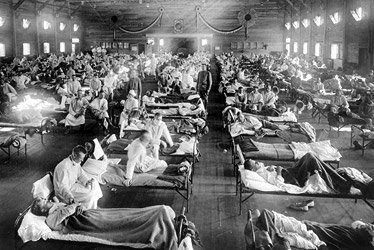
As the government warnings mount, an expert explains how we need to prepare for a possible pandemic
By CHRISTINE GORMAN
Posted Wednesday, Mar. 15, 2006
The official warnings about bird flu have been growing scarier in the past few days. In a speech last Sunday, Health and Human Services Secretary Mike Leavitt advised folks to stock up on tuna fish and powdered milk in case the bird flu virus mutates into a form that could easily infect people. Agriculture Secretary Mike Johanns recently told reporters, "It would be almost biblical to think we would be protected." Then there was Robert Webster, the noted flu virologist from St. Jude Children's Research Center, who said on national television Tuesday night that he had a three-month supply of food and water in his house in case bird flu becomes a serious human pandemic.
Scientists and government officials are usually supposed to calm people down, but these authorities seem to be trying to provoke greater fear, even a little panic. This is not necessarily such a bad thing, says Peter Sandman, a risk communications consultant based in Princeton, N.J., who has advised HHS officials in the past not to be too concerned about alarming the public when trying to educate them to a new danger.
"When they were listening to me many months ago, they didn’t agree with me," Sandman says. What happened to apparently change the attitude? President Bush read The Great Influenza, a book by John Barry about the devastating 1918-1919 pandemic. Then Hurricane Katrina devastated the Gulf Coast and revealed the consequences of poor or nonexistent planning.
Sandman argues that it’s hard to rouse folks from their usual day-to-day routine to prepare for a new threat without also triggering alarm. Besides, a little bit of panic helps folks prepare emotionally for what the future may hold. It’s a necessary kind of "adjustment reaction," he says, that allows folks to think about what they can and cannot do, so that when the crisis comes they don’t just dissolve into despair and inaction.
"This is the hardest kind of risk to focus on because it’s potentially huge but nobody knows if it will happen or how big it will be," the consultant says. One possibility is that bird flu will mutate and start infecting people easily, but the result is only a mild pandemic, like the flu pandemic of 1968. (Many people who were alive then still aren’t aware they lived through a pandemic.) In that case, people will wonder what all the fuss was about. But another possibility is that the pandemic will be severe—as bad as the 1918 pandemic or even worse. In such a worst-case situation, being prepared could mean the difference between life and death. The biggest problem, many experts believe, will not be the availability of medical care, but all the bottlenecks and breakdowns that will occur because so many people are sick or staying home from work because they fear getting sick.
People need to think about the possibility of these disruptions now, Sandman argues. What if you couldn’t get to a pharmacy for three months to fill a prescription for high blood pressure medication, placing you at greater risk of a heart attack or stroke? Have you thought about where and how you’d take care of someone in your family who got sick, to avoid infecting anyone else in the house? What if enough truck drivers who deliver chlorine to water treatment plants get sick that the water in your community is no longer treated? Is there a stock of water that you could rely on in such an emergency? Now might be a good time to get to know your neighbors better, since you may be depending on their kindness for deliveries of food. What’s the plan at your local church, school or office in the event of a human pandemic?
"We can do something about this," Sandman says. "We can stockpile chlorine for water treatment plants. We can make sure we have enough energy so we don’t freeze to death. We can do something for people with chronic conditions." Imagining the possibilities helps you to prepare emotionally and to figure out what precautions are reasonable to take. "You’re not completely ready, but you’re readier. You’re as ready as you can be."
Even if a severe pandemic occurs, Sandman points out, most people would probably survive. “Let’s say it kills 5% of infected people, which is twice as bad as 1918," he says. "That still means that 95% of people who get the flu have two weeks of hell and then they get better. And when they get better, long before the government makes a vaccine, they’ll be immune.” We should then figure out how to gather these immunized folks, Sandman says, into volunteer groups to do the jobs—like food and water deliveries—that might be needed for the next wave of the pandemic.
Sandman has some advice for journalists covering the bird flu as well: stop focusing so much on birds and other animals that get infected. "The problem with people focusing on bird flu and not a pandemic among humans is that as long as there’s no bird flu in town, they think they’re safe. We really need people to understand that it’s not about the birds. You’re not at any greater risk after a bird is found to be infected and you’re not any safer before an infected bird is found." The key moment will come if and when the bid flu mutates in such a way as to infect humans. Then it won't matter where the infected birds are; the new strain will quickly circle the globe.
South Africa Gets Gold – Again!
Report by Nick van der Leek
The Olympic Champions went into the 400m Freestyle Leader as the favorites, and they’d talked up a confident win. After 4 swimmers and 400m, half a second was what separated South Africa from Australia, with Ryk Neethling digging deep in the final few metres, to hold his stroke, and hold off the challenging Australians, to take Commonwealth gold.
The fastest man in the world, South Africa’s Roland Schoeman,
who television commentators refered to as ‘Showman’, dived in and immediately leapt ahead of the other swimmers. Schoeman’s was the fastest 100m split of the race, setting the South Africans up for the win. Even so, it was a tight race, with the Australians and Canadians inching closer through Lyndon Ferns’ 2nd leg, and closing the gap slightly on the big newcomer, Johannes Zandberg. It was left to Ryk Neethling to finish it off, and he managed to hold off a last minute challenge – bringing the team home well outside their world record time, but setting a Commonwealth record of 3:14.97. Australia came in with 3:15:54, edging out Canada’s 3:15.74.
After the medal ceremony the top three teams strolled around the pool, highfiving with the Australian crowd and posing for photos.
In an earlier race Ryk Neethling’s sister, Jean-Marie Neethling, managed a respectable 6th place. The 15 year old finished her 200m Individual Medley in 2.17.64, less than 5 seconds slower than the local youngster, 18 year old Stephanie Rice, who finished in 2:12.90. Both these girls have a bright future in the pool.
Zandberg posted the 2nd best qualifying time for the backstroke 50m final.
Subscribe to:
Posts (Atom)