Wednesday, August 24, 2011

ALERT: Irene is the first hurricane to seriously threaten the U.S. in three years

Hurricane Irene on Aug. 23, 2011 as it passes over Puerto Rico and the Dominican Republic.
AP / NOAA


(MIAMI) — Emergency officials from Florida to the Carolinas were closely watching Irene Tuesday as the first hurricane to seriously threaten the U.S. in three years churned over energizing tropical waters. The storm has already cut a destructive path through the Caribbean.

Forecasters say the hurricane could grow to a monstrous Category 4 storm with winds of more than 131 mph before it's predicted to come ashore this weekend on the U.S. mainland. The U.S. National Hurricane Center in Miami expected Irene to reach Category 3 strength on Tuesday, said spokesman Dennis Feltgen.

Officials could begin issuing watches for parts of the U.S. mainland later in the day. Because the storm is so large, Florida could begin feeling some effects from the storm late Wednesday.
Current government models have the storm's outer bands sweeping Florida late this week before it takes aim at the Carolinas this weekend, though forecasters caution that predictions made days in advance can be off by hundreds of miles. Georgia is also likely to be affected.

The last hurricane to make landfall in the U.S. was Ike, which pounded Texas in 2008.
For now, the first Atlantic hurricane of the season had maximum sustained winds early Tuesday around 100 mph and was centered about 55 miles northeast of Puerto Plata in the Dominican Republic. The hurricane was moving west-northwest near 10 mph. "For residents in states that may be affected later this week, it's critical that you take this storm seriously," said Craig Fugate, administrator at the Federal Emergency Management Agency.

Emergency officials in North Carolina were checking "pre-landfall operations" to make sure equipment such as trucks, forklifts, generators and computers were working, said Ernie Seneca, spokesman for the state Department of Crime Control and Public Safety. They also were taking inventory of food and water supplies.
To the south in Miami, Julio Gonzalez was heeding the warnings and headed to a hardware store to pick up what he needed to protect his home. "I'm gonna board up," he said Monday. "It's best to play it safe."


Others were stocking up on bottled water and plywood. And Hurricane Irene was trending on Twitter, with many users sharing updates on the storm's progress while others hoped it wouldn't come their way. "We want to make sure Floridians are paying attention," said Bryan Koon, director of the Florida Division of Emergency Management, who met Monday with the governor. "We are at the height of the hurricane season right now. If it's not Hurricane Irene, it could be the follow-up storm that impacts us."

Economically, 2011 could be worst year yet


SHOOT: Most people find it hard to believe that the fundamental foundation of the world's house, is in houses.  If you think about it, a house is by far the largest asset a person can own, and it creates a lot of money over the course of creating the finance and employment around furnishing, building and otherwise servicing it.  Of course, when homes are leaving these equations, the opposite happens, money leaves the system, along with jobs and everything else.  Below is a story which signals to me why we can expect tough economic times for quite some time.  In future we will need to invest in living arrangements other than suburbia, something like the European model of civic deisgn, 3-5 stories, multi-disciplinary etc.

2011 shaping up to be worst on records dating back 50 years

ap
, On Tuesday August 23, 2011, 4:42 pm EDT
WASHINGTON (AP) -- Sales of new homes fell for the third straight month in July, a sign that housing remains a drag on the economy. If the current pace continues, 2011 would be the worst year for new-home sales on records dating back at least half a century.

Sales fell nearly 1 percent in July to a seasonally adjusted annual rate of 298,000, the Commerce Department said Tuesday. That's less than half the 700,000 that economists say represent a healthy market.
Last year, 323,000 homes were sold -- the worst year on records that go back to 1963.
While new homes represent less than one-fifth of the housing market, they have an outsize impact on the economy. Each home built creates an average of three jobs and $90,000 in taxes, according to the National Association of Home Builders.

High unemployment, larger required down payments and tougher lending standards are preventing many people from buying homes.
Plunging stocks and a growing fear that the U.S. could tip back into another recession are also keeping people from entering the troubled housing market.
Renewed concerns about job security likely weighed on many would-be buyers' minds, said Mark Vitner, senior economist at Wells Fargo.

A slowdown in the U.S. economy has more than offset any boost from super-low mortgage rates, said Paul Dales, senior U.S. economist at Capital Economics.
"A new home is a luxury that many Americans can no longer afford," Dales said.
All home sales remain weak. The sales pace for previously occupied homes is trailing last year's 4.91 million sales, the fewest since 1997. In a healthy economy, people buy roughly 6 million existing homes annually.
A report last week showed that more home sales than usual fell apart at the last minute, a sign that many buyers may be nervous about the economy. At least 16 percent of deals were canceled head of closings last month -- four times the rate in May.

The troubled housing industry is hurting the broader economy. After previous modern-day recessions, housing contributed up to 20 percent to U.S. economic growth. That has fallen to 4 percent following the Great Recession.

Sales rose in July for new homes valued at less than $150,000. They also increased for those going for more than $750,000. But mid-priced home sales fell.
Outside of luxury markets, builders are struggling to compete with foreclosures and short sales, which have forced down prices. A short sale is when a lender accepts less than what is owed on the mortgage.

Those homes are selling at an average discount of 20 percent, and they lower neighboring values. That's made many re-sales a bargain compared with new homes, creating an average 30 percent disparity in prices.

The number of new homes for sale at the end of the month dropped to a record low of 165,000, down 0.6 percent from June. At the July sales pace, it would take 6.6 months to exhaust the current supply. Economists consider a 6-month supply a normal level, indicating that builders are heavily cutting back construction.
Sales of new homes have fallen 18 percent in the two years since the Great Recession officially ended.
A telling sign of how bad things have gotten for the housing industry: Prices have dropped more since the recession started, on a percentage basis, than during the Great Depression of the 1930s.
And it took 19 years for prices to fully recover after the Depression.

Adidas Launches Barefoot Shoe

SHOOT: Available in South Africa are the Vibram Fivefingers. Read my article to find out more about The Barefoot Revolution.


SymbolPriceChange
NKE83.59+4.34
Chart for Nike, Inc. Common Stock
, On Tuesday August 23, 2011, 5:41 pm
PORTLAND, Ore. (AP) -- Adidas is going barefoot.
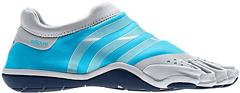
The world's second-largest athletic company unveiled its first "barefoot" training shoe Tuesday, which is designed to mimic the experience of exercising barefoot while providing the protection, traction and durability of a shoe. The Adipure Trainer, which is a cross between a glove for the feet and a traditional shoe, hits U.S. stores in November priced at $90.

The barefoot shoe is part of a strategy by Adidas, which is based in Germany, to expand into the U.S. where rival Nike dominates. Adidas joins a list of athletic makers trying to tap into the small but burgeoning U.S. market of fanatical runners and gym-goers who swear by shoes designed with as little material between the wearer and the ground as possible.

"People who believe barefoot is the way to go...are very emphatic about it," said Matt Powell, an analyst with industry research organization SportsOneSource Group. "They want to spread the message. It sounds religious but some of them are evangelical about it."

The athletic shoe and clothing business has been fairly resilient during the U.S. economic downturn, but it is an industry that thrives almost entirely on new products. When it comes to shoes, the latest and greatest captures the U.S. customer. While barefoot shoes make up a tiny fraction of the $22 billion U.S. athletic shoe industry, it is one of the fast-growing categories. Sales have more than doubled in the past year to roughly $750 million, according to SportsOneSource.

Nike, the world's biggest athletic company, holds roughly 65 percent of the market and appeals to barefoot loyalists and mainstream exercise enthusiasts alike with the traditional running-shoe look of its "Free" line. Vibram has about 10 percent of the market with its Five-Finger shoe, which encases each toe separately and has come to define the style. Other big companies such as Merrell, Fila, Saucony, Asics and New Balance also have their own barefoot or so-called minimalist offerings.

The design of the Adidas barefoot shoe strikes a balance between the two styles. The brightly-colored trainer, which features the trademark Adidas three stripes, covers the foot as a shoe would but with a sock-like fit and toe compartments to allow more natural movement.

"The Adipure Trainer is a unique piece of equipment for elite level athletes that we're bringing to our core consumer," said Patrik Nilsson, president of Adidas North America.
The growing U.S. barefoot market is an important one for Adidas. The company runs a close race with Nike globally, but the gap is much wider in North America.

In their most recent fiscal years, Nike generated $7.58 billion in revenue in North America. Adidas, meanwhile, had roughly $4.05 billion in revenue when translated to U.S. dollars. Nike holds roughly 46 percent market share in U.S., while Adidas comes in at a distant second with about an 11 percent share.
Adidas, which recently has seen its sales improve in North America, has implemented a growth strategy that relies heavily on gaining market share in the U.S. The company said it is trying to connect better to U.S. consumers through new products and marketing.

The company, which has long relied on its strength as a soccer and lifestyle brand, has put a bigger push behind other sports that are big in the U.S. as well. In basketball, for example, it's expanded its products in recent years and signed Chicago Bulls player Derek Rose, who was the NBA's most valuable player this year.

"To be successful is damn hard work day in and day out," said Herbert Hainer, CEO of Adidas speaking from the company's U.S. headquarters in Portland. "It's not just basketball or having Derek Rose or Tiger Woods, or whatever. It's a lot of different things all the time and connecting right with the consumer."
Now, Adidas is trying to connect with the barefoot movement.

The theory behind the use of barefoot shoes is that the body is already optimally designed to move. Science backing up this theory suggests that traditional shoes inhibit that, which can sometimes cause the kinds of injuries that plague many runners. Fans of barefoot shoes say they allow them to better use the body's natural motions and strengths.

The barefoot culture has long had proponents, but it caught on widely in 2009 after publication of Christopher McDougall's book "Born to Run," which explored the history and benefits of barefoot running. The movement got further attention last year when Harvard biologist and runner Daniel Lieberman published a paper in the journal Nature that concluded that running barefoot seems to be better for the feet, producing far less impact stress compared to those in traditional running shoes.

The practice of running in barefoot shoes has been a somewhat controversial topic, though. The odd appearance of the shoes sometimes causes heads to turn in parks. Some races across the country will not allow people to run in them. And some barefoot shoe wearers themselves have reported injuries after using them.

Shoemakers and health professionals say many of the injuries are a result of people using the shoes too quickly. They suggest people trying to make the switch from traditional shoes to barefoot ones do so gradually ---- increasing distance over time ---- to let the body adjust to how the body was naturally meant to move.
"A lot of engineering went into making your foot a high performance machine," said Mark Verstegen, founder of Athletes' Performance, a training and performance organization for elite athletes that works with Adidas. "Using your foot's natural power and movement will help you strengthen muscles you never knew you had in your feet, lower legs and throughout your core."

"Win or lose, we are green."


SHOOT: This speech sounds in parts a bit like a spoof remix.

The Story of Bottled Water


SHOOT: Drinking bottled water is more stupid than smoking. It's thousands of times more expensive than drinking tap water.

Tuesday, August 23, 2011

Interesting facts about South Africa

South Africa has the longest wine route in the world.

South Africa is ranked first in the world for its floral kingdom and South Africa is home to the world's smallest succulent plants (less than 10 mm) and the largest (the baobab).

South Africa has the third highest level of biodiversity in the world.

South Africa is one of the most generously endowed geographic solar hotspots in the world, soaking up just over half of the world's highest category of solar wattage per square metre of land.

South Africa is the second largest exporter of fruit in the world.

There are only 12 countries in the world that supply tap water that is fit to drink, and South Africa is one of them. Our tap water quality is third best overall in the world.

South Africa is 5 times the size of Japan and three times the size of Texas.

South Africa was the world's best performing tourist destination in 2002.

The Lost City Resort Hotel at Sun City is the largest theme resort hotel in the world.

South Africa is the only country in the world to voluntarily abandon its nuclear weapons programme.

South Africa is the top ranked gold producing country and has 80% of the world's platinum reserves.

South Africa is the first country outside of Europe to gain Blue Flag status for its coastal management.

South Africa has 11 official languages, from A-Z: Afrikaans, English, Ndebele, Pedi, Sotho, Swazi, Tsonga, Tswana, Venda, Xhosa and Zulu.

South Africa has deserts, mountains, escarpments, plateaus, grasslands, bush, wetlands and subtropical forests.

There are 18 000 indigenous vascular plant species in South Africa of which 80% are uniquely South African.

South Africa's hotels, game lodges and restaurants are frequent winners of top global awards, for example, "Best Hotel in the World" by Conde Naste Traveller.

South Africa has the only street in the world to house two Nobel Peace Prize winners - Vilakazi Street in Soweto has houses owned by Nelson Mandela and Archbishop Desmond Tutu.

South Africa offers approximately 1700 conference venues that range from large city conference venues catering for up to 5000 delegates, to small-meeting venues at resorts.

South Africa has the oldest meteor scar in the world. The meteor plummeted to Earth nearly two billion years ago, predating the heady days of oxygen and multi-celled life. The Vredefort Dome was recently declared a World Heritage Site.

South Africa also has the world's most progressive and admired water legislation, and it is making a real difference on the ground. Since 1998 when the so-called "Blue Revolution" began, four million more poor people have access to clean water.

South Africa's Dr Percy Amolis invented the Retinal Cryoprobe used successfully on former British Prime Minister Margaret Thatcher to repair a detached retina. He also removed a cataract from Nelson Mandela's eye that enabled the former president to, for the first time, read a speech without glasses.

The quagga vanished in a frenzy of hunting in the 1800s, but after finding that the DNA is almost identical to the common Burchell's zebra, the species is being brought back from beyond the brink by careful breeding of stripe-challenged zebras.

The highest quality cars in Europe are made in South Africa: BMW's Rosslyn plant was awarded the highly prestigious European Gold Plant Quality Award ranking it first among European plants in quality.

The Transfrontier Park set in South Africa, Mozambique and Zimbabwe is a world first. The 38 600 square kilometre park will be bigger than the Yellowstone National Park in the US, and bigger than Switzerland, Belgium or Taiwan.

The rocks around Barberton in Mpumalanga are some of the most ancient in the world - over three billion years old.

The Tugela Falls is the second highest waterfall in the world, where the water tumbles down 850 metres. [First place goes to the Angel Falls in Venezuela at 979 metres].

Blyde River Canyon is the third largest canyon in the world (and the largest ‘green canyon’). The Grand Canyon in the US is the biggest, and second place goes to the Fish River Canyon in Namibia..

Most of the world's proto-mammalian fossils are found in the Karoo region - along with a 280 million year old fossilized shark.

According to recent studies, the star-watching town of Sutherland in the Northern Cape is one of the most geologically stable places on Earth, yet it has a 66-million year old volcano, not yet officially extinct.

Kimberley may have the biggest man-made hole in the world, but the southern Free State town of Jagersfontein has the deepest vertical man-made hole.

Lake Fundudzi in Venda is possibly the world’s only inland freshwater lake formed by a landslide.

Roger Ebert's review of Cowboy's & Aliens

SHOOT: Here's an excerpt of his review. Love it.

"Cowboys & Aliens" has without any doubt the most cockamamie plot I've witnessed in many a moon. Here is a movie set in 1873 with cowboys, aliens, Apaches, horses, spaceships, a murdering stagecoach robber, a preacher, bug-eyed monsters, a bartender named Doc, a tyrannical rancher who lives outside a town named Absolution, his worthless son, two sexy women (one not from around here), bandits, a magic bracelet, an ancient Indian cure for amnesia, a symbolic hummingbird, a brave kid with a spyglass, and a plucky dog who follows the good guys for miles and miles through the barren waste and must be plumb tuckered out.

Nevertheless Ebert's review is positive. So is mine, due to appear in the Friday 26th of August issue of the Free State Times.

Olivia Wilde is wild [PHOTOS]


Monday, August 22, 2011

Cape Town Cover


I recently received an email asking for images of Cape Town to be used on the cover of a major travel magazine.  Cape Town is an iconic city, so the image has to represent that.  I found a few that have something of that quality...

The View from my Bicycle [COLUMN]


Why don’t you teach your heart to feel - by Nick van der Leek

I recently wrote an article for a major Sunday paper on the 75th anniversary of the SABC. The idea was to take a pleasant walk down memory lane, recalling all the warm and fuzzy stuff surrounding the early days of television. What surprised me was in terms of my very earliest memories, I could remember virtually nothing. Given the huge volumes of TV I consumed as a child, the meagre trickle of memories was bewildering.

I happen to have exceptional memory under the worst of circumstances. I can recall smells, and colors, and exact sentences over the course of years. Some of my memories are extremely vivid, and rich in detail. Which is why I find the mind-swipe that is TV memory quite sad.

I was able to jog my memories by googling a list of SABC movies in the 70's and 80's, and of course, with the help of a list a lot of TV memory came swishing back. But I think there is a reason TV/movie memory is expendable. Because we achieve absolutely fuck all when we're sitting on our asses watching shit happen. All we learn, perhaps, is the art of doing nothing, and being losers.

Which is why this piece of writing, which I picked up recently in the Energy Bulletin made an impression:

one of the advantages of time is that the most forgettable things get forgotten; there was a huge amount of vapid popular culture in the 19th century, for example, but only the most erudite specialists know much about it now. Your chances of finding something worth reading or watching or hearing or doing goes up as time has more of a chance to run its filter on the results. Second, even if what you find is pablum, it’s the pablum of a different time, and will clash with mental habits tuned to the pablum of this time, with useful results. When the visual conventions of a Humphrey Bogart movie strike you as staged and hokey, stop and ask yourself how current popular culture will look fifty years from now—if anybody’s looking at them at all, that is.

That, of course, is the third reason, the one I hinted at a few paragraphs back: current popular culture, like so much else of contemporary American society, is almost uniquely vulnerable to the multiple impacts of an industrial civilization in decline. Fifty years from now, the way things are going just now, the chances that anybody will be able to watch a Care Bears video are pretty close to nil; most of today’s media don’t age well, and all of them depend directly and indirectly on energy inputs that our society can scarcely maintain now and almost certainly won’t be able to maintain for most Americans for more than a decade or two longer. Beyond that, you’re going to need something more durable, and a great deal of what was in circulation before the era of mass culture will still be viable after that era is over once and for all.


If the above rationale from John Michael Greer makes sense, you might want to act on it, and here are his two suggestions:

1. Pull the plug on current popular culture in your own life. Cutting back a little doesn’t count, and no, you don’t get any points for feeling guilty about wallowing in the muck. Face it, your television will do you more good at the bottom of a dumpster than it will sitting in your living room, and the latest pirate zombie romantic mystery, with or without Jane Austen, is better off gathering cobwebs in a warehouse; you don’t need any of it, and it may well be wrecking your capacity to think clearly.

2. Replace it with something worth reading, watching, hearing, or doing. You may well have your own ideas about what goes in this category, but in case you don’t, I have a suggestion: go looking among things that are older than you are.


In my case, I am a writer, and I am often assaulted by the seeming futility of adding to the clutter of mindless entertainment. I would like to do more than entertain with my writing. I want my stories to inspire change, to inspire deeper introspection, to give us pause. I want my stories to lift through popular culture, and not be submersed in it. I don't want to mire people in endless reruns of some Hollywood revenge formula. I want people to feel their personal truth magnified, resonating, in a story which perhaps empowers them to trust in their own capacities to change their world, and communities. Powerful movies with integrity, and conscience, include AVATAR, The Dark Knight, 7, Inception, Revolutionary Road, A Beautiful Mind, American Beauty, Star Trek and others. These films are more than fodder. They nourish the spirit. They lift us up to where we belong. This is what I aim to produce. What will you do to add meaning, and value to not only your own life, but those around you? Because it boils down to teaching your heart to talk. Those heartfelt actions matter, because above and beyond the cacophony of voices, they can be heard and felt.

Take That - Love Love


This is my favorite song at the moment...

You bring me right back down to the earth from the promised land
We’re getting close to the centre of the earth with an honest plan
You’ll never be your mother or your father do you understand
Do you understand

We don’t have too much time here
And time it travels far too fast
We’re not too far we’re down here
Before they take it from our hands

Why don’t you teach your heart to feel
And give you love love
Give you love love
Give it all away
Why don’t you teach your heart to talk
And give you love love
Give you love love
Give me give me what I need

We’ll take you right back down to the earth from the mother land
This is a first class journey from the Gods to the son of man
You’re at the gates of human evolution don’t you understand
Why don’t you understand
Understand

We don’t have too much time here
And time it travels far too fast
We’re not too far we’re down here
Before they take it from our hands

Why don’t you teach your heart to feel
And give you love love
Give you love love
Give it all away
Take That Love Love lyrics found on http://www.directlyrics.com/take-that-love-love-lyrics.html

Why don’t you teach your heart to talk
And give you love love
Give you love love
Give it all away
Why don’t you teach your heart to feel
And give you love love
Give you love love
Give it all away
Why don’t you teach your heart to talk
And give you love love
Give you love love
Give me give me what I need

We don’t have too much time here
And time it travels far too fast
We’re not too far we’re down here
Before they take it from our hands

Why don’t you teach your heart to feel
And give you love love
Give you love love
Give it all away
Why don’t you teach your heart to talk
And give you love love
Give you love love
Give it all away
Why don’t you teach your heart to feel
And give you love love
Give you love love
Give it all away
Why don’t you teach your heart to talk
And give you love love
Give you love love
Give me give me what I need

Maria Bekker: My favorite shots [PHOTOGRAPHY]


Monday, August 15, 2011

Kids and Pets


The View from my Bicycle [COLUMN]

Nationalisation and the Information Bill – Something Smells Fishy
(Political Opinion) by Nick van der Leek


One man, above all, has been spreading divisive talk about nationalization. In fact, the Youth League leader describes nationalization as economic revolution. At every opportunity, Malema has been encouraging his followers to be revolutionaries (economic revolutionaries mind you) because, he says, nationalisation will unite and reconcile South Africans. The punchline is that the poor have every right to benefit.

Meanwhile, a more passionate repartee has emerged elsewhere. “Are we talking nationalization whilst living off the profits of privatization? Is that the sort of revolution we want?” I’m paraphrasing, but this was Ferial Haffajee’s cogent response to ex-Sowetan columnist Eric Miyeni, whose column had about as much impact as a flame thrower on a tinderbox. I won’t go into the gory details, but the crux of Haffajee’s crime, according to Miyeni: He called the City Press editor a traitor to blacks, someone “deployed by white capital”, Miyeni said, who deserved to be lynched. It was a vicious spat, but it masked a far more ominous threat, one I’ll get to in a moment.

First, let’s examine Haffajee’s defense. She questions the following (Miyeni’s) view: “[L]et’s say Malema does have a family trust, that the trust is funded by black business…[who] made their fortune through government tenders. What the hell is wrong with that?” Haffajee answers: “What’s wrong with that is that it’s a text-book definition of corruption and cronyism…and it means politicians end up taking a chunk of the profits that [could] be better…[re-invested] to increase black capital.”

Now it’s useful to put both publications broadly into context. City Press, with almost missionary zeal, has been nailing the Youth league leader, Julius Malema. Recently, the City Press have reached a fever pitch with blistering allegations against the firebrand. Malema, undoubtedly, have felt these allegations hit their mark. Indeed, the singing allegations solicited elaborate reaction from the Youth League (who called a press conference to shadow box with smoke and mirrors), and only a few days ago, Malema claimed he would sue City Press for defamation. City Press are gamely sticking to their guns; they maintain their source/s are accurate, that Malema indeed has a secret trust for funneling ill-gotten gains through tender rigging, which amounts to…what were those words Haffajee used… Ah yes, “corruption and cronyism”.

“I'm taking you to court City Press for defamation of character. In your defence you'll be forced to reveal this ape," he said, referring to the source. But Marothi Ledwaba, the same legal counsel who failed to prevent a prior City Press story on Malema, claimed he didn’t know about plans to sue.

Interestingly, in defending their leader, the Youth League referred to City Press journalists and its editor as "puppets" of "masters" bent on the protection ill-gotten wealth. It’s interesting because Miyeni touched on the exact same topic, in the exact same way, using precisely the same logic. The implications of the City Press allegations are another complaint of corruption by the Freedom Front Plus against Malema. The questions do seem valid. How can someone build a R16-million house in Sandton on a salary of R25 000?

It was within this context of blistering attacks on the Youth League leader that brought about Eric Miyeni’s scathing critique of the City Press editor. Calling Haffajee a black snake suffering from self hatred, Miyeni was quickly fired in the uproar that followed. Justice Malala and Mondli Makhanya wrote an apology on behalf of the Sowetan titled “Sorry, Ferial and all”. Malema charactertistically came out in support of the disgraced columnist, calling him a victim of “white editorial rules” and wanted to meet with the Sowetan to demand an explanation for Miyeni’s dismissal (which says something about the relationship between Malema, Miyeni and the Sowetan vis-à-vis City Press, Haffajee and fact finding reports).

“If you don’t agree with the (media) cabal, they destroy you. We must support Eric,” Malema said. Since Malema explains his instant wealth is the result of “charitable” donations, perhaps his personal vehicle, a R1.2 million white Range Rover, is an aberration. Matome Hlabioa, the sponsor of the handsome vehicle, reportedly received over R200m in tenders from Limpopo province. 
Malema has other trinkets too. According to City Press: Malema has two homes worth R4.5 million which are not mortgaged, a love of Breitling watches which retail at R250 000 a pop, [but] his salary cannot cover his lifestyle – but revelations about his business interests may finally explain where he gets his millions.

How can Malema, and other politicians with their hands in the cookie jar, respond to such derisive reports? And what do Malema’s calls for nationalisation have to do with City Press, and the Information Bill? Well, potentially everything. Imagine that both happen: the ANC nationalise resources and the Information Bill is passed into law. Who will benefit? Immediately, and almost overnight, the ANC and its present leadership will be virtually assured of a longer lease on the reigns of power than present demagoguery permits. Given the state of the economy, and the huge number of dissatisfied and unemployed, South Africa’s leaders must be feeling troubled if not terrified.

It’s possible that nationalisation is unofficial ANC policy. The continued reign of the party, it can be argued, depends on the ANC being able to convince their prime constituents, the rural, unemployed poor, that free lunches are still on the menu, and free money (or land, or gold) is on the cards. Possibly the motive is single-minded greed: ANC heavyweights chomping at the bit for further self-enrichment. The only party-killer in the picture right now, after all, are the newspapers. And the courts. The Information Bill paralyses both. Each time a story leaks, it has the potential to sour both the deals behind doors and the voting public. The Information Bill (also called the Secrecy Bill} allows for an easier flow of capital, a simpler, less convoluted and certainly less risky order of business for the intents of the corrupt.

It is interesting that Cosatu, who are also clearly anti-corruption, are resolutely opposed to the Information Bill. Cosatu, however, are confident that nationalisation is just a matter of time. But a few days ago Cosatu economist Chris Malikane and two ANC bigwigs contradicted one another. Malikane said nationalisation was not a case of if but when, while South African Mineral Resources Minister Susan Shabangu and Minister of Public Enterprises Malusi Gigaba separately called nationalisation talk “harmful”. Finance Minister Pravin Gordhan earlier this year also said that nationalisation was not ANC policy. ANC spokesperson Keith Khoza recently said the ANC has no policy on Nationalisation.

Is it just possible that the ANC are testing the water with Malema, checking public and business response to the Youth League, biding their time as they seek to entrench the Information Bill and secure fortunes (and feet in various doors). Such a secrecy bill will rid the likes of Malema of bothersome allegations and editors like Haffajee for good. And, of course, Malema is not the first ANC politician nor the only one to benefit from nationalization whilst living off the profits of privatization.

There is of course, another alternative. The ANC may be playing both sides, and they themselves may be afraid, and unsure what to do in the interests of the country. What, after, are the best interests of the whole country? By playing dumb (or at least, keeping their cards close to their chest) they avert inflaming the unemployed discontents, and uncertainty keeps the middle class and the capitalists on their toes, and the ANC relatively in control, but juggling both until the game is up.

Note: The original article appeared in the August 12 edition of the Free State Times.

Saturday, August 13, 2011

Desmond Tutu: "Whites benefitted from Apartheid"


SHOOT: Tutu was off his game in this speech. He admits in the beginning that he had a sore throat, and couldn't quite recall the details of the occasion of his speech.
Tutu needs to go to Europe and the States and refresh his memory, that just because you go to a good school or live in a decent home doesn't mean you discriminate. It's time to get people to work, and yes, be less corrupt. Don't blame those who are more successful for the poverty gap, 17 years later.