ZA NEWS DAILY 22/09/10 from ZANEWS on Vimeo.
Wednesday, September 22, 2010


Tuesday, September 21, 2010
Seth Priebatsch - the Scavenger
SHOOT: It's interesting how art and some of the greatest ideas and wisdoms come from what initially appears to be lunacy. I think the place where that magic starts is some sort of intercept between imagination and being a bit manic. Basically an imagination on steroids is going to get you results. See below to see what I mean:
From NYtimes.com
“Elevated” hardly describes this guy. To keep the pace of his thoughts and conversation at manageable levels, he runs on a track every morning until he literally collapses. He can work 96 hours in a row. He plans to live in his office, crashing in a sleeping bag. He describes anything that distracts him and his future colleagues, even for minutes, as “evil.”
He is 21 years old.
So, what do you give this guy — a big check or the phone number of a really good shrink? If he is Seth Priebatsch and you are Highland Capital Partners, a venture capital firm in Lexington, Mass., the answer is a big check.
But this thought exercise hints at a truth: a thin line separates the temperament of a promising entrepreneur from a person who could use, as they say in psychiatry, a little help. Academics and hiring consultants say that many successful entrepreneurs have qualities and quirks that, if poured into their psyches in greater ratios, would qualify as full-on mental illness.
Which is not to suggest that entrepreneurs like Seth Priebatsch (pronounced PREE-batch) are crazy. It would be more accurate to describe them as just crazy enough.
“It’s about degrees,” says John D. Gartner, a psychologist and author of “The Hypomanic Edge.” “If you’re manic, you think you’re Jesus. If you’re hypomanic, you think you are God’s gift to technology investing.”
The attributes that make great entrepreneurs, the experts say, are common in certain manias, though in milder forms and harnessed in ways that are hugely productive. Instead of recklessness, the entrepreneur loves risk. Instead of delusions, the entrepreneur imagines a product that sounds so compelling that it inspires people to bet their careers, or a lot of money, on something that doesn’t exist and may never sell.
So venture capitalists spend a lot of time plumbing the psyches of the people in whom they might invest. It’s not so much about separating the loonies from the slightly manic. It’s more about determining which hypomanics are too arrogant and obnoxious — traits common to the type — and which have some humanity and interpersonal skills, always helpful for recruiting talent and raising money.
Some V.C.’s have personality tests to help them weed out the former. Others emphasize their toleration of mild forms of mania, if only because starting a business is, on its face, a little nuts.
“You need to suspend disbelief to start a company, because so many people will tell you that what you’re doing can’t be done, and if it could be done, someone would have done it already,” says Paul Maeder, a general partner at Highland Capital. “There are six billion human beings on this planet, we’ve been around for hundreds of thousands of years, we’re a couple hundred years into the industrial revolution — and nobody has done what you want to do? It’s kind of crazy.”
ON a recent Saturday evening, Seth Priebatsch is sitting in his office/bedroom in the 26,000-square-foot space that houses Scvngr (pronounced “scavenger”), which he founded in early 2009. Dozens of toy race cars fill a bookshelf on one wall; the other is covered with lists and drawings. The sofa where he crashes in his sleeping bag lies between the two.
He will explain the genesis of Scvngr, and offer a sort of guided tour of his mind, while sitting on a stool in his bare feet, wearing jeans and a Princeton T-shirt. A pair of Oakley sunglasses are perched, as they nearly always are, atop his head — part talisman, part personal branding.
He is lean, smiley and partial to the word “awesome,” which he uses as a noun — as in “an extra dose of awesome.” He speaks quickly and with what sounds like a Canadian accent, which seems odd because he was raised in Boston.
He first pitched Scvngr as a freshman at Princeton, to a professor linked to an annual business plan contest open to undergraduates and graduates. “I told him I wanted to build the game layer on top of the world,” Mr. Priebatsch recalls. “And he didn’t say, ‘You’re insane.’ So I said, ‘And I want everyone in the world to help me build it.’”
More.
SHOOT: Interesting comment on this story that I don't disagree with:
I've this idea for a game in the US called booleschit. You log into facebook or myspace or scvngr or whatever stupid thing and then you delete your account and live real life and stop thinking that life is being online 24.7
From NYtimes.com
“Elevated” hardly describes this guy. To keep the pace of his thoughts and conversation at manageable levels, he runs on a track every morning until he literally collapses. He can work 96 hours in a row. He plans to live in his office, crashing in a sleeping bag. He describes anything that distracts him and his future colleagues, even for minutes, as “evil.”
He is 21 years old.
So, what do you give this guy — a big check or the phone number of a really good shrink? If he is Seth Priebatsch and you are Highland Capital Partners, a venture capital firm in Lexington, Mass., the answer is a big check.
But this thought exercise hints at a truth: a thin line separates the temperament of a promising entrepreneur from a person who could use, as they say in psychiatry, a little help. Academics and hiring consultants say that many successful entrepreneurs have qualities and quirks that, if poured into their psyches in greater ratios, would qualify as full-on mental illness.
Which is not to suggest that entrepreneurs like Seth Priebatsch (pronounced PREE-batch) are crazy. It would be more accurate to describe them as just crazy enough.
“It’s about degrees,” says John D. Gartner, a psychologist and author of “The Hypomanic Edge.” “If you’re manic, you think you’re Jesus. If you’re hypomanic, you think you are God’s gift to technology investing.”
The attributes that make great entrepreneurs, the experts say, are common in certain manias, though in milder forms and harnessed in ways that are hugely productive. Instead of recklessness, the entrepreneur loves risk. Instead of delusions, the entrepreneur imagines a product that sounds so compelling that it inspires people to bet their careers, or a lot of money, on something that doesn’t exist and may never sell.
So venture capitalists spend a lot of time plumbing the psyches of the people in whom they might invest. It’s not so much about separating the loonies from the slightly manic. It’s more about determining which hypomanics are too arrogant and obnoxious — traits common to the type — and which have some humanity and interpersonal skills, always helpful for recruiting talent and raising money.
Some V.C.’s have personality tests to help them weed out the former. Others emphasize their toleration of mild forms of mania, if only because starting a business is, on its face, a little nuts.
“You need to suspend disbelief to start a company, because so many people will tell you that what you’re doing can’t be done, and if it could be done, someone would have done it already,” says Paul Maeder, a general partner at Highland Capital. “There are six billion human beings on this planet, we’ve been around for hundreds of thousands of years, we’re a couple hundred years into the industrial revolution — and nobody has done what you want to do? It’s kind of crazy.”
ON a recent Saturday evening, Seth Priebatsch is sitting in his office/bedroom in the 26,000-square-foot space that houses Scvngr (pronounced “scavenger”), which he founded in early 2009. Dozens of toy race cars fill a bookshelf on one wall; the other is covered with lists and drawings. The sofa where he crashes in his sleeping bag lies between the two.
He will explain the genesis of Scvngr, and offer a sort of guided tour of his mind, while sitting on a stool in his bare feet, wearing jeans and a Princeton T-shirt. A pair of Oakley sunglasses are perched, as they nearly always are, atop his head — part talisman, part personal branding.
He is lean, smiley and partial to the word “awesome,” which he uses as a noun — as in “an extra dose of awesome.” He speaks quickly and with what sounds like a Canadian accent, which seems odd because he was raised in Boston.
He first pitched Scvngr as a freshman at Princeton, to a professor linked to an annual business plan contest open to undergraduates and graduates. “I told him I wanted to build the game layer on top of the world,” Mr. Priebatsch recalls. “And he didn’t say, ‘You’re insane.’ So I said, ‘And I want everyone in the world to help me build it.’”
More.
SHOOT: Interesting comment on this story that I don't disagree with:
I've this idea for a game in the US called booleschit. You log into facebook or myspace or scvngr or whatever stupid thing and then you delete your account and live real life and stop thinking that life is being online 24.7
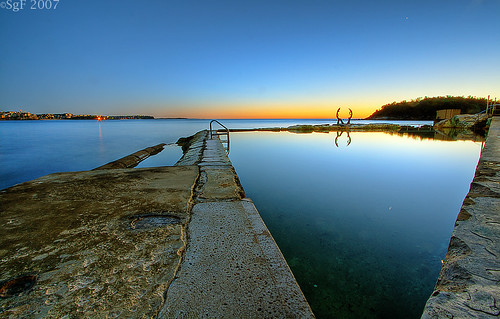
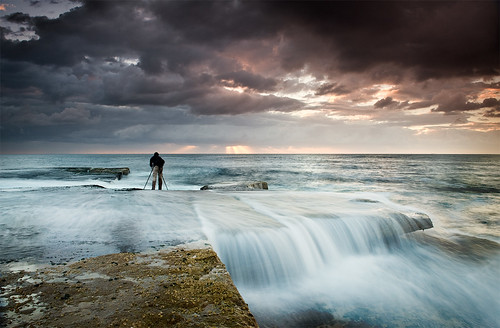
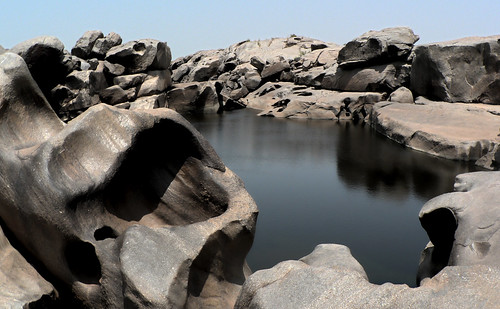
Long Exposure Rock Pool Photos [PHOTOGRAPHY]
From Lightstalking.com: Combining long exposure and moving water often produces haunting images, if you can get it to work. Whether it be streams, rivers, lakes or oceans, the effects can be spectacular. There are a group of photographers mainly centered around Sydney (but also a few other places) who practice long exposure photography on the beaches and rock pools and who are damn good at it. We thought we would show you some of their work.













Monday, September 20, 2010
Kuntler: Puke Time
This is the season when the comprehensive contraction becomes unmistakable and we have to make provision for its mandates: to get smaller, leaner, more local, more earnest, more truthful, and more willing to endure the discomforts of changed circumstances. Read the rest.
The View from my Bicycle [COLUMN]
 I had an epiphany whilst working on an article this week. The premise is about looking at gadgets that athletes often use to enhance their performance. So the idea was initially to gauge the effectiveness of various gadgets. Without going into much detail, the most important asset you have when you're trying to perform at your peak, or simply more effectively, is you. In fact if we're speaking about assets, not even owning your own home, or a car, or what's in your bank account compares to the the asset that is you. Well, a healthy you. A distracted, semi-attentive, stressed and sick you is less of an asset. But a healthy you is the most vital and valuable asset you'll ever own.
Vitality
Consider for example some of those small things we do that we take for granted to make us more effective. It may be a cup of coffee to give us that boost. What if you found a way to boost your own energy. Another trick is training to music or with an iPod plugged into our ears. It is a way to motivate you, sure, and to occupy your mind whilst moving, but there is another psychology to consider too. Imagine if, while you are exercising, you can instead concentrate - in virtual silence - on you. On your goals. And let the inner motivation flow - your thoughts, crystal clear, encouraging you to dance. Because it's important that we know how to do this - motivating ourselves, that whole inner dialogue. On why you are doing what you are doing, and how you should be doing it. Isn't the music a distraction from the pain and discomfort? Isn't it running interference for that vital inner dialogue, interrupting or drowning out the reasons why we are sweating in the first place. And they are good reasons no doubt, we're just out of practise reminding ourselves what they are. And isn't it really important that you listen and feel your body, rather than making exercise another thing we want to escape from, rather than celebrate or at least do so in a fully realised fashion?
Listen and Learn
Another example is the heart rate monitor. Top athletes don't use them. Why? Because they listen to their bodies. They push themselves according to 'perceived' exertion. My guess is they're able to push themselves a lot harder because they know how to listen to their bodies, and better, they know how to respond.
Give yourself a chance to know yourself, and absorb this sense of aliveness. Turn off the distractions, move away from all the entertaining things that ultimately serve little purpose but to amuse us [and waste our time]. You are your most important asset. Respect that fact. And find ways to live by this new knowledge I'm sharing with you today. Apply the hard lessons that require repetition and effort. See if you can do the most vital thing that you need to do, rather than buy or pay for something else that allows you then not to commit yourself personally to making an effort, and being physically and wholeheartedly committed. There is tremendous value in the experience of putting oneself thoroughly in pursuit of a goal. Without background music. Just you.
The next time you do something, do it for you. Strip away the music, the make-up, all the distractions and just be yourself doing what you are doing. And you might find good reasons why you aren't who are, but those same reasons will push you to become the you you've been waiting to be.
Here the lion is still the king

Note: This is a slightly different version [in a more narrative style] than is the article published in Getaway's September issue. I'll leave it to you to decide which you prefer...
With the world cup over, Kruger offers constant escape into a world that is pure and good, cruel but also kind. Here the lion is still the king, even if you’re in your vehicle – by Nick van der Leek
A rainbow lifts over burnished bronze bushveld in the Kruger National Park. We drive under it, Tanya and me, leaving behind rain and Kruger’s very own speedcops [also known as bush pigs], crouched under an umbrella near Phalaborwa Gate. The landscape is gently undulating bushveld with the occasional outcrop. These infrequent natural turrets sporting huge grey boulders are often home to baboons and some or other historical significance. Kruger, God’s own country, is a place that probably hasn’t changed since man first arrived here. Well, other than a strip of tar and the style of the flashing vehicles sliding along these slim corridors.
Kruger’s a big place; the 50km/h speed limit somehow makes the place two or three times bigger.
“The speed limit is there for a reason; look at this,” I say to Tanya. We find a tortoise turned on its back, shell crushed, spaghetti guts spilling out the side.
We also find vultures, dozens of buffalo and elephants browsing on the verge. Up ahead a car is stalled on a verge, heads trained on something invisible to us, but a telltale sign that someone has hit the jackpot. As we slide past he tells us, whispers, “Hyena.”
He drifts away and we take over surveillance. This animal, believe it or not, belongs to the cat family, and a cackle of these mutts are no match for lions. Amazingly we find the animal further down the road, and follow it to a watering hole. We watch as the silver water of a pond makes small circles around his snout has he loudly munches at the water. He then slinks straight towards us, head down, and passes the vehicle for the bush, invisibility cloak back on. It’s these glimpses that make Kruger so exciting.
Tanya tells me that we have to exceed the speed limit slightly if we’re to make Shingwedzi [a quarter of the way from the top of the Park]. From Phalaborwa Gate it’s 131km to Shingwedzi, or 2 hours 45 minutes drive. In winter the Gate closes at 5:30pm and you can get fined up to R1500 for arriving late. Wildlife popping out of the roadside woodwork [lots of vervet monkeys, waterbuck, nyala and birds aplenty] doesn’t make getting there on time any easier, so one really has to plan your trip to allow sufficient time for photo stops.
We rush across the Tropic of Capricorn, and after some debate make a u-turn to capture this moment as well. It’s July, midwinter, but t-shirt warm, and the surrounds have gone from an autumn bronze, a lovely fiery orange in the rain-washed sunlight, to a brilliant, shining green, teeming with buffalo and elephant.
With the sun having just set, 6km left to Shingwedzi, and just 5 minutes to Gateline [Kruger jargon] we find the road in the distance blocked off by a wall of grey. I approach them faster than I would like, and one obstreperous bull lurches forward at us, trumpeting loudly as we sail – now moving slowly – past.
About 2km further we are delayed by a pair of ultra sensitive owls silhouetted against the grey ashes of a cigarette sky. While they’re telescoping towards rustles in the grass, and we have long lenses focused on them, 3 vehicles pass us in quick succession: a reminder – Gateline is fast approaching. We set off, watching the time tick over to 5:31pm. Just around the corner, with around 1km we find all three vehicles stopped dead, abreast of each other, and in their headlights, two beautiful lions, a large male and female, standing in the road.
The female is very relaxed, enjoying the male’s riveted attention, and lounging on the warm tar while the male paces around her, paws her tail, sits, and makes another pass. Finally, one of the vehicles inches forward on the gravel of the right hand verge, and I slide into his slot. The male bristles at this encroachment; the vehicle inches further, and then the male advances with The Look, and the Toyota’s white reverse lights come on, and we’re back where we started. I hover for a moment and try a few moments later down the left verge. As we pass the Toyota the driver says to us, “Not a hell.” I go as far to the left as I can, hover, watch, and then see if they’ll let me pass. The lion lovers are so laid back, they won’t mind me. At about 3 metres the male is up and I hit reverse; next minute the lion is about to run so I stop [they say don’t run away from a lion, does the same apply to driving?], and he abruptly turns and goes back to his fiancé.
“He was right, ‘not a hell’.”
It’s interesting, sitting high off the ground, protected by a powerful capsule of metal and glass, and you have a male lion holding 4 vehicles with fines to pay, at bay. That’s power.
10 minutes later we’re through the gate, none the worse for wear. The lion encounter is a thrilling highlight to close off the day’s game viewing.
Shingwedzi is nestled right beside the Shingwedzi River in mopane country, close – but not too close – to the river’s flood level. This really does give visitors that ‘back to nature’ vibe. Unlike Olifants, which is perched high above that magnificent river, and has awesome scenery but is somehow a little detached from the surroundings, Shingwedzi’s camping sites, huts and bungalows conspire to create a community. So it’s kind’ve cozy. The limited use of paving, the tall palms elbowing the tall thatch cottages and the abundance of squirrel filled trees make Shingwedzi the sort of space that you want to braai in and sit around outide. There’s not much of a view, but isn’t that what game drives are for?
The next morning I visit reception to note the recent sightings. Everything, from leopard, to wild dog, and most of it on a dirt road that starts on the east side of the camp [right behind our bungalow where a Bateleur likes to brood]. So we follow the gravel road [23km along the S50] that skirts the Shingwedzi River. It has dozens of mini loops to get you closer to the river. It is here that we spot our first crocs, and a bunch of terrapins. Further down we see the bloated carcass of a hippo floating in the middle of the river, with a croc fastening a napkin to his throat before thrashing down some lunch.
I do a very dom thing moments later. I get out the vehicle – strictly forbidden – to get a ground level view of a tortoise with a flat shell. Just after clicking the shot a blue vehicle saunters up the road and I dive back into our Isuzu. The lady on our side motions us to roll down the window.
“I wouldn’t do that if I were you; a leopard was in that exact spot yesterday.”
Feeling embarrassed, I try to rationalize to Tanya that I am right at the door of the vehicle, and leopards don’t attack people anyway…I learn later that I am wrong on both counts. Unlike hyenas and lions, leopards are known to hunt and attack people – including adults. They’re also the sort of cats that see you; you’re unlikely to see them. And as a matter of fact, leopards are the only one of the big five that we don’t see.
I suspect we came close. Later the same day, with my camera trained on a herd of impala sunning themselves in the late rays on a straw colored verge, all of them glance suddenly – in unison – at something, and in a wink, they are gone. We hear that characteristic snort/bark that is their alarm call. We never did see what was chasing them though.
The area around Shingwedzi is lovely and teems with life. It’s warmer and greener here than just an hour or so further south, but be warned, William, the manager tells me July is usually full every year.During our visit there is a constant [and let’s admit, irritating] stream of vehicles. Although the rest camps offer drives, sometimes, often, you’ll see more from your own vehicle, and you can take it all in at your own pace.
On our night drive the highlight was two Marshall Eagles sleeping in an Apple Leaf and a Bushbaby that most of us didn’t see [what does that tell you?]. The local ranger, Matthew, says there is a resident pride of 14 lions so you’re virtually assured of seeing these on your visit. Also make sure to visit the Shingwezi Bridge justaround the corner from the camp, where you are allowed to alight from your vehicle and take some photos. It was a very popular spot when we were there, and it’s a lovely place for sundowners and a quick social.
While braaiing under a sky shot through with stars on our last night, and using some locally purchased meat [and it must be mentioned, delicious] in front of our cottage, I point out the headlines in a paper bought at Phalaborwa’s Spar to Tanya. The entire front page of the The Star [June 29] is dedicated to theft – everyone from the new police commissioner, to his deputy, to the ex-president, minister of correctional services, the previous finance minister, the former deputy president, you name it – has been a victim. The World Cup has been a temporary reprieve from this uninterrupted news-stream designed to bring about depression and cynicism. But with the World Cup over, Kruger offers constant escape into a world that is pure and good, cruel but also kind.
If you’re looking for a pot of gold under the rainbow in the Kruger Park, you won’t find it. What you will find is a treasure of another sort - wild animals. Lots of them. And you can do far worse than the critters you’ll encounter at Shingwedzi.
Getaway September 2010 article here.
Soon we'll all be Pig Spotters - Moerdyk

South Africa's latest celebrity, PigSpotter, has proved two very important points.
Firstly, that if the authorities don't get on with cracking down on graft and corruption in its own ranks, the public is going to take the law into its own hands.
Government inactivity and failure to keep promises results in vigilante groups being formed by ordinary people to do the job the authorities should be doing.
To say that vigilantism is dangerous is putting it mildly. Mob rule is an extremely nasty thing.
The second important point is the increasing power of the consumer thanks to social media such as Twitter.
This extremely efficient and easy to use form of communication has proven to be incredibly powerful with two great examples in just a week. Read the rest.
SHOOT: The cops must be quivering in their socks. At last there is someone watching them, eyes and ears everywhere. We should make more use of this sort of social media to self govern, and hold others accountable. Especially in South Africa where so many take their chances on someone elses mint.
Sunday, September 19, 2010
Money is a fiction, not an elixir
This is not a liquidity crisis that can be avoided by printing more money or keeping interest rates on the floor, because real wealth does not come out of a printing press. by Tim Murray
Real wealth must ultimately derive from the use of energy to transform physical objects subject to the laws of entropy. Nate Hagens, the editor of “Oil Drum” put it plainly, “If you go from using a 20-1 energy return fuel down to a 3-1 fuel, economic collapse is guaranteed.”
As the Romans discovered in the last century of their crumbling empire, money is a fiction, not an elixir. People will stop believing in it when they come face to face with a reality that can’t be fooled by confidence tricks and greenwash. When that realization hits, my hope is that they will look for scapegoats, and find them in the financial industry, the universities, the think tanks, the journalism schools, parliament, the media, and last but not least, the offices of environmental NGOs who have accepted donations from banks in return for their accommodation to growth.
Debt must be regarded as a white collar crime of epic proportions which flourishes by custom and want of scrutiny. While Jefferson was right about banks being more dangerous to our liberties than standing armies, their silent partners and witnesses must be held equally accountable. Let them be hung from the lamp-posts as Mussolini was, like a slab of meat on a hook in an abattoir, as befits liars and collaborators.
With apologies to Diderot, I would not rest content until the last politician or banker is strangled by the entrails of the last environmentalist on the take---too busy sucking on corporate tits to alert us to the perils ahead, trying to “manage” growth rather than stop it.
SHOOT: Anger is increasing as wealth dissipates. Someone is going to pay for these shannigans, and there will be a great baying for blood...but in the end, everyone is to blame for their short sighted greed.
Real wealth must ultimately derive from the use of energy to transform physical objects subject to the laws of entropy. Nate Hagens, the editor of “Oil Drum” put it plainly, “If you go from using a 20-1 energy return fuel down to a 3-1 fuel, economic collapse is guaranteed.”
As the Romans discovered in the last century of their crumbling empire, money is a fiction, not an elixir. People will stop believing in it when they come face to face with a reality that can’t be fooled by confidence tricks and greenwash. When that realization hits, my hope is that they will look for scapegoats, and find them in the financial industry, the universities, the think tanks, the journalism schools, parliament, the media, and last but not least, the offices of environmental NGOs who have accepted donations from banks in return for their accommodation to growth.
Debt must be regarded as a white collar crime of epic proportions which flourishes by custom and want of scrutiny. While Jefferson was right about banks being more dangerous to our liberties than standing armies, their silent partners and witnesses must be held equally accountable. Let them be hung from the lamp-posts as Mussolini was, like a slab of meat on a hook in an abattoir, as befits liars and collaborators.
With apologies to Diderot, I would not rest content until the last politician or banker is strangled by the entrails of the last environmentalist on the take---too busy sucking on corporate tits to alert us to the perils ahead, trying to “manage” growth rather than stop it.
SHOOT: Anger is increasing as wealth dissipates. Someone is going to pay for these shannigans, and there will be a great baying for blood...but in the end, everyone is to blame for their short sighted greed.
Snapshot of the US economy
You are invited to review a snapshot of the US economy, as it stood on Saturday, October 10th, 2009, almost a year go, at approximately 3:15 PM PDT. The figures were as they appeared on the “Debt Clock”, and in the instant the numbers were recorded, greater numbers replaced them with terrifying rapidity. A glance at the Debt Clock a day or even an hour after you last looked at it would make the data look quite dated.
Take a look at this:
GDP per person $34, 764
Debt per person $38,802
GDP per worker $ 76,792
Debt per taxpayer $118,000 (changing too quickly to record)
Private debt per person $54,247
Personal savings per adult $ 1, 996
Liabilities per citizen $349,180
Assets per citizen $237,178
In round numbers, these were the expenditures in 2008-9:
Military $618 billion
Social Security $499 billion
Subsidies $ 51 billion
Medicare/Medicaid $643 billion
Interest on the debt $369 billion
Sub-total appox. $ 2.5 trillion
Government bailouts $11.5 trillion
Little more than 11 months later, the Debt Clock has climbed about $2 trillion to $13.39 trillion at the end of August, and about $5 trillion more than it was five years ago. At this pace, the federal government will require $2 trillion in 2020 just to pay the interest. Since September 28, 2007 the national debt has grown by an average of $4.11 billion per day, and the per capita share of this debt has risen by $5330 from October 10th of 2009 to $43,332.28 as of August 31st, 2010. To this add $8100 of consumer debt per person, exclusive of debt secured by falling real estate assets, while credit card charges average $11,300 per cardholder. Some 13% of disposable income in America is now being spent on servicing mortgage obligations and consumer debt. No wonder one in four children rely on food stamps to survive.
More.
SHOOT: I have arguments with people about why the stock markets don't really reflect the true nature [bankruptcy] of markets. These statistics quoted above should give you pause.
Take a look at this:
GDP per person $34, 764
Debt per person $38,802
GDP per worker $ 76,792
Debt per taxpayer $118,000 (changing too quickly to record)
Private debt per person $54,247
Personal savings per adult $ 1, 996
Liabilities per citizen $349,180
Assets per citizen $237,178
In round numbers, these were the expenditures in 2008-9:
Military $618 billion
Social Security $499 billion
Subsidies $ 51 billion
Medicare/Medicaid $643 billion
Interest on the debt $369 billion
Sub-total appox. $ 2.5 trillion
Government bailouts $11.5 trillion
Little more than 11 months later, the Debt Clock has climbed about $2 trillion to $13.39 trillion at the end of August, and about $5 trillion more than it was five years ago. At this pace, the federal government will require $2 trillion in 2020 just to pay the interest. Since September 28, 2007 the national debt has grown by an average of $4.11 billion per day, and the per capita share of this debt has risen by $5330 from October 10th of 2009 to $43,332.28 as of August 31st, 2010. To this add $8100 of consumer debt per person, exclusive of debt secured by falling real estate assets, while credit card charges average $11,300 per cardholder. Some 13% of disposable income in America is now being spent on servicing mortgage obligations and consumer debt. No wonder one in four children rely on food stamps to survive.
More.
SHOOT: I have arguments with people about why the stock markets don't really reflect the true nature [bankruptcy] of markets. These statistics quoted above should give you pause.
Is There Life After Death?
 FROM ROBERT LAWRENCE KUHN, HOST AND CREATOR OF CLOSER TO TRUTH: When my second son was five years old, we held a garage sale. In a halting, squeaky voice, Adam begged me not to sell his beloved tricycle.
“But you’ve grown too big for it,” I said, appealing to logic.
“But I’ll grow up, get old, and die,” he responded cheerily, “and when I’m little again, I’ll have my bike.”
My worldly wisdom collapsed. How did he know about death? We hadn’t discussed death in his presence; no relative had died. Perhaps television, friends? Somehow, death had entered his world. But why was he so sure he’d be back? That was more puzzling. I could detect no antecedent. Perhaps the permanent cessation of life seemed so inconceivable, so discordant with childhood sentience, that coming back just seemed self-evident.
I’d like to live forever ... wouldn’t everyone? I really mean it. Could we survive bodily death? Could our personal awareness transcend physical decay?
It seems absurd. It seems obvious.
Whether there is, or is not, life after death is the most singularly personal question we can ask, and the only two possible answers are in radical conflict. Everything we know about third-person science argues that life after death is impossible, absurd. Should we not follow the evidence of our senses? Yet, everything we feel about first-person consciousness argues that life after death is self-evident, obvious. Should a being who perceives eternity and desires it deeply be denied it?
No mere intellectual inquiry, this. The answer affects us. All of us. Forever. (Although what we conclude, either way, has no relationship to what is real.)
I fear "no life after death," but there is one thing I fear even more: fooling myself into believing that there is life after death when there is not. I struggle to differentiate what I know from what I believe and both from what I hope. Hope can fog belief, and both can distort knowledge.
I step back. How can the question of life after death be assessed?
Read the rest.
SHOOT: Short answer is 'No'. That's why we have sex, so that life can continue after we're dead. So there is life after death, just not for those who are dead.
Oliver Stone turns on Goldman Sachs
 Dinner
 Half-reformed after prison, Gekko is more anti-hero than villain this time. He is still dazzled by lucre, but also determined to give warning of the dangers of excessive leverage. The real baddies are Bretton James and the securities firm he runs, Churchill Schwartz—perhaps the least disguised fictional name ever. Executives at Goldman Sachs are said to be unamused.
James, played by Josh Brolin, is nothing like Goldman’s top brass. He wields phallic cigars, races superbikes and smashes his copy of Goya’s “Saturn Devouring His Son” on a lamp when fingered for manipulating the share price of a rival firm.
But the script is sprinkled with echoes of Goldman: Churchill Schwartz bets against markets that it makes, including subprime mortgages; its credit-default swaps are bailed out at par; and it has friends at the Treasury. An exposé of the firm, written by Jake Moore, a disillusioned prop trader and the film’s central character, begins: “The first thing you need to know about Churchill Schwartz is that it’s everywhere.” A damning Rolling Stone article on Goldman in 2009 opened with precisely those words, the name apart. Read the rest.
SHOOT: Good to see public sentiment turning on these two-faced, dissembling bankers.
Kids that can't pay attention, doing badly at school? Give them aerobic exercise!
Fit children have significantly larger basal ganglia, a key part of the brain that aids in maintaining attention and “executive control,” or the ability to coordinate actions and thoughts crisply.
Since both groups of children had similar socioeconomic backgrounds, body mass index and other variables, the researchers concluded that being fit had enlarged that portion of their brains.
Meanwhile, in a separate, newly completed study by many of the same researchers at the University of Illinois, a second group of 9- and 10-year-old children were also categorized by fitness levels and had their brains scanned, but they completed different tests, this time focusing on complex memory. Such thinking is associated with activity in the hippocampus, a structure in the brain’s medial temporal lobes. Sure enough, the M.R.I. scans revealed that the fittest children had heftier hippocampi.
The two studies did not directly overlap, but the researchers, in their separate reports, noted that the hippocampus and basal ganglia regions interact in the human brain, structurally and functionally. Together they allow some of the most intricate thinking. If exercise is responsible for increasing the size of these regions and strengthening the connection between them, being fit may “enhance neurocognition” in young people, the authors concluded.
SHOOT: Makes sense. Staying indoors makes one stale, physically, emotionally and mentally. More here.
General Motors testing electric Cruze in South Korea

NEW YORK – General Motors says it will launch a test fleet of electric cars in South Korea as it continues to develop battery-powered models of its Chevrolet Cruze.SHOOT: Good news. GM is taking the idea of alternative power for mass produced vehicles seriously. Late start but better late than never.
The automaker will begin the project at the end of October. It is working with LG Electronics on the project.
The Cruze EV demo fleet will be GM's first compact sedan electric vehicles to hit the road and will be powered by batteries from LG Chemical and propulsion systems from LG Electronics.
Clinton's advice to Obama
Yes, tell them what you're going to do, but then go out and do it. Talk then do. Not just All Talk.
Saturday, September 18, 2010
Thursday, September 16, 2010
Beached Humpback Whale [Maitland Beach]

Humpbacks migrate up to 25 000 kilometres a year, in other words, they really get around. They basically eat in summer [at the Poles] then swim like hell to get to the other side of the world and feed at the opposite polar ice cap [during that hemisphere's summer]. On the way they calf in tropical waters sometimes in consecutive years [gestation is just under a year], and the mother has to keep the baby whale going on her own reserves.
Another interesting aspect about these creatures is whale song. Only the male whales sing.
Interestingly there is very little social structure, which means these whales mostly move by themselves. They do engage in co-operative feeding, using a mixture of song and bubble blowing to create a sort've bubble net. This whale is the smartest feeder of all whales, using a variety of techniques and strategies. Humpback calves in Hawaiian waters have sometimes been seen to play with bottlenose dolphin calves.


A second or less after this photo was taken a fast moving wave about 3 feet deep hit me hard, wetting all of my jeans and my back right up to the shoulder level. Not sure how I didn't fall over or drop my camera. The whale washed up at about the same time the Navy arrived [above photograph taken the same day as the others] to do exercises. Coincidence?

The eye is closed, and there seems to be some damage around the eye cavity.

The whale is actually lying on his back.

They have few natural enemies; one is the Killer Whale, which sometimes attack calves. Once hunted to the verge of extinction, there are about 80 000 Humpback Whales in the world today. Correction: 79 999.
Subscribe to:
Posts (Atom)