Simple stratagems to successfully and effectively engage with the opposite sex
First, what is a Casanova: a Don Juan, ladies man, conquistador, a serial seducer of the opposite sex, or in today’s parlance, a player.
With Valentines Day having come and gone, some people’s love life paradigms have shifted sharply into focus. It’s my experience that Valentine’s Day can sometimes bring couples and strangers closer, but more often, the pressure of demonstrating affection perfectly according to someone else’s standards is usually a source of friction on Valentine’s Day. Was it? Hands up who had an argument or even just some bickering on V-Day? This article is for those, and those poor souls who wish they were in relationship to start off with.
Now I’m sure some of you are going: who are you to offer us advice? It’s a fair point. Am I qualified? As any real Casanova will tell you, discretion is one of the strongest virtues you will need. What I can tell you is a group of 30 girls on a cycling tour voted me (and not my 29 male companions) as Mr. Casanova, so let’s take it on their authority. As far as I know though, the vote was not unanimous, which may be a good thing.
So let’s get started. The most basic trait of a Casanova is this one:
- be friendly. It may sound simple, but obviously if you’re walking around cursing and muttering under your breath, it’s probably going to be tough to approach other people with an open mind, and it’s going to be tough for them to approach you. Also, friendliness begets friendliness.
- smile. Well, it’s not quite as simple as that. I’m not referring to an artificial camera-in-your-face-smile, I’m saying you need to try to wear your feelings comfortably on your face. People like people who communicate openly with their bodies, and most particularly, their facial gestures. Guy’s are especially hard to read. Guys – show your feelings on your face. If this is a tough one for you, spend time figuring something to smile about before stepping out your door each day. That’s can be a significant mental step you make each day, and it can make the world of difference
- pay attention. Notice what is going on around you. That means, if there’s sport on television, or you’re busy with something, try to find the capacity or the space to move beyond your attention’s pan, and try to pan beyond, to include other people in your viewfinder. This could be at work, on a bus, anywhere. Paying attention also means being attentive to what others might need. It means remembering people’s birthdays, remembering the details in people’s lives the same way you like the things you like done in a certain way, and remembered on your behalf. Paying attention can also mean actual giving.
- listen. Chances are, if you don’t score well with the first three, you’re a dismal listener. A good listener shuts up and listens. It’s simple, but not always easy. Don’t listen in order to comment or judge or provide feedback. Listen in order to get to know the other person better. First seek to understand. You might find you discover a great deal in a short space of time. If you listen, it’s likely they will listen to you too (but not necessarily). Listen, learn and then, especially when specifically asked, provide your response. Choose your works carefully, and speak as honestly as you can.
- make plenty of eye contact. Enough said.
- touch. Please note that the first five tips are really about spending some time getting to know the person you’re intending to seduce (or at least, getting to know), but they’re also going to allow you to get to know who are as you put yourself in a place where you’re exposing yourself to someone else’s world. Touch is where the stakes change. Touch is very personal, so use sound judgment here. Touch is about trust. Forearms and shoulders, the back of the head perhaps for starters.
- talk. In this game you first talk the talk before you walk the walk. Knowing how to talk to someone is an art, and it’s where you can tell whether someone is charming or not, whether they do it for you (beyond mere appearances) or not. The eyes may be the window to the soul, but the voice is the door to the heart, and the words you use, a path into the mind of both people in a conversation. Obviously adapt what you say depending on the person. Someone who is shy will need you to take the lead in talking and setting the pace, but they’ll be more sensitive to what you’re saying, so watch carefully for cues. Someone who is particularly garrulous will probably want someone that can stimulate them, or understand them, or both.
I think if you want to have a good experience with the opposite sex you have to be fascinated by them, curious, and interested. I am and it certainly helps, because it shows. Be as honest as possible, even about the details, but let’s face it, sometimes it’s easier to tell a big lie in the beginning. Try not to. As far as possible, be true to yourself. Deceiving others in the end is demeaning to the both of you, and you’ll end up not feeling self-congratulatory but bitter about hurting someone else. If you can be yourself and get the girl, that’s the kick you want.
Another paradigm to bear in mind is this one: No Rules. Of course it does depend on the individual. Some will make their boundaries according to a list, others according to their religion, and others according to pure appearance only or to those they envy. The fewer rules, the shorter the list of must-haves in your search for love, the easier, more enjoyable and likely happy the experience will be. Many people get stuck on appearance, and so did I once upon a time. Why? Because it’s the obvious place to start. We start by noticing someone who looks attractive. You may have noticed that I didn’t even mention appearance in the above 7 stratagems, simply because it’s overdone (but not unimportant).
Like many young bucks, I started out dating a model and so my first three girlfriends were all models. Boy can they give you a hard time! Throw away the rule book. Is someone you know, or like, divorced, or with children, or a bit short, or bit too this or a bit too that? Be a little flexible and take a step. A small step isn’t a commitment; it’s just a small step. Going through a Casanova Stage (that’s probably Cinderella for the girls) is helpful for a while, because you learn what you like and you explore your personal power and develop your ability to charm and seduce. It’s really about your internal journey towards who you are and knowing who you are. It’s when this continues for too long, where you’re in love with being in love, and you know you’re being immature and greedy, and breaking hearts left and right (and finding your own heart becoming emptier and emptier)anyway, that it becomes self defeating.
It’s my experience though that few people graduate from the Casanova/Cinderella Stage; instead they quickly marry the first or second prospect that comes along, and then the babies roll out. This is usually at a youngish age. Not good. Today, given the complexity and pace of society, we need far more time not only to find ourselves, but to find our feet. Bachelors today, for example, are expected to spend more time alone than in a relationship, and thus are investing more in bachelor pads that are not just stylish but functional and livable. Give yourself time to find your space, and your place, before you choose your Cinderella.
The idea is to treat women as human beings, not as objects. Doing so assures success (for both players). There are plenty of men who use the ‘hit and run’ method, or simply play ‘the numbers’. It’s up to the woman to accept the man's attentions or not, and obviously the more acceptably (honestly and sincerely he behaves, the better the chances of mutual fulfillment. My recommendation is to be as true to yourself and as honest as possible, that way you save everyone (including yourself), a lot of pain. It also allows for a more rapid response, because in the end ‘having a relationship’ is about interactive communication on a number of levels. To the extent that this is free flowing, it ought to also be satisfying. Treating the opposite sex as an adversary or worse, the enemy, and employing tricks and deception is counterproductive and only effective over the very short term. Word spreads quickly, and so does the karma you’re employing. Be careful to manage your image over the longer term, if you expect to be playing the field further than just today.
In the movie Dangerous Liaisons, it’s interesting to see that the Casanova Game can go wrong (or is it right), when someone comes along that is genuine, and you’re ready to be – how can I put it? Disarmed. Of course, by being genuine, by talking and listening, you (the Casanova) runs the risk of really liking someone. That’s the reward for finally learning to play the game with sincerity and with minimum contrivance.
A good place to be is The Retired Casanova. You’ve experienced enough to know what you want, and you’re ready to seize the person who next makes your heart melt, and for the right reason. If you do embark on the Casanova Stage, make sure you graduate, and do so with honor!
Thursday, February 15, 2007


Wednesday, February 14, 2007
<>
Came in to work a lot earlier today. Am feeling the effects. Need to get into the sunlight soon or my skin my suddenly turn to an ash color.
Adelle Swiegelaar's birthday today, and the usual Valentine's Day spam.
Have heard topCar aren't interested in Jugular so am quite disappointed about that.
Will amputate and transform as needed and then submit. Writing articles for magazines is a lot tougher, especially when you're continuously busy with something else. It's different when you go somewhere or do something with the overt intention of converting it to a story. Nothing's impossible though.
Think I must write a story for tomorrow titled: How to be a Casanova (without really trying). Although that's not quite how I'm feeling today. Feeling a bit sad and flat actually, and not so much for myself.
Adelle Swiegelaar's birthday today, and the usual Valentine's Day spam.
Have heard topCar aren't interested in Jugular so am quite disappointed about that.
Will amputate and transform as needed and then submit. Writing articles for magazines is a lot tougher, especially when you're continuously busy with something else. It's different when you go somewhere or do something with the overt intention of converting it to a story. Nothing's impossible though.
Think I must write a story for tomorrow titled: How to be a Casanova (without really trying). Although that's not quite how I'm feeling today. Feeling a bit sad and flat actually, and not so much for myself.
Mr. President: Can’t you see?
It’s a little late to finally realize what the average South African, and the majority of the population are going through
Actually, it’s very late. In the State of the Nation speech by South African President Thabo Mbeki, crime was finally highlighted as a problem. The man called crime ‘ugly’ and used a few words of empathy to reach a beleaguered populace. It is all the more ironic that the president recognized crime the way he did after a major bank was forced to can a major advertising campaign calling on South Africans to stand together against crime. The government canned the campaign because they feared it would impinge on the President’s image. Of course it would. In fact, by canning the campaign, and the president then making his speech, demonstrates self serving single-mindedness and a selfish attitude to image preservation more than a concern for the nation.
What’s more, it’s crazy that both Mr Selebi and our President must be aware of the shameful levels of crime even in their neighborhoods. The Sunday Times explored this in detail in the most recent edition.
Where I work a car was stolen last week, and another car the week before. One of the incidents is captured on CCV TV, and it’s obvious that the thief found his target, made a number of passes (first breaking a window, then returning to release the handbrake etc) before finally towing away the car. It appears that the tow-away vehicle is the same vehicle used to drop staff off at our offices. Of course, I haven’t seen hint nor hair of policemen here, we just have our local security people.
Here are a two more ground level anecdotes, to paint the picture of the average citizen in this country:
Yesterday while jogging I noticed a man walking with a sjambok in one hand, which is essentially a whip, and in the other he was lugging some groceries. The streets simply aren’t safe to walk alone, or unarmed.
Over the weekend, after doing a bicycle race, a gentleman walked by my driveway. My car boot and doors were open, and when I looked up, he continued to walk by, staring intently at the scene before him. I glanced down and up again, and saw he was still staring at me. He disappeared behind a tree and when he reappeared he was still looking at me. Since the suburb where I live has the highest break-in rate in the city, I felt my ire rising. I jogged briskly, directly up to the man, who stood his ground, and asked him what he was looking at. He responded evenly that he was allowed to look wherever he wanted to. I explained the crime levels in the suburb, and told him it made me feel uncomfortable his walking by my home and staring at it, despite the fact that he must have noticed me watching him.
I also told him I was aware of the signaling system being used by criminals, tin cans of various colors planted on sidewalks in front of homes to communicate different levels of security/vulnerability. And I noticed a green Zionist-church star on his shirt, but then there was a camouflage hat on his head, which is military issue. He argued that he had not committed any crime. I finished my venting in the street in front of my door by saying that if his intentions were decent, fine, I apologize, but given the sheer number of criminal activity, he can’t blame me for noticing his behavior. Subsequently I worried that he might scribble my address on a scrap of paper and hand it to a gang. That’s the reality of suburban life in South Africa.
I’ve pondered on numerous occasions the method behind the madness of explicitly ignoring the crime problem. Ordinary people do it, and our leaders seem to have been ignorant too. But people aren’t stupid, and especially not presidents. Even in the cases where presidents might be a little dopey, they have plenty of advisers at their beck and call to point them in the right direction. (Right, of course, is relative.)
Since crime is neither an easy problem to ignore, nor an impossible problem to solve, how is it that our president has basically taken two terms to finally acknowledge crime (first it was AIDS) in terms (words) that are sort’ve, but not quite, adequate to the problem and the wider perception of it. Well, people and corporations, power structures especially, do what they do because there is a payoff. For a long time it’s seemed apparent to me that crime must have some payoff, because the government certainly has been about as ineffectual as it could be on the topic. The first answer that came to mind was this one: Crime is an awkward but effective means to redistribute wealth, and in South Africa, wealth is very unevenly distributed. Our gini coefficient (measuring distribution of wealth) is one of the worst in the world. A second idea: Mbeki and other people in power simply want to erode the power, and will of whites as much as they can. Perhaps not a payoff, but certainly payback. This theory is easy to subscribe to, but when you actually meet leaders like Trevor Manuel, it’s hard to believe that they are motivated more by spite than by common sense, and particularly, that they subscribe more to racial revenge than say, common sense about economics.
Most people are very astute when it comes to economics. Economics is about the flow of money, and if one understands how to flows, a lot of money can be made, streams can be directed into one’s own reservoir.
So, I don’t think Mbeki really has a bone to pick with whites, although I’m not willing to stand up in court and argue the point. I do think there’s a good reason for his intransigence (or at least, a reason he thinks is good). And here it is. It’s less conspiracy theory and more simple economics.
Whenever a South African is murdered, the deceased’s relatives inherit that person’s wealth. There are 50 murders a day in South Africa, and a large proportion are the elderly and infirm. The government has an Inheritance Tax of 25%. Furthermore, security companies are all the rage in South Africa, and Pieter van der Merwe provides the following calculation based on just one province (of 9) in South Africa. Gauteng with 1000 000 households, pays an average of R240.00 per month to security companies. At 14% Value Added Tax, that’s R403 million the government earns. Remember, the security doesn’t prevent crime, it merely responds to it, so the government is happy to see more security companies.
Van der Merwe goes on to do the math on car theft. A thief earns upwards of R10 000 on stealing and fencing a vehicle. Where the value of the vehicle is R500 000 the government gets R63 404 in tax as a direct result of the crime. Moreover, all this criminal activity provides lots of business for insurance companies and plenty of other spin-off ‘work’, including an industry dedicated to tracking stolen vehicles (there are television commercials from these companies each night), as well as industries dedicated to securing the home (doors, windows etc). These benefits have not really translated to the area one would expect it most, which is the police. The police remain understaffed, but have a fairly good record of effectiveness. Even so the police are seen by the public as corrupt, and presumably the government doesn’t mind that perception, because nothing is done to advertise or promote the South African Police.
So instead of wailing into the great blue bowl that is the South African sky: “Mr. President, can’t you see? Can’t you see? You’ve left me drowning…” I’m sure the President can see, and does see very well.
Perhaps there is a method to this madness. And those – those many – who employ it need to be removed from their plush offices, and people, real people who are really for the people, instituted in their place.
Failing that, there is a way to combat the vicious ‘Crime Pays’ triad – which enriches government, criminals and associated industries. It’s simple: all crimes that result in insurance claims ought to be bracketed as tax free. New laws will have to be made, which will also require new lawmakers (most probably), but in this way the government, and its leaders, can no longer personally benefit from crime.
Thanks to Pieter van der Merwe’s email sharing salient insights to the ‘Crime Pays in South Africa’ Theory.
Tuesday, February 13, 2007
Celebrating Valentines Day As A Singleton
by KC Morgan (from Ohmynews International)
If you consider Valentine's Day to be a slap in the face, then you're probably single. Not everyone wants to celebrate, because not everyone is a couple. What about a Valentine's Day for singles?
The stores are filled with chocolates, and the media is filled with talk of love, but Valentine's Day is one holiday where the public is definitely split. Relationship-oriented events and holidays can make singles feel bad, but there is good news. In many places, the single population outnumbers that of the married populace. That means, there are probably more people who are not getting into the Valentine's Day spirit of coupledom. Celebrate being single on Valentine's instead, and turn this Two Holiday into a day of fun for one.
Get together with other singles to enjoy the day. Spending the day with others who are without dates can make Valentine's Day seem like a day for singles, instead of one for couples. Some friends may even exchange small gifts, to further celebrate their singleness. Candy and flowers can still be enjoyed -- and you will probably enjoy them just as much as if they were given by a boyfriend or girlfriend.
For some, Valentine's Day may be a chance to remember why they like being alone in the first place. Spend the day doing things you enjoy doing, things you want to do, and things you probably wouldn't get to do if you had another person to worry about. Being single isn't cause for tears, but for tons of enjoyment. Remind yourself why it's great to be single, instead of just feeling alone during Valentine's Day.
There are many ways to celebrate Valentine's Day that don't include having a date. One thing that's very hard to do, however, is ignore Valentine's Day completely. So many others will be celebrating, and advertisements are everywhere. It's too hard to skip over the day, and Valentine's is often one holiday that refuses to be ignored. Don't try to hide from Valentine's, even if it means admitting you're still a single. Find a way to make it great instead, because holidays aren't something you can hide from. Being single shouldn't mean that you have to hide from anything, and certainly not a day.
Valentine's Day may be a holiday all about love, but it isn't intended to make singles feel bad. Celebrate other types of love by telling people close to you how special they are. Remember, the world is full of love, and even single people have plenty of it in their lives. Valentine's is a celebration of all kinds of love, including the love you have for yourself. And when you look at it like that, being single definitely doesn't sound so bad.
If you consider Valentine's Day to be a slap in the face, then you're probably single. Not everyone wants to celebrate, because not everyone is a couple. What about a Valentine's Day for singles?
The stores are filled with chocolates, and the media is filled with talk of love, but Valentine's Day is one holiday where the public is definitely split. Relationship-oriented events and holidays can make singles feel bad, but there is good news. In many places, the single population outnumbers that of the married populace. That means, there are probably more people who are not getting into the Valentine's Day spirit of coupledom. Celebrate being single on Valentine's instead, and turn this Two Holiday into a day of fun for one.
Get together with other singles to enjoy the day. Spending the day with others who are without dates can make Valentine's Day seem like a day for singles, instead of one for couples. Some friends may even exchange small gifts, to further celebrate their singleness. Candy and flowers can still be enjoyed -- and you will probably enjoy them just as much as if they were given by a boyfriend or girlfriend.
For some, Valentine's Day may be a chance to remember why they like being alone in the first place. Spend the day doing things you enjoy doing, things you want to do, and things you probably wouldn't get to do if you had another person to worry about. Being single isn't cause for tears, but for tons of enjoyment. Remind yourself why it's great to be single, instead of just feeling alone during Valentine's Day.
There are many ways to celebrate Valentine's Day that don't include having a date. One thing that's very hard to do, however, is ignore Valentine's Day completely. So many others will be celebrating, and advertisements are everywhere. It's too hard to skip over the day, and Valentine's is often one holiday that refuses to be ignored. Don't try to hide from Valentine's, even if it means admitting you're still a single. Find a way to make it great instead, because holidays aren't something you can hide from. Being single shouldn't mean that you have to hide from anything, and certainly not a day.
Valentine's Day may be a holiday all about love, but it isn't intended to make singles feel bad. Celebrate other types of love by telling people close to you how special they are. Remember, the world is full of love, and even single people have plenty of it in their lives. Valentine's is a celebration of all kinds of love, including the love you have for yourself. And when you look at it like that, being single definitely doesn't sound so bad.
Early Bird
Went for my usual route this morning. Bright, and crisp, with a bit of wind ripping around. Went in yellow and felt that my legs were still a bit fatigued from Saturday. Did a few hard pushes, past 165.
Time: 1:16
Distance: 36.5km (hills)
Maximum HR: 167
Got in to work at 10am. Had lunch with Tarryn which was a nice change. What am I going to do tomorrow? Be miserable? Think I'll go and swim after work or something.
Time: 1:16
Distance: 36.5km (hills)
Maximum HR: 167
Got in to work at 10am. Had lunch with Tarryn which was a nice change. What am I going to do tomorrow? Be miserable? Think I'll go and swim after work or something.
The God Juxtaposition
Beliefs infect hearts and minds because they are based on the powerful parent/child imprint
Over the Festive Season, I wrote 7 papers, and in one I compared Christianity’s success as a belief system to that of a virus, and I quoted a number of factors that supported the infectiousness and stickiness of the underlying psychology (the hero traits common to plenty of others gods and heroes, including Dionysus and Mythra for example). I’d like to have a look at the simple inner mechanism that makes us susceptible to contagious psychologies, and why ‘belief’ feels incontrovertibly ‘right’ even though it is evidently delusional but based on some principles and truths.
Having been overseas for as long as I have, it is shocking to return to South Africa and realize what a powerful hold religion has on a great number of local hearts and minds. It’s not necessarily a bad thing, I sometimes think, because at heart, Christianity and other religions are ‘good’, right? Well, as any Christian can tell you, half measures aren’t good enough. Something is either good, or it isn’t. Well, I mean to apply that standard to Christianity. Being a Christian for the wrong reason is living in a delusion, and the consequences can be extreme. George W. Bush is a poster child for modern Christianity (so is his dad). The Christian ilk can thus be seen as a well meaning bunch of pretty ugly, self righteous zealots who are capable of incredible stupidity, incredible violence, all in the name of their definition of ‘good’, and ‘peace’. The war in Iraq is an example of the silliness of Christianity, where a threat is colored in as ‘doomsday adversary’ and wiped out. No one of the Christians who penned their signature authorizing the use of shock and awe against their Anti-Christian adversary (Iraq?) saw themselves as they really are: murderers on a self righteous, self ingratiating mission. Iraq was not a mission of necessity, but a mission built on the popular belief of 50% of American citizens that a war would ostensibly be about ‘good’ versus ‘evil’. Obviously the underlying demographics of the Iraqi’s was not a byproduct of this decision, it was completely ignored. Even when good was as powerful as an elephant, and evil as effectual (vis ?avis an elephant) as a rat, it was spun as a war in the name of self preservation. All that the American elephant has managed to do in Iraq is time a few good kicks to the rat’s mouth, knocking out a few teeth, and a few stomps to the tail. But Iraq is a mere distraction in the context here.
What I really mean to say is this. I was listening to a song playing on my car radio this evening. OFM dedicates Sunday evenings to many hours of religious based content. The song was about ‘God reigns’, and I was wondering what the payoff was in singing, in a reverent tone, about something apparently so self evident? Why is it that we sing songs in church that are so obvious and self evident? Self hypnosis? When I’m in my car I don’t sing that I am driving, or that I am going 100km/h. A child, of course, might do that.
So instead of turning it off I listened to the rest of the song. It wasn’t easy because it felt a little like listening to a home-shopping channel on TV, in the sense that you know it’s trying to sell you something, and you’re not in the mood to be convinced you need anything. Anyway, I listened, and the song went on about God being the father of ‘all the nations’. In the warm happy bosom of the song, that sounded nice. Then, it made reverence to us, calling us ‘children’. Even us adults. So God is portrayed as a great powerful father. That would also be nice. A big father for everyone to turn to. And he’d look after us. Especially if your real father has died, and you’re an adult without one, that would really be very very nice. The song went on to say, over and over again that God is the only God for all the nations, the only father. Very nice, very simple. One powerful ? I almost said person ? God, that sort of looks after everyone. Is that right?
Well the catch is he isn’t just there looking after you. You have to do something too. Even though he obviously exists, you have to believe in Him, sings songs about this, demonstrate to others that you believe this (even though it is supposed ton be obvious) and follow all sorts of codes and guidelines. Depending on where you go, you may have to be born again, baptized in the holy spirit, meaning you’ll speak in gibberish and be given ‘fruits of the spirit’. Before we get lost in the details, the point is that the simple song works on its own, but beyond the dreamy premise there is plenty that contradicts the underlying psychology. One of the reasons that Christianity works is because people can pretty much pick and choose what works for them, and what doesn’t: meaning, it’s a custom-friendly belief system. That’s an easily made point, and one Christians will fiercely refute, crying that ‘their’ psychology is the only, best, true reflection, and that anything else is nominal. Meanwhile, quite a few subscribers with different perspectives of the same thing are also holding up the nominal card. Oh but they’re nominal Christians, we’re onto the truth. Which is exactly what the deal is with the whole world: we’re right, you’re wrong. We have God’s sacred blessing, you’re lost and doomed etc.
While the initial imprint I get from the song works, when you examine it further it does become more interesting. God isn’t only a Father, he’s a Son. He’s also a ghostly sort of apparition (that’s everywhere), so you can pretty much take what you want. I like the ghostly apparition everywhere part, because it comes closest to my definition of God, which is the underlying consciousness of everything in the universe. Or put simply: all that is.
Meanwhile, whoever you are, you can identify with the Son, if you like, or you can be more reverent and put God in the sky (off the Earth). God can be immediate or distant, personal or impersonal, whatever suits you.
Get real. God, the God Christians claim, is nowhere near the father of all the nations. Not even the Jews (and Jesus was Jewish) believed that. Jesus is depicted in some cultures as an African or as an Asian, and slightly-funny as that may seem, it’s not less ridiculous than claiming God to be this sovereign God of all the nations. In reality, God as a psychology of energy and intelligence does breathe through the tissues of everything, the living, and the inanimate rocks. So there the imprint works. But sorry, in the reality of a religion called Christianity, the Christian-God is not the Father of all nations. Not even close. Travel a little and you may find that out. Only 25% of Koreans believe in Christianity. Buddhism is an amazingly sensible and benign belief system integrated with nature. Have Buddhists ever gone to war? In some Muslim countries like Pakistan and Afghanistan, the percentage of Christians dives to single digits. Large parts of Europe have become entirely secularized. These are intelligent, university educated populations that experienced both World Wars and experienced God’s Lordship then.
It’s also not true that God doesn’t exist. If God exists in someone’s mind, that is a claim to existence, however fickle. More potent though is the fact that faith and focus drive human behavior. Faith can bring about some positive results, based on our beliefs. The same is true of being positive, and living an affirmative life (because that is also based in faith in oneself, and in the world). Human behavior equals actions, and if your life is put into the service of God, and you’re an acknowledged instrument of God, then God’s actions are your actions. Well, hey, that’s pretty convenient too. And we’re told he is going to show up, very soon, but maybe in thousand years as well. Thanks for the blueprint, now we know exactly where we are.
No, when you really think about it, Christianity is absurd. Why it is not perceived to be absurd, and why so many Christians reading this article right now are feeling very unloving, un-Christian indignation and self righteous anger, is because believers do not think. They’re not allowed to. Faith, after all (the best display of faith), precludes thinking.
When we are irrelevant, and God is pulling all the strings, it’s a fabulous excuse to let ourselves off the hook. After all, God’s in control right. It’s up to him to set things straight right. It’s his plan isn’t it? God is none other than the God of Blame. The Christian payoff is about one thing, and one thing alone: uncertainty. The rationale, the buy in behind the elaborate scam is to comfort us about uncomfortable things like the end of our own existences, and about essential and difficult things we need to face and do. But we don’t. We pray and hope and let God sort it out, but in the end, someone goes out into the world and that’s how something happens. Not very effective.
We created God in our image, and then God returned the favour. He made a world in our image. I’m sure my saying that rings a bell in the most hardened of hearts. Do you know what that is? Self evident reality. God’s world is our world. Just look at it. All of this is our doing. Is it a world to be proud of?
Meanwhile, God is somewhere else, undoing, harmonizing the hell we unleash daily on this planet. The harm we did, and continue to do to ourselves, and on all other life, we do in his name.

Kunstler: Obamamania
February 12, 2007
Note: the price of oil went up almost 20 percent over the past ten days from near $50 a barrel to $59. Neither CNN or the New York Times (or any other mainstream news org) made mention of this from the close of business Friday to Superbowl game time on Sunday night. Earth calling the US media. . . .
From Texas geologist Jeffrey Brown in Dallas
Matthew Simmons (author of "Twilight in the Desert") appeared on Bloomberg TV January 31:
"We have hit peak oil," Simmons said.
The fall in production at Cantarell (Mexico), the North Sea, and other places — totaling up to 1 million barrels — will not be made up by new production coming on line during 2007.
Simmons went on to say that oil is vastly underpriced and has a value of $300 per barrel – although that is not exactly a prediction. He did not make specific predictions as to the price of oil. Simmons said there is potential to find oil way off shore and other previously unexplored places, but such exploration will be expensive. Simmons concluded that within two years, the problem of Peak Oil will become so well known that it will be more widely discussed than global warming.
Jeff Brown's own comments:
Saudi crude oil production started falling five months after Matt Simmons’ book came out, warning about a Saudi production collapse. Saudi Aramco and Pemex (Mexico) are both cutting crude oil deliveries to refineries, below what the buyers want to buy. We know that Cantarell, the second largest producing field in the world, is crashing. I suspect that Ghawar (Saudi Arabia), the largest producing field in the world, is also declining or crashing. Note that world crude oil production, based on EIA data, has been continuously below the May, 2005 peak, since 2005.
You've really got to feel sorry for whoever gets sworn in as president in 2009. Whichever of the candidates gets there, he or she will be walking into a shit storm of trouble much worse than the domestic political turmoil that Lincoln faced in 1861.
By January 2009 we will surely be reeling from the "work out" of peak financial excess represented by the hedge fund fiesta and the reckless mortgage fiasco (from which the housing industry as we have known it will never recover). By 1/20/09 (inauguration day) the global oil crisis will be accepted as self-evident even by Cambridge Energy Research Associates (and its clients in the oil industry). By 1/20/09, we will have gone through two more global warming hurricane seasons. By 1/20/09 we will have spent several hundred billion dollars more maintaining our garrisons in the Middle East and elsewhere -- and the strategic concerns that have required them will still be there.
This translates into severe socioeconomic hardship at home and deteriorating influence on the geopolitical scene. Under the circumstances, Senator Barack Obama seemed perhaps oddly serene in last night's interview on CBS's "60 Minutes" with newsman Steve Kroft. It was not an idle, unmindful serenity, though. Obama, who spent many childhood years in Hawaii, seems to know what it's like to stand on the beach and watch a killer wave roll in. Just knowing that the killer wave is only one in an infinite succession of waves that will roll in eternally lends more dimension to this essentially tragic view -- and the tragic hero is typically the person required by destiny to get hammered by the killer wave, but goes forth to greet it anyway. Perhaps Obama's most appealing quality is his stoicism in the face of this awful assignment.
His most telling answer was to Kroft's question: "Why are you in such a hurry to become president?" Obama replied succinctly that "we may not have ten years" to get our national act back together. By saying this, he managed to get across what most Americans over eleven years of age must suspect in their heart-of-hearts, no matter how hard they are partying, or working to cover their re-set mortgage, or praying to Jesus: that circumstances will compel us to live differently, whether we like it or not.
Obama's stoicism extends into the minefield of race. He typically refuses to act as a shit-magnet for white America's obsessive guilt, especially the discomfort of "progressives" ever-desperate to prove their moral rectitude by groveling, patronizing, pandering, and disingenuously dancing the brotherhood shuffle. (The recent dust-up over Senator Biden's use of the word "articulate" in reference to Obama was a typical case of white discomfort with the inherent contradictions of their own "diversity" politics.) I would also like to be a fly on the wall of the figurative woodshed when Obama has a one-to-one with somebody like Al Sharpton.
For the record, Obama would be older on inauguration than several other presidents were, and he will have had more political experience than one-term congressman Abe Lincoln.
I would like to be a fly on the wall of the deluxe hotel suite where Senator Hillary tries to shake down Obama with the offer of a vice-president slot on her ticket. Never will Hillary's mouth scrunch into a tighter rictus as in the moment when he stoically tells her to go get fucked (so to speak).
Anyway, Obama's moment of launching has now come and gone. He flared off the pad in Springfield, Ill., last week and now the focus has to shift on what he actually thinks about this country and the behavior of its citizens. For now, he comes off as a straight-talking, competent person, comfortable in a difficult role -- and in these times of disappointment with virtually all authority figures, this is enough to inspire near-hysteria.
There will not have been a longer election campaign season in our history. We have all of this year and most of next to endure before the levers are pulled, or the chads punched, or the touch screens touched -- or whatever new fucked-up technology we devise for voting. The candidates (including Obama) may run out of things to say, or they may be overwhelmed by events. A dark horse may emerge from some surprising quarter and steal their thunder. Maybe next December 24th, Santa Claus will declare he's available for the job. (Americans would like that!) A nuke may go off in an uninspected shipping container in some port city. George W. Bush might impose a 50-cent-per-gallon war tax surcharge on the gas pumps. Who knows. . . ?
Monday, February 12, 2007
Race Report
Time: 2:00:30
Distance: 78.6km (80km)
Average speed: 38.6kmm/h
Heart Rate: 162 (average) 176 (max)
Time per km: 1:32
Energy: 1180kcal
1h38 in red zone
Nice cycle on Jagersfontein road in cool, wet conditions. Ran out of water with 27km to go, so the last 10km weren't that easy.
100km coming up next weekend.
Distance: 78.6km (80km)
Average speed: 38.6kmm/h
Heart Rate: 162 (average) 176 (max)
Time per km: 1:32
Energy: 1180kcal
1h38 in red zone
Nice cycle on Jagersfontein road in cool, wet conditions. Ran out of water with 27km to go, so the last 10km weren't that easy.
100km coming up next weekend.
Endless Summer
Free State under fire: Climate change is clearly happening right here, every day
What we are seeing is daily temperatures soaring to the mid-30’s degrees Celcius, then dropping to the mid-20’s overnight. Over a period of time the soil has become so parched because virtually no rain has fallen. In fact, rainfall for this time of the year is less than 50% of the norm, but the heat is the more worrying aberration.
30 to 40% of South Africa’s 2.7 million hectares (under maize cultivation) could be lost this year due to the extreme heat which continues to persist day in and day out. The central parts, particularly the Free State,where I live, and the North West Province are succumbing to this ’Endless Summer’ scenario.
In a recent article I made the following statement:
The average rainfall for my city (Bloemfontein) in January is 83 millimetres for the month. There are a few days left on the calendar, but so far we’re limping through a dry month with a mere 16.3 millimetres.
As it turned out, no more rain fell in January, and other centres in the region had statistics that were even more off kilter from the norm than here in Bloemfontein.
For February the average is predicted (based on a 30 year mean) to reach 111mm. So far (and it’s more than 33% of the month gone already), we’re still less than 5mm.
Despite these conditions, the South African Weather Bureau are not referring to the conditions as a Heat Wave.
Interestingly, on the radio commentators were stating what everyone was thinking: that we simply cannot wait for summer to end. We simply want some relief from the constant heat. And the locals are unanimous that the conditions - the constant extreme heat - is highly irregular.
Climate models from the University of Pretoria depict long term(30 year) conditions in South Africa’s central heartland becoming 10-20% wetter, but that temperatures are also likely to rise 3-5 degrees Celcius (over the next 50 years).
At the moment it appears that the heat is winning. We see front loaded with clouds, but the hot dry air seems to boil them into nothing.
While 2006 was the warmest year on record, from where we are, it’s likely to be eclipsed by the Endless Summer conditions we’re experiencing here.
Meanwhile, the hot, dry conditions of this 2007 summer season means there is nowhere near enough winter grazing to tide our cattle herds through the long dry winter season. Summer is our rainy season, and here in central South Africa we are supposed to have a lot more rain in summer, and negligible drops in winter. Recently, we’ve been getting none of the vital summer rains we need, and summer heat worse than we’ve ever seen.
What we are seeing is daily temperatures soaring to the mid-30’s degrees Celcius, then dropping to the mid-20’s overnight. Over a period of time the soil has become so parched because virtually no rain has fallen. In fact, rainfall for this time of the year is less than 50% of the norm, but the heat is the more worrying aberration.
30 to 40% of South Africa’s 2.7 million hectares (under maize cultivation) could be lost this year due to the extreme heat which continues to persist day in and day out. The central parts, particularly the Free State,where I live, and the North West Province are succumbing to this ’Endless Summer’ scenario.
In a recent article I made the following statement:
The average rainfall for my city (Bloemfontein) in January is 83 millimetres for the month. There are a few days left on the calendar, but so far we’re limping through a dry month with a mere 16.3 millimetres.
As it turned out, no more rain fell in January, and other centres in the region had statistics that were even more off kilter from the norm than here in Bloemfontein.
For February the average is predicted (based on a 30 year mean) to reach 111mm. So far (and it’s more than 33% of the month gone already), we’re still less than 5mm.
Despite these conditions, the South African Weather Bureau are not referring to the conditions as a Heat Wave.
Interestingly, on the radio commentators were stating what everyone was thinking: that we simply cannot wait for summer to end. We simply want some relief from the constant heat. And the locals are unanimous that the conditions - the constant extreme heat - is highly irregular.
Climate models from the University of Pretoria depict long term(30 year) conditions in South Africa’s central heartland becoming 10-20% wetter, but that temperatures are also likely to rise 3-5 degrees Celcius (over the next 50 years).
At the moment it appears that the heat is winning. We see front loaded with clouds, but the hot dry air seems to boil them into nothing.
While 2006 was the warmest year on record, from where we are, it’s likely to be eclipsed by the Endless Summer conditions we’re experiencing here.
Meanwhile, the hot, dry conditions of this 2007 summer season means there is nowhere near enough winter grazing to tide our cattle herds through the long dry winter season. Summer is our rainy season, and here in central South Africa we are supposed to have a lot more rain in summer, and negligible drops in winter. Recently, we’ve been getting none of the vital summer rains we need, and summer heat worse than we’ve ever seen.
Endless Summer
Free State under fire: Climate change is clearly happening right here, every day
What we are seeing is daily temperatures soaring to the mid-30’s degrees Celcius, then dropping to the mid-20’s overnight. Over a period of time the soil has become so parched because virtually no rain has fallen. In fact, rainfall for this time of the year is less than 50% of the norm, but the heat is the more worrying aberration.
30 to 40% of South Africa’s 2.7 million hectares (under maize cultivation) could be lost this year due to the extreme heat which continues to persist day in and day out. The central parts, particularly the Free State,where I live, and the North West Province are succumbing to this ’Endless Summer’ scenario.
In a recent article I made the following statement:
The average rainfall for my city (Bloemfontein) in January is 83 millimetres for the month. There are a few days left on the calendar, but so far we’re limping through a dry month with a mere 16.3 millimetres.
As it turned out, no more rain fell in January, and other centres in the region had statistics that were even more off kilter from the norm than here in Bloemfontein.
For February the average is predicted (based on a 30 year mean) to reach 111mm. So far (and it’s more than 33% of the month gone already), we’re still less than 5mm.
Despite these conditions, the South African Weather Bureau are not referring to the conditions as a Heat Wave.
Interestingly, on the radio commentators were stating what everyone was thinking: that we simply cannot wait for summer to end. We simply want some relief from the constant heat. And the locals are unanimous that the conditions - the constant extreme heat - is highly irregular.
Climate models from the University of Pretoria depict long term(30 year) conditions in South Africa’s central heartland becoming 10-20% wetter, but that temperatures are also likely to rise 3-5 degrees Celcius (over the next 50 years).
At the moment it appears that the heat is winning. We see front loaded with clouds, but the hot dry air seems to boil them into nothing.
While 2006 was the warmest year on record, from where we are, it’s likely to be eclipsed by the Endless Summer conditions we’re experiencing here.
Meanwhile, the hot, dry conditions of this 2007 summer season means there is nowhere near enough winter grazing to tide our cattle herds through the long dry winter season. Summer is our rainy season, and here in central South Africa we are supposed to have a lot more rain in summer, and negligible drops in winter. Recently, we’ve been getting none of the vital summer rains we need, and summer heat worse than we’ve ever seen.
What we are seeing is daily temperatures soaring to the mid-30’s degrees Celcius, then dropping to the mid-20’s overnight. Over a period of time the soil has become so parched because virtually no rain has fallen. In fact, rainfall for this time of the year is less than 50% of the norm, but the heat is the more worrying aberration.
30 to 40% of South Africa’s 2.7 million hectares (under maize cultivation) could be lost this year due to the extreme heat which continues to persist day in and day out. The central parts, particularly the Free State,where I live, and the North West Province are succumbing to this ’Endless Summer’ scenario.
In a recent article I made the following statement:
The average rainfall for my city (Bloemfontein) in January is 83 millimetres for the month. There are a few days left on the calendar, but so far we’re limping through a dry month with a mere 16.3 millimetres.
As it turned out, no more rain fell in January, and other centres in the region had statistics that were even more off kilter from the norm than here in Bloemfontein.
For February the average is predicted (based on a 30 year mean) to reach 111mm. So far (and it’s more than 33% of the month gone already), we’re still less than 5mm.
Despite these conditions, the South African Weather Bureau are not referring to the conditions as a Heat Wave.
Interestingly, on the radio commentators were stating what everyone was thinking: that we simply cannot wait for summer to end. We simply want some relief from the constant heat. And the locals are unanimous that the conditions - the constant extreme heat - is highly irregular.
Climate models from the University of Pretoria depict long term(30 year) conditions in South Africa’s central heartland becoming 10-20% wetter, but that temperatures are also likely to rise 3-5 degrees Celcius (over the next 50 years).
At the moment it appears that the heat is winning. We see front loaded with clouds, but the hot dry air seems to boil them into nothing.
While 2006 was the warmest year on record, from where we are, it’s likely to be eclipsed by the Endless Summer conditions we’re experiencing here.
Meanwhile, the hot, dry conditions of this 2007 summer season means there is nowhere near enough winter grazing to tide our cattle herds through the long dry winter season. Summer is our rainy season, and here in central South Africa we are supposed to have a lot more rain in summer, and negligible drops in winter. Recently, we’ve been getting none of the vital summer rains we need, and summer heat worse than we’ve ever seen.
Friday, February 09, 2007
6pm Hills
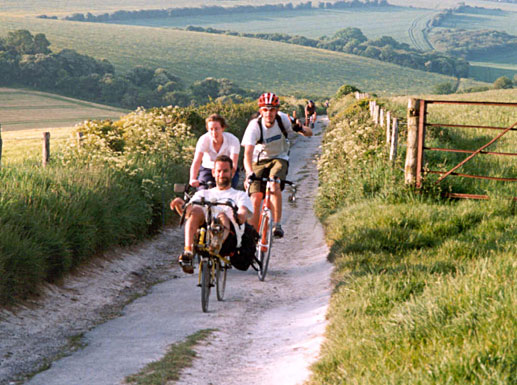
I am starving. Swam in my lunch break and then came back and loaded stories. Stretching myself too thin, like too little margarine over a vast surface of dry bread.
Earlier today I emailed Frans Cronje of Global Creative Studios (they did Faith Like Potatoes and they're about to do 'The Choice'). Did a short pitch of Sunburnt Soil.
What else. Oh, title of this post. Got ought at 6pm yesterday after a short kip for a much needed hill session. Smacked my heartrate up to 171 on the longest section.
Also got this message from Alex:
Well, I am not going to give you a lecture...you are a big boy that needs to motivate yourself to get up in the mornings and train. What I will however do is tell you how far you are falling behind.
I did 1:30 on Tuesday morning. About 1 hour of this at threshold.
Wed: Easy 1:20 (recovery)
Thurs: 1:30 included Hills.
Tomorrow: Recovery ride: 1:30
Sat: 109km Race in VA (Will be hard - over Hekpoort. 4km climb, rest of race is fairly flat) Total climbing will be in excess of 1000m.
Sun: 3 hour recovery ride.
Total riding time for week: Approx 12 hours.
One question for you: Do you want to compete or just be a fun rider?
Serious!
Software Review: MXit

Cheap instant messaging service a big hit
The teenagers are onto something. And no, there’s no catch. In fact, on MXit’s website (www.mxit.co.za - where you’ll get all download instructions), they say: ‘You can access it from anywhere in the world provided that there is GPRS/3G coverage.’
Okay, I know what you’re thinking. What exactly is ‘it’? Well, imagine being able to sms for around 1 cent per sms. You read that right: not R1, 1 cent. Their website provides the following tariff calculation:
200 Moola = 100 messages
1 Moola = 1 South African cent
Give me a moment to talk about look and feel before we go into setup etc. If you have a Samsung phone like I do, you’ll have to go into Applications (this is after going through downloading and installation, see below), scroll down to Java World, then open MXit. You’ll need to have added contacts (names and numbers) just as you would on other messaging services like Windows or Yahoo Messenger. MXit uses JAVA, which means you basically stay connected on one screen, and chat. Sound like a good idea? Well, around 10 000 new subscribers per day think so. And, if you don’t know by now, MXit has recently surpassed the 3 million subscriber mark.
In view of reporter.co.za’s concerns over plagiarism, it’s quite amusing (but probably shouldn’t be) that when you Google MXit (click on the news filter), you get the same story (and please note the date) with one word variations:
MXit reaches the 3 million mark
Bizcommunity.com, South Africa - 1 Feb 2007
MXit connects 3 millionth user
News24, South Africa - 31 Jan 2007
MXit captures its 3 millionth user
iAfrica.com, South Africa - 31 Jan 2007
So, with Naspers making a 30% acquisition in the company, MXit is clearly hitting the big time. And they deserve their success. In South Africa where Telkom manages to strangle free and fair communication (somehow, surprise surprise our internet and our cellular tariffs are also amongst the highest in the world), the initiative (to find ways around the bloated Telkom octopus) from companies such as iBurst and MXit ought to give them Hero Brand status.
Okay, now to set up your phone:
Firstly you need to contact your service provider and ask them to activate your GPRS and to send you your GPRS settings.
I’ll provide Vodacom’s (copied and pasted from the website), because most user’s probably subscribe to Vodacom:
Vodacom:
1 On your mobile, dial *111#
2 Select option 5 (phone settings) from the menu that follows. (Answer -> 5 -> send)
3 Select option 1 to choose your mobile make and model from a list, or options 2 to have Vodacom identify the phone for you.
4 In both cases, simply follow the steps as provided to get your WAP settings activated.
5 You will receive an SMS with your settings, save these settings.
6 If any of the above mentioned steps fail, simply retry.
7 Still having trouble? Call Vodacom’s call centre on 082 111 or visit a Vodacom outlet near you.
Now you can install this useful software:
• go to www.mxit.co.za (on your computer)
• go to ‘download’ and follow these instructions (there may be some variation, so use common sense!):
1. On your mobile, go to ‘services’ (globe icon).
2. Create a new bookmark (www.mxit.co.za/wap) and save.
3. Select this bookmark, then select ‘go to’.
4. You should be welcomed to the MXit WAP portal at this stage.
5. Check that your mobile manufacturer and model has been detected correctly. (If not, select your phone type and model.)
6. Select next
7. Select your country
8. Select your province
9. Enter the image code displayed
10. Select accept
11. Download Normal or Trusted
12. Continue accepting until process is complete
Start chatting
Now you can add all your friends and family as MXit contacts, if they have MXit. If not, they are missing out!
I’m looking forward to decreasing my cellphone bill this month by R100 to R200. Of course, I have to spread the word to all my contacts. The more people who have it, the better for all of us.
The thought does occur to me now that as awesome as this technology is, our countries don’t really need it or care for it because call rates are so low almost no one uses sms’s. But anything that can get under Telkom’s tentacles is good enough for me, for the meantime.
If you know of brilliant free software like MXit, please review it right here.
Published and edited with permission from Gillian Clapham | Business Development Manager
Thursday, February 08, 2007
Sunday on Brighton Pier

Picture courtesy topleftpixel.com
Am I mad? It's 18:38 and I'm still in the office. Oh yeah. It's still damn hot outside. Oh, my Insurance in Plain Clothes story was published on the front page of reporter.co.za today, and picture of a Zastron church four pages further on.
Must write something on this Endless Summer situation...
MX and Match

Image courtesy C. van der Leek
Got up at 6pm but was just too bombed to go cycling.
Just received comfirmation that I'm in C2131. Now there's an incentive to jump out of bed early tomorrow.
Things at work are getting busy. But it's all good.
Wednesday, February 07, 2007

Kunstler: Agenda
The Agenda Restated
Out in the public arena, people frequently twang on me for being "Mister Gloom'n'doom," or for "not offering any solutions." I find this bizarre because I never fail to present audiences with a long, explicit task list of projects that American society needs to take up in the face of the combined problems I have labeled The Long Emergency. That the audience never hears this, and then indignantly demands such instruction, only reinforces my sense that the cognitive dissonance in our culture has gone totally off the charts.
Insofar as I just returned from a college lecture road trip, and heard the same carping all over again, I conclude that it's necessary for me to spell it all out a'fresh. I think of this not so much as a roster of "solutions" but as a set of reasonable responses to a new set of circumstances. (Not everything we try to do will succeed, that is, be a "solution.") So, for those of you who are tired of wringing your hands, who would like to do something useful, or focus your attention in a purposeful way, here it is.
• Expand your view beyond the question of how we will run all the cars by means other than gasoline. This obsession with keeping the cars running at all costs could really prove fatal. It is especially unhelpful that so many self-proclaimed "greens" and political "progressives" are hung up on this monomaniacal theme. Get this: the cars are not part of the solution (whether they run on fossil fuels, vodka, used frymax™ oil, or cow shit). They are at the heart of the problem. And trying to salvage the entire Happy Motoring system by shifting it from gasoline to other fuels will only make things much worse. The bottom line of this is: start thinking beyond the car. We have to make other arrangements for virtually all the common activities of daily life.
• We have to produce food differently. The ADM / Monsanto / Cargill model of industrial agribusiness is heading toward its Waterloo. As oil and gas deplete, we will be left with sterile soils and farming organized at an unworkable scale. Many lives will depend on our ability to fix this. Farming will soon return much closer to the center of American economic life. It will necessarily have to be done more locally, at a smaller-and-finer scale, and will require more human labor. The value-added activities associated with farming -- e.g. making products like cheese, wine, oils -- will also have to be done much more locally. This situation presents excellent business and vocational opportunities for America's young people (if they can unplug their Ipods long enough to pay attention.) It also presents huge problems in land-use reform. Not to mention the fact that the knowledge and skill for doing these things has to be painstakingly retrieved from the dumpster of history. Get busy.
• We have to inhabit the terrain differently. Virtually every place in our nation organized for car dependency is going to fail to some degree. Quite a few places (Phoenix, Las Vegas, Miami....) will support only a fraction of their current populations. We'll have to return to traditional human ecologies at a smaller scale: villages, towns, and cities (along with a productive rural landscape). Our small towns are waiting to be reinhabited. Our cities will have to contract. The cities that are composed proportionately more of suburban fabric (e.g. Atlanta, Houston) will pose especially tough problems. Most of that stuff will not be fixed. The loss of monetary value in suburban property will have far-reaching ramifications. The stuff we build in the decades ahead will have to be made of regional materials found in nature -- as opposed to modular, snap-together, manufactured components -- at a more modest scale. This whole process will entail enormous demographic shifts and is liable to be turbulent. Like farming, it will require the retrieval of skill-sets and methodologies that have been forsaken. The graduate schools of architecture are still tragically preoccupied with teaching Narcissism. The faculties will have to be overthrown. Our attitudes about land-use will have to change dramatically. The building codes and zoning laws will eventually be abandoned and will have to be replaced with vernacular wisdom. Get busy.
• We have to move things and people differently. This is the sunset of Happy Motoring (including the entire US trucking system). Get used to it. Don't waste your society's remaining resources trying to prop up car-and-truck dependency. Moving things and people by water and rail is vastly more energy-efficient. Need something to do? Get involved in restoring public transit. Let's start with railroads, and let's make sure we electrify them so they will run on things other than fossil fuel or, if we have to run them partly on coal-fired power plants, at least scrub the emissions and sequester the CO2 at as few source-points as possible. We also have to prepare our society for moving people and things much more by water. This implies the rebuilding of infrastructure for our harbors, and also for our inland river and canal systems -- including the towns associated with them. The great harbor towns, like Baltimore, Boston, and New York, can no longer devote their waterfronts to condo sites and bikeways. We actually have to put the piers and warehouses back in place (not to mention the sleazy accommodations for sailors). Right now, programs are underway to restore maritime shipping based on wind -- yes, sailing ships. It's for real. Lots to do here. Put down your Ipod and get busy.
• We have to transform retail trade. The national chains that have used the high tide of fossil fuels to contrive predatory economies-of-scale (and kill local economies) -- they are going down. WalMart and the other outfits will not survive the coming era of expensive, scarcer oil. They will not be able to run the "warehouses-on-wheels" of 18-wheel tractor-trailers incessantly circulating along the interstate highways. Their 12,000-mile supply lines to the Asian slave-factories are also endangered as the US and China contest for Middle East and African oil. The local networks of commercial interdependency which these chain stores systematically destroyed (with the public's acquiescence) will have to be rebuilt brick-by-brick and inventory-by-inventory. This will require rich, fine-grained, multi-layered networks of people who make, distribute, and sell stuff (including the much-maligned "middlemen"). Don't be fooled into thinking that the Internet will replace local retail economies. Internet shopping is totally dependent now on cheap delivery, and delivery will no longer be cheap. It also is predicated on electric power systems that are completely reliable. That is something we are unlikely to enjoy in the years ahead. Do you have a penchant for retail trade and don't want to work for a big predatory corporation? There's lots to do here in the realm of small, local business. Quit carping and get busy.
• We will have to make things again in America. However, we are going to make less stuff. We will have fewer things to buy, fewer choices of things. The curtain is coming down on the endless blue-light-special shopping frenzy that has occupied the forefront of daily life in America for decades. But we will still need household goods and things to wear. As a practical matter, we are not going to re-live the 20th century. The factories from America's heyday of manufacturing (1900 - 1970) were all designed for massive inputs of fossil fuel, and many of them have already been demolished. We're going to have to make things on a smaller scale by other means. Perhaps we will have to use more water power. The truth is, we don't know yet how we're going to make anything. This is something that the younger generations can put their minds and muscles into.
• The age of canned entertainment is coming to and end. It was fun for a while. We liked "Citizen Kane" and the Beatles. But we're going to have to make our own music and our own drama down the road. We're going to need playhouses and live performance halls. We're going to need violin and banjo players and playwrights and scenery-makers, and singers. We'll need theater managers and stage-hands. The Internet is not going to save canned entertainment. The Internet will not work so well if the electricity is on the fritz half the time (or more).
• We'll have to reorganize the education system. The centralized secondary school systems based on the yellow school bus fleets will not survive the coming decades. The huge investments we have made in these facilities will impede the transition out of them, but they will fail anyway. Since we will be a less-affluent society, we probably won't be able to replace these centralized facilities with smaller and more equitably distributed schools, at least not right away. Personally, I believe that the next incarnation of education will grow out of the home schooling movement, as home schooling efforts aggregate locally into units of more than one family. God knows what happens beyond secondary ed. The big universities, both public and private, may not be salvageable. And the activity of higher ed itself may engender huge resentment by those foreclosed from it. But anyone who learns to do long division and write a coherent paragraph will be at a great advantage -- and, in any case, will probably out-perform today's average college graduate. One thing for sure: teaching children is not liable to become an obsolete line-of-work, as compared to public relations and sports marketing. Lots to do here, and lots to think about. Get busy, future teachers of America.
• We have to reorganize the medical system. The current skein of intertwined rackets based on endless Ponzi buck passing scams will not survive the discontinuities to come. We will probably have to return to a model of service much closer to what used to be called "doctoring." Medical training may also have to change as the big universities run into trouble functioning. Doctors of the 21st century will certainly drive fewer German cars, and there will be fewer opportunities in the cosmetic surgery field. Let's hope that we don't slide so far back that we forget the germ theory of disease, or the need to wash our hands, or the fundamentals of pharmaceutical science. Lots to do here for the unsqueamish.
• Life in the USA will have to become much more local, and virtually all the activities of everyday life will have to be re-scaled. You can state categorically that any enterprise now supersized is likely to fail -- everything from the federal government to big corporations to huge institutions. If you can find a way to do something practical and useful on a smaller scale than it is currently being done, you are likely to have food in your cupboard and people who esteem you. An entire social infrastructure of voluntary associations, co-opted by the narcotic of television, needs to be reconstructed. Local institutions for care of the helpless will have to be organized. Local politics will be much more meaningful as state governments and federal agencies slide into complete impotence. Lots of jobs here for local heroes.
So, that's the task list for now. Forgive me if I left things out. But please don't carp at me, by letter or in person, that I am not providing you with anything to think about or devote your personal energy to. If you're depressed, change your focus. Quit wishing and start doing. The best way to feel hopeful about the future is to get off your ass and demonstrate to yourself that you are a capable, competent individual resolutely able to face new circumstances.
Out in the public arena, people frequently twang on me for being "Mister Gloom'n'doom," or for "not offering any solutions." I find this bizarre because I never fail to present audiences with a long, explicit task list of projects that American society needs to take up in the face of the combined problems I have labeled The Long Emergency. That the audience never hears this, and then indignantly demands such instruction, only reinforces my sense that the cognitive dissonance in our culture has gone totally off the charts.
Insofar as I just returned from a college lecture road trip, and heard the same carping all over again, I conclude that it's necessary for me to spell it all out a'fresh. I think of this not so much as a roster of "solutions" but as a set of reasonable responses to a new set of circumstances. (Not everything we try to do will succeed, that is, be a "solution.") So, for those of you who are tired of wringing your hands, who would like to do something useful, or focus your attention in a purposeful way, here it is.
• Expand your view beyond the question of how we will run all the cars by means other than gasoline. This obsession with keeping the cars running at all costs could really prove fatal. It is especially unhelpful that so many self-proclaimed "greens" and political "progressives" are hung up on this monomaniacal theme. Get this: the cars are not part of the solution (whether they run on fossil fuels, vodka, used frymax™ oil, or cow shit). They are at the heart of the problem. And trying to salvage the entire Happy Motoring system by shifting it from gasoline to other fuels will only make things much worse. The bottom line of this is: start thinking beyond the car. We have to make other arrangements for virtually all the common activities of daily life.
• We have to produce food differently. The ADM / Monsanto / Cargill model of industrial agribusiness is heading toward its Waterloo. As oil and gas deplete, we will be left with sterile soils and farming organized at an unworkable scale. Many lives will depend on our ability to fix this. Farming will soon return much closer to the center of American economic life. It will necessarily have to be done more locally, at a smaller-and-finer scale, and will require more human labor. The value-added activities associated with farming -- e.g. making products like cheese, wine, oils -- will also have to be done much more locally. This situation presents excellent business and vocational opportunities for America's young people (if they can unplug their Ipods long enough to pay attention.) It also presents huge problems in land-use reform. Not to mention the fact that the knowledge and skill for doing these things has to be painstakingly retrieved from the dumpster of history. Get busy.
• We have to inhabit the terrain differently. Virtually every place in our nation organized for car dependency is going to fail to some degree. Quite a few places (Phoenix, Las Vegas, Miami....) will support only a fraction of their current populations. We'll have to return to traditional human ecologies at a smaller scale: villages, towns, and cities (along with a productive rural landscape). Our small towns are waiting to be reinhabited. Our cities will have to contract. The cities that are composed proportionately more of suburban fabric (e.g. Atlanta, Houston) will pose especially tough problems. Most of that stuff will not be fixed. The loss of monetary value in suburban property will have far-reaching ramifications. The stuff we build in the decades ahead will have to be made of regional materials found in nature -- as opposed to modular, snap-together, manufactured components -- at a more modest scale. This whole process will entail enormous demographic shifts and is liable to be turbulent. Like farming, it will require the retrieval of skill-sets and methodologies that have been forsaken. The graduate schools of architecture are still tragically preoccupied with teaching Narcissism. The faculties will have to be overthrown. Our attitudes about land-use will have to change dramatically. The building codes and zoning laws will eventually be abandoned and will have to be replaced with vernacular wisdom. Get busy.
• We have to move things and people differently. This is the sunset of Happy Motoring (including the entire US trucking system). Get used to it. Don't waste your society's remaining resources trying to prop up car-and-truck dependency. Moving things and people by water and rail is vastly more energy-efficient. Need something to do? Get involved in restoring public transit. Let's start with railroads, and let's make sure we electrify them so they will run on things other than fossil fuel or, if we have to run them partly on coal-fired power plants, at least scrub the emissions and sequester the CO2 at as few source-points as possible. We also have to prepare our society for moving people and things much more by water. This implies the rebuilding of infrastructure for our harbors, and also for our inland river and canal systems -- including the towns associated with them. The great harbor towns, like Baltimore, Boston, and New York, can no longer devote their waterfronts to condo sites and bikeways. We actually have to put the piers and warehouses back in place (not to mention the sleazy accommodations for sailors). Right now, programs are underway to restore maritime shipping based on wind -- yes, sailing ships. It's for real. Lots to do here. Put down your Ipod and get busy.
• We have to transform retail trade. The national chains that have used the high tide of fossil fuels to contrive predatory economies-of-scale (and kill local economies) -- they are going down. WalMart and the other outfits will not survive the coming era of expensive, scarcer oil. They will not be able to run the "warehouses-on-wheels" of 18-wheel tractor-trailers incessantly circulating along the interstate highways. Their 12,000-mile supply lines to the Asian slave-factories are also endangered as the US and China contest for Middle East and African oil. The local networks of commercial interdependency which these chain stores systematically destroyed (with the public's acquiescence) will have to be rebuilt brick-by-brick and inventory-by-inventory. This will require rich, fine-grained, multi-layered networks of people who make, distribute, and sell stuff (including the much-maligned "middlemen"). Don't be fooled into thinking that the Internet will replace local retail economies. Internet shopping is totally dependent now on cheap delivery, and delivery will no longer be cheap. It also is predicated on electric power systems that are completely reliable. That is something we are unlikely to enjoy in the years ahead. Do you have a penchant for retail trade and don't want to work for a big predatory corporation? There's lots to do here in the realm of small, local business. Quit carping and get busy.
• We will have to make things again in America. However, we are going to make less stuff. We will have fewer things to buy, fewer choices of things. The curtain is coming down on the endless blue-light-special shopping frenzy that has occupied the forefront of daily life in America for decades. But we will still need household goods and things to wear. As a practical matter, we are not going to re-live the 20th century. The factories from America's heyday of manufacturing (1900 - 1970) were all designed for massive inputs of fossil fuel, and many of them have already been demolished. We're going to have to make things on a smaller scale by other means. Perhaps we will have to use more water power. The truth is, we don't know yet how we're going to make anything. This is something that the younger generations can put their minds and muscles into.
• The age of canned entertainment is coming to and end. It was fun for a while. We liked "Citizen Kane" and the Beatles. But we're going to have to make our own music and our own drama down the road. We're going to need playhouses and live performance halls. We're going to need violin and banjo players and playwrights and scenery-makers, and singers. We'll need theater managers and stage-hands. The Internet is not going to save canned entertainment. The Internet will not work so well if the electricity is on the fritz half the time (or more).
• We'll have to reorganize the education system. The centralized secondary school systems based on the yellow school bus fleets will not survive the coming decades. The huge investments we have made in these facilities will impede the transition out of them, but they will fail anyway. Since we will be a less-affluent society, we probably won't be able to replace these centralized facilities with smaller and more equitably distributed schools, at least not right away. Personally, I believe that the next incarnation of education will grow out of the home schooling movement, as home schooling efforts aggregate locally into units of more than one family. God knows what happens beyond secondary ed. The big universities, both public and private, may not be salvageable. And the activity of higher ed itself may engender huge resentment by those foreclosed from it. But anyone who learns to do long division and write a coherent paragraph will be at a great advantage -- and, in any case, will probably out-perform today's average college graduate. One thing for sure: teaching children is not liable to become an obsolete line-of-work, as compared to public relations and sports marketing. Lots to do here, and lots to think about. Get busy, future teachers of America.
• We have to reorganize the medical system. The current skein of intertwined rackets based on endless Ponzi buck passing scams will not survive the discontinuities to come. We will probably have to return to a model of service much closer to what used to be called "doctoring." Medical training may also have to change as the big universities run into trouble functioning. Doctors of the 21st century will certainly drive fewer German cars, and there will be fewer opportunities in the cosmetic surgery field. Let's hope that we don't slide so far back that we forget the germ theory of disease, or the need to wash our hands, or the fundamentals of pharmaceutical science. Lots to do here for the unsqueamish.
• Life in the USA will have to become much more local, and virtually all the activities of everyday life will have to be re-scaled. You can state categorically that any enterprise now supersized is likely to fail -- everything from the federal government to big corporations to huge institutions. If you can find a way to do something practical and useful on a smaller scale than it is currently being done, you are likely to have food in your cupboard and people who esteem you. An entire social infrastructure of voluntary associations, co-opted by the narcotic of television, needs to be reconstructed. Local institutions for care of the helpless will have to be organized. Local politics will be much more meaningful as state governments and federal agencies slide into complete impotence. Lots of jobs here for local heroes.
So, that's the task list for now. Forgive me if I left things out. But please don't carp at me, by letter or in person, that I am not providing you with anything to think about or devote your personal energy to. If you're depressed, change your focus. Quit wishing and start doing. The best way to feel hopeful about the future is to get off your ass and demonstrate to yourself that you are a capable, competent individual resolutely able to face new circumstances.


Loop D Loop
Had a loop-de-loop weekend bike-wise. Averaged 161 on the bike in the Grey race, and was hitting 171 when the slow puncture finally blew out its last at about 54km. Up til then we'd averaged 34.4km/h, but at least by now we had the wind at our backs, so who knows.
On Sunday I went out again, this time doing 75km on a broken spoke. Took it easy on the downhills, HR 129 average, and an overall time of 2:45.

Like Climate Change, most of us continue to snore through endless fossil fuel warnings
"My father rode a camel. I drive a car. My son flies a jet airplane. His son will ride a camel."
--popular saying in Saudi Arabia
It's difficult to make sense of the fact that, with so much cogent information at our disposal, we continue to ignore all these messages. With enough circumspection the reason for our prolonged ignorance becomes more self evident. We're getting mixed messages, some from those who are well-intentioned but nevertheless incorrect, and some from those knights of industry who want infinite demand (despite finite supplies) whatever the cost.
But there's also something wrong with our psychology, because most people who read newspapers ought to be reasonably intelligent, right? Well it seems that a substantial fraction of people believe simply what they are told to believe. I ardently hope that citizen-based Web sites like this one will begin to change this ridiculous psychology. Where people on the ground can investigate the spin fed into media channels and declare it counterfeit or at the very least, challenge and prove it is defective when and where it is.
In terms of fossil fuels I believe our inability to see reality is a simple case of having a paradigm of insufficient scale. That means we're seeing the trees individually, or as a hillside, but never as a whole forest. Here's what I mean. In one sense, perhaps the best sense, we tend to make our assessments on fossil fuels based on one indicator: the oil price. And yes, it provides a fantastic barometer for what is going on in liquid fossil fuels, but with this limitation: it is simply a snapshot. The price can dive or rocket in the next day, or hour, or second.
So one way to see beyond the "tree" in this sense is to take a wider view: compare the spot price of Brent crude, say, over a full year. Let's do that right now. Today crude is around $53.40 a barrel. It's dropped in recent times to a floor of about $50 and has since begun a gradual ascendancy. In 2006, in January, the same thing happened, except that oil moved in a higher range, from around $60 to $66. By mid February 2006 oil was down to $57, and then shot up, in two progressive peaks to first $75 at the end of April, then after falling back, shot up to $78 in two peaks during the American driving season in late June and July. After that the price fell dramatically, with the exception of a small spike in December.
It's against this backdrop, and similar cycles (higher prices associated with cold northern hemisphere winters, and the even higher prices associated with the U.S. summer driving season) that we need to view daily spot prices. With this in mind it's clear that oil is cheap right now, and in comparison to the cycle, it is cheaper by at least $10. Why? Well, thanks to relative geopolitical stability (which now demonstrates some instability once again in Iran) and an unusually mild winter (thanks to climate change), oil prices have remained fairly flat.
A low oil price at a certain time shouldn't provide immunity (a sense of security) against oil alarmism. Many writers make arguments about tree spacing, and the rate of tree growth, but avoid looking at the forest as whole. Observers praise the resilience of the global economy, and illustrate this by citing inflation, or the lack of inflation given bounces in the oil price. We hear endless views about supply and demand factors, about elasticity and absorption effects. Yes, they're relevant, but the underlying paradigm, the atmosphere of the whole forest is far more important.
Here are a few paradigm shifters then:
1) World oil supply peaked at no more than 85mbpd, but the value for total world oil production was less in 2006 than 2005, although demand continued to increase.
2) Continual depletion of the world's largest oil wells, including Ghawar and the North Sea Fields, and America’s now meager Gulf reservoirs.
3) No significant new discoveries of oil despite intense exploration and hype.
4) Against this background rampant demand for oil users (incredible, record motor vehicle and aircraft sales in countries from China to South Africa).
5) And in contrast to Auerswald's invisible inflation, in South Africa at least, food price inflation has jumped 12 percent.
I'm guessing that food price inflation is not merely the case in South Africa; I'm guessing it's the case everywhere. I know that food prices for example in Korea (where I lived for several years), and other countries like the U.K. (where I also lived), where the bulk of fruits and vegetables have to imported, are probably seeing much greater inflationary effects in terms of food than in South Africa, where they are produced locally.
So what is the invisible hand behind these increased food prices? I'd say it's a combination of three factors, and all these factors are linked together. Most obviously, fuel prices underpin how expensive it is going to be to cultivate and harvest crops, so there is your first input. Then, weather affects crop viability, so climate change is already having an impact on food prices. And the third is a consequence of both, and that is the choice to allocate a proportion of crops to the making of ethanol. This necessarily means allocating a proportion of a crop away from the consumption of it as food, and towards the consumption of it as a fuel (for cars). We're likely to see this dilemma increase until it reaches the inevitable point: a stalemate: where the cost of food is simply too high to make the allocation of ethanol (biofuels) cost effective.
Which will bring us to the inevitable question: what alternative now? And of course we don't really have one. We don't have an alternative to run suburbia and the world's highway systems on the scale that we're running it on anything else but fossil fuels. There's your forest.
Plenty of writers eloquently point out that our technology will save us. One writer recently cited cold fusion as a solution. I agree. But maybe 20 or 30 years from now, perhaps more. Quite a lot is going to happen in that period, and it's likely that the next two or three decades geopolitically are not going to be conducive to doing highly unstable experiments in laboratories all day. There are going to be plenty of other crises to deal with associated with simply not having enough energy for everyone, and the national bickering that goes with that. Going nuclear is more realistic, but although it addresses simple energy issues, it doesn't quite address the easy motoring issue.
On the demand side, people argue that efficiency (through technology) is allowing us to ameliorate our demand. Well, the Toyota Prius is an example of another tree. The Prius may be fuel efficient once it is on the road, but its key components are far less durable (it has two engines after all), harder to recycle and more energy intensive to make in the first place. So step back a little from the wonders of our genius, and see the forest. It's a humble but powerful organism, and we will be humbled by our failure, this whole time, to understand both the forest and our place in proportion to it.
On Sunday I went out again, this time doing 75km on a broken spoke. Took it easy on the downhills, HR 129 average, and an overall time of 2:45.
Like Climate Change, most of us continue to snore through endless fossil fuel warnings
"My father rode a camel. I drive a car. My son flies a jet airplane. His son will ride a camel."
--popular saying in Saudi Arabia
It's difficult to make sense of the fact that, with so much cogent information at our disposal, we continue to ignore all these messages. With enough circumspection the reason for our prolonged ignorance becomes more self evident. We're getting mixed messages, some from those who are well-intentioned but nevertheless incorrect, and some from those knights of industry who want infinite demand (despite finite supplies) whatever the cost.
But there's also something wrong with our psychology, because most people who read newspapers ought to be reasonably intelligent, right? Well it seems that a substantial fraction of people believe simply what they are told to believe. I ardently hope that citizen-based Web sites like this one will begin to change this ridiculous psychology. Where people on the ground can investigate the spin fed into media channels and declare it counterfeit or at the very least, challenge and prove it is defective when and where it is.
In terms of fossil fuels I believe our inability to see reality is a simple case of having a paradigm of insufficient scale. That means we're seeing the trees individually, or as a hillside, but never as a whole forest. Here's what I mean. In one sense, perhaps the best sense, we tend to make our assessments on fossil fuels based on one indicator: the oil price. And yes, it provides a fantastic barometer for what is going on in liquid fossil fuels, but with this limitation: it is simply a snapshot. The price can dive or rocket in the next day, or hour, or second.
So one way to see beyond the "tree" in this sense is to take a wider view: compare the spot price of Brent crude, say, over a full year. Let's do that right now. Today crude is around $53.40 a barrel. It's dropped in recent times to a floor of about $50 and has since begun a gradual ascendancy. In 2006, in January, the same thing happened, except that oil moved in a higher range, from around $60 to $66. By mid February 2006 oil was down to $57, and then shot up, in two progressive peaks to first $75 at the end of April, then after falling back, shot up to $78 in two peaks during the American driving season in late June and July. After that the price fell dramatically, with the exception of a small spike in December.
It's against this backdrop, and similar cycles (higher prices associated with cold northern hemisphere winters, and the even higher prices associated with the U.S. summer driving season) that we need to view daily spot prices. With this in mind it's clear that oil is cheap right now, and in comparison to the cycle, it is cheaper by at least $10. Why? Well, thanks to relative geopolitical stability (which now demonstrates some instability once again in Iran) and an unusually mild winter (thanks to climate change), oil prices have remained fairly flat.
A low oil price at a certain time shouldn't provide immunity (a sense of security) against oil alarmism. Many writers make arguments about tree spacing, and the rate of tree growth, but avoid looking at the forest as whole. Observers praise the resilience of the global economy, and illustrate this by citing inflation, or the lack of inflation given bounces in the oil price. We hear endless views about supply and demand factors, about elasticity and absorption effects. Yes, they're relevant, but the underlying paradigm, the atmosphere of the whole forest is far more important.
Here are a few paradigm shifters then:
1) World oil supply peaked at no more than 85mbpd, but the value for total world oil production was less in 2006 than 2005, although demand continued to increase.
2) Continual depletion of the world's largest oil wells, including Ghawar and the North Sea Fields, and America’s now meager Gulf reservoirs.
3) No significant new discoveries of oil despite intense exploration and hype.
4) Against this background rampant demand for oil users (incredible, record motor vehicle and aircraft sales in countries from China to South Africa).
5) And in contrast to Auerswald's invisible inflation, in South Africa at least, food price inflation has jumped 12 percent.
I'm guessing that food price inflation is not merely the case in South Africa; I'm guessing it's the case everywhere. I know that food prices for example in Korea (where I lived for several years), and other countries like the U.K. (where I also lived), where the bulk of fruits and vegetables have to imported, are probably seeing much greater inflationary effects in terms of food than in South Africa, where they are produced locally.
So what is the invisible hand behind these increased food prices? I'd say it's a combination of three factors, and all these factors are linked together. Most obviously, fuel prices underpin how expensive it is going to be to cultivate and harvest crops, so there is your first input. Then, weather affects crop viability, so climate change is already having an impact on food prices. And the third is a consequence of both, and that is the choice to allocate a proportion of crops to the making of ethanol. This necessarily means allocating a proportion of a crop away from the consumption of it as food, and towards the consumption of it as a fuel (for cars). We're likely to see this dilemma increase until it reaches the inevitable point: a stalemate: where the cost of food is simply too high to make the allocation of ethanol (biofuels) cost effective.
Which will bring us to the inevitable question: what alternative now? And of course we don't really have one. We don't have an alternative to run suburbia and the world's highway systems on the scale that we're running it on anything else but fossil fuels. There's your forest.
Plenty of writers eloquently point out that our technology will save us. One writer recently cited cold fusion as a solution. I agree. But maybe 20 or 30 years from now, perhaps more. Quite a lot is going to happen in that period, and it's likely that the next two or three decades geopolitically are not going to be conducive to doing highly unstable experiments in laboratories all day. There are going to be plenty of other crises to deal with associated with simply not having enough energy for everyone, and the national bickering that goes with that. Going nuclear is more realistic, but although it addresses simple energy issues, it doesn't quite address the easy motoring issue.
On the demand side, people argue that efficiency (through technology) is allowing us to ameliorate our demand. Well, the Toyota Prius is an example of another tree. The Prius may be fuel efficient once it is on the road, but its key components are far less durable (it has two engines after all), harder to recycle and more energy intensive to make in the first place. So step back a little from the wonders of our genius, and see the forest. It's a humble but powerful organism, and we will be humbled by our failure, this whole time, to understand both the forest and our place in proportion to it.
Subscribe to:
Posts (Atom)