Thursday, September 01, 2005


 Posted by Picasa

 Posted by Picasa

Allan and his siter Janet. Looking forward to seeing them again. Allan's an engineer and part time musician. He's been composing a lot of music lately and playing at gigs around Johannesburg and Pretoria. He says he knows someone who is competing in South Africa's Pop Idol who is helping him get more involved in the music industry. Posted by Picasa

Allan's daughter Didi (in front). I think she's just turned 5. Posted by Picasa

I spent a holiday in Kleinmond with Allan and his wife's family in December 1999. That's where I met Michelle (left). I used to have quite a crush oln her. This picture was taken at a combined birthday party for one of my best friend's little girls in Johannesburg. Posted by Picasa

Wednesday, August 31, 2005

X-Change


Music players have changed, evolving from sticks and stones and drums and violas to a box as big as a TV set, with chunky moving parts. Now we have a stick again, in the case of the iPod shuffle. Truly nifty, light, cool and convenient, even with today's flatscreens and cellphone cameras, it's amazing to have so many rock bands and orchestras fitting into something so elegant, and so slim. The iPod is a truly intelligent product, with the unusual feature of a design that makes it seem almost friendly. Posted by Picasa

My iPod Shuffle Review
by Russell Beattie

It’s definitely sleek, and comes with a little strap that goes around your neck (that Apple calls imaginatively a “lanyard” - I’ve never seen that word before in my life). All you get in the package is the “stick”, the lanyard, an extra USB plug cap (in case you don’t feel like walking around with it hanging around your neck), two white Apple stickers and the iTunes set up disk. Oh, and a little laminated card which explains the controls and what the embedded red, amber and green LEDs on the front and back of the Shuffle mean (battery levels mostly). There’s no power charger, it gets its juice solely from your USB slot when it’s plugged in. And on a Windows PC at least, when you plug it in, it looks just like another drive like any of the number of other flash-based players out there.

There’s just two play modes - straight through and shuffle. I find it incredibly amusing that Apple’s marketing department has successfully compensated for the fact that the device doesn’t have a display for navigating your music and folders by making a standard feature on all music devices the key selling point of the music player. “Life is random” Honestly, only Apple could get away with it. Which they have and I feel good about it. They should have classes at major institutions which do nothing but study Apple marketing. I’m reading the Tipping Point now, and in the first few pages it talks about how American industry has two main competitive advantages left: Inventive technology and Marketing. This device is definitely on the latter side of that equasion.

From:
http://www.russellbeattie.com/notebook/1008237.html

Unsettled

Today was unsettled and unsettling.

I made some calculations. Based on those, the fact that my electricity bill was so high and unexpected (almost W400 000 for 2 months), and the extra teaching is supposed to be an agreement stretching at least until December, I started considering doing exactly that. But staying one more month (after November)is out of the question.

The kids were rambunctious, but possibly with good reason. Today is the last day of vacation from their public schools - the real drainer of their lifeblood.
So I asked one kid, whose English is about the best in the school, I asked him:
"Alex, so how do you feel about going back to school tomorrow."
"Fuck."
I had a kid throwing chips and biscuits into a fan, other kids shoving their feet at each other for them to smell, one little boy attacked another (hitting him in the face) after a rock, paper, scissors duel turned sour. Plenty of shouting, and shouting from me, but by now they know it's just words and shouts from me. They know now that I'm not going make them do anything.

I am just bored to tears. Minjung, the girl I met yesterday, a programmer, decided not to take this job. She pertinently asked me what I thought about the students. She would have seen for herself how lethargic and pathetic a lot of them are. It't not their fault. They're just easing into the comfortable space that a lack of discipline creates. If your school has a bozo structure, you're going to turn the students and teachers there into bozos. No big surprise there.
It's to her credit that she didn't settle for this place.
Pity though, I would have enjoyed her company and conversation I think. She seemed clever and shy, which is always an interesting combination.

I also felt bloated for most of the day. Just ate too much at Outback. Fell asleep on the way back, on the bus, and very nearly missed my stop. I need to find a pillow soon.

August Revisited

Some of you may remember, at the beginning of this month, I had gone through 3 diaries and found dire events in all three during the month of August. So I made a suggestion to myself: Beware of this month. It brings turmoil and transformation.

Indeed it has.
We're now in record oil territory, the 70's now instead of the 60's.
We've had a month of mayhem, war and anti-war protests.
For me personally I've nearly been fired.
One of my co-workers has given birth.
One of my best friend's has just broken up with his girlfriend.
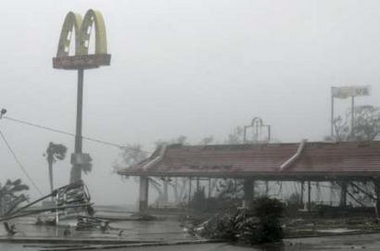
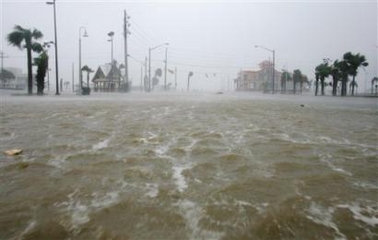
One of the worst storms in US history has hit, and when it seemed it had spared us a fate that seemed too 'doomsday', the next day arrived with ever swelling waters
My weight has ballooned, and sleep patterns worsened even more (today is the last day of the month, and the first Wednesday in weeks where I am simply too tired to go and swim and then only eat dinner at 10pm).
And then there are other things that have happened that I won't even mention.

I wonder how many people found August to be a good month? I guess 'good' is the wrong word. It's just about change, and change is just what it is. It's only when we resist it and judge it that it can seem an unpleasant new reality.

Today is the last day of the month, and it has been an extremely muggy, filthy, sweaty, grimy day. The air has a steamy look and the skin feels slightly irritated by the junk in the air that touches against it.

Note to Planet Earth: It's the end of August, and tomorrow is September 1st. That means the beginning of spring in South Africa. So please start letting things cool down here!

What Have We Done To Deserve This? Quite A Few Things


 Posted by PicasaKatrina's real name
By Ross Gelbspan | August 30, 2005

THE HURRICANE that struck Louisiana yesterday was nicknamed Katrina by the National Weather Service. Its real name is global warming.

When 124-mile-an-hour winds shut down nuclear plants in Scandinavia and cut power to hundreds of thousands of people in Ireland and the United Kingdom, the driver was global warming.

When a severe drought in the Midwest dropped water levels in the Missouri River to their lowest on record earlier this summer, the reason was global warming.

In July, when the worst drought on record triggered wildfires in Spain and Portugal and left water levels in France at their lowest in 30 years, the explanation was global warming.

When a lethal heat wave in Arizona kept temperatures above 110 degrees and killed more than 20 people in one week, the culprit was global warming.

And when the Indian city of Bombay (Mumbai) received 37 inches of rain in one day -- killing 1,000 people and disrupting the lives of 20 million others -- the villain was global warming.

As the atmosphere warms, it generates longer droughts, more-intense downpours, more-frequent heat waves, and more-severe storms.

Although Katrina began as a relatively small hurricane that glanced off south Florida, it was supercharged with extraordinary intensity by the relatively blistering sea surface temperatures in the Gulf of Mexico.

The consequences are as heartbreaking as they are terrifying.

Unfortunately, very few people in America know the real name of Hurricane Katrina because the coal and oil industries have spent millions of dollars to keep the public in doubt about the issue.

The reason is simple: To allow the climate to stabilize requires humanity to cut its use of coal and oil by 70 percent. That, of course, threatens the survival of one of the largest commercial enterprises in history.

In 1995, public utility hearings in Minnesota found that the coal industry had paid more than $1 million to four scientists who were public dissenters on global warming. And ExxonMobil has spent more than $13 million since 1998 on an anti-global warming public relations and lobbying campaign.

In 2000, big oil and big coal scored their biggest electoral victory yet when President George W. Bush was elected president -- and subsequently took suggestions from the industry for his climate and energy policies.

As the pace of climate change accelerates, many researchers fear we have already entered a period of irreversible runaway climate change.

Against this background, the ignorance of the American public about global warming stands out as an indictment of the US media.

When the US press has bothered to cover the subject of global warming, it has focused almost exclusively on its political and diplomatic aspects and not on what the warming is doing to our agriculture, water supplies, plant and animal life, public health, and weather.

For years, the fossil fuel industry has lobbied the media to accord the same weight to a handful of global warming skeptics that it accords the findings of the Intergovernmental Panel on Climate Change -- more than 2,000 scientists from 100 countries reporting to the United Nations.

Today, with the science having become even more robust -- and the impacts as visible as the megastorm that covered much of the Gulf of Mexico -- the press bears a share of the guilt for our self-induced destruction with the oil and coal industries.

As a Bostonian, I am afraid that the coming winter will -- like last winter -- be unusually short and devastatingly severe. At the beginning of 2005, a deadly ice storm knocked out power to thousands of people in New England and dropped a record-setting 42.2 inches of snow on Boston.

The conventional name of the month was January. Its real name is global warming.

Ross Gelbspan is author of ''The Heat Is On" and ''Boiling Point."

© Copyright 2005 Globe Newspaper Company.

"Wanna go for a swim, or stay here and drown?" Posted by Picasa

This is a Korean built training jet. Quite nifty. Posted by Picasa

37/3 Early Start

Slept reasonably well, and then went to Starbucks in Juyeop to meet Lauren.

A lady there offered to buy a both coffee; I had a delicious caramel frap. Then we visited two kindergartens where they introduced me to the staff, nice, and the little bodies running around. Both schools seem quite nice, and a nice little earner for a while. I did though, feel the energy begin to drain out of me - there are a LOT of kids in these classes. Fortunately I'll just teach one day on, one day off, and I can use my own material.

After that, although I was keen on getting back to pay my phone bill, the lady recruiter offered to buy us lunch at Outback. I thought it would be a small one, but she ended up ordering 3 multiple course lunches. And kept prodding us to eat more. I ended up feeling very stuffed.

Made it back in time to pay my KT bill, and also figured out that there's a special booth for paying bills that doesn't have lots of people waiting around it. I've gone there before and waited in front of the main counters for more than 20 minutes.

Will try to get a swim in tonight.
I start my extra teaching next week.

Kunstler Making Sense - Part Two


by Dmitry Podborits

On a more general ground, it is interesting to revisit the earlier made point that when supply/demand imbalances occur, the structure of the society changes in response. This goes very contrary to the central dogma of "freakonomics" (which is really traditional economics in disguise), that as supply/demand imbalances occur, mysterious market forces "make sure" that the adequate substitute is found, irrespective of the laws of physics, chemistry and geology.

Basically, this means that the structure of any observed society (that is not in a state of flux or discontinuity) reflects the balance between supply and demand of all critical commodities, existing in that society.
It also means that when new types of products, services and commodities become available through, say, geological discoveries or the efforts of inventors and innovators, or opening of the new trade routes, the demand for them does not occur immediately, but only builds up gradually and with much effort and large energy expenditures (witness, for example, the enormous expense companies go through in order to get their product accepted in the market), because such penetration of the new product into society essentially means restructuring the society around the newly available product.

This is illustrated by the history of penetration of absolutely indispensable items into the current North American living arrangement such as automobiles, computers, mobile phones and commercial airliners. Take away any one of them (much less several of them), and the structure of the society will change dramatically. However, when these items were introduced, they did not get incorporated into the then-existing living arrangement immediately and without effort. When they finally gained widely acceptence, they forced change, or restructuring, of then-existed living arrangement.

There is an observable diminishing returns effect here: further innovations do not create demand for new products if the new products do not "knock out" already established products occupying the same niche in the existing living arrangement. Thus, a person who was forced to buy a new computer (maybe even reluctantly) when the societal structure changed around him so much that the computerless life no longer adequately worked, may have less incentive to upgrade, even if the new computer, on its own, is overall better, cheaper and shinier.

In this light, maybe certain utterances commonly ridiculed as shortsighted may be viewed more charitably in the new context. Take, for example, the famous pronouncement of a top IBM executive circa 1950 that in the entire world there is market for maybe five computers. That statement reflected the realities of the living arrangement of the time, that's all. Yes, it is an absurd statement from today's standpoint because it would take tremendous changes in the societal structure to have computers as ubiquitous as we observe them today.

However, it is extremely hard even for a very smart person immersed in the daily realities of his busy life to imagine, let alone anticipate, the changes in the societal structure that are lying ahead.

It may be just as difficult for some to imagine the extent and the direction of the societal changes that will result from the supply/demand imbalance (from today's arrangement's standpoint) in the energy supply. This is another notion that freakonomists ridicule without realizing how vulnerable and superficial their criticism looks.

For example, is it possible that in the post-Peak Oil world the price for oil would decline? Yes, of course it is possible -- without even finding the adequate substitute for oil. For example, disappearance of commercial airlines from the historic scene and inability of air travel for most people would make it possible (for a while).

Now, a society without air travel would be a differently structured society, wouldn't it? It would solidly fall within the "other arrangement" notion. There go a lot of things currently taken for granted, such as high mobility, tourism, globalization, and so on. But yes, it is possible -- within the context of a perfect market economy. I would even venture to assert that it is far more probable than finding an adequate substitute for oil. This kind of a change would fit well within the currently understood natural laws scheme.

Is it difficult to imagine a world where some of the ingredients for something like affordable air travel might not be adequately available, and it would have never, so to speak, taken off? Wouldn't our current necessities deemed indispensable today in the easy air travel world seem strange and foreign to people inhabiting that, alternative, living arrangement?

The "efficient markets" religion is so pervasive that people who make pronouncements in the spirit of the freakonomists do not even stop to look around them and think what they are really saying. Where does it come from that a perfect market society has to satisfy every human need?

Well, here is an example of a market society which is still relatively very wealthy: the United States circa 2005. And here is a basic need which even an economist would not dare to dispute: adequate health care for its population. In this society with about 40 million medically uninsured (some of which resort to pulling out their own decaying teeth with pliers, as Malcolm Gladwell reports in The New Yorker), and with the medical care and insurance industries virtually in the crosshairs of the economic "science", how can this market aberration be possible?
Clearly, this need in healthcare can be satisfied under some other living arrangement, as evidenced by countries where we do not observe such a large contingent without medical care. No laws of physics, chemistry and geology would need, most likely, to be changed for that; maybe only something in the public psychology and the currently existing system of priorities and values. What makes people think that under dramatic increases in the cost of energy, much reduced mobility, etc. other life support systems in the currently arranged society (such as, for example, food production and distribution, law enforcement, finance, government services, etc.) will perform better than the healthcare performs currently?

Finally, I'd like to observe the following seeming paradox from the "efficient markets will satisfy every need" standpoint.
I note that many of the residents of Manhattan, as a segment of the US population, are doing better financially than the average, and have more discretionary income. Some of these well-off Manhattanites happen to be economists, and some happen to like horses at the same time.

As it presently stands, horse breeding is generally incompatible with the life in Manhattan. Therefore, the stables in which the economists' keep their horses are typically located far from Manhattan, in places like Long Island, New Jersey and Upstate New York. This circumstance creates, I would assume, a major inconvenience for the economists who visit their hooved friends during the weekends (consider the stress of long distance driving, tunnel tolls, road rage, harassment by truck drivers and other unpleasant circumstances).

It would have therefore followed from the efficient market principle that the economists would be willing to pay extra, if someone figured out a way, or a substitute, that would allow them to keep horses right there, in Manhattan and avoid the inconveniences.
It is possible that someone already tinkered with, say, breeding smaller and smaller horses to fit a Manhattanite's lifestyle, but such substitutes didn't take off, probably because they wouldn't provide the potential clientele with the adequate horse experience. So, this way or another, the current economists' living arrangement for those of them who combine both horses and Manhattan in their lives has been restructured around certain inconveniences. The inconveniences, it appears, are here to stay.

I wonder, how this discrepancy might be explained by the freakonomics worldview.
_________________________________________________
Dmitry Podborits was born and grew up in Odessa, (then the USSR).
He immigrated to the US in 1991.
He specializes in analytical software for interest rate derivatives
and works in a major investment bank in New York City.

 Posted by Picasa

 Posted by Picasa

If she can run, so can you.  Posted by Picasa

 Posted by Picasa

Damage

By Carl Mortished

“SEND us Liberty ships filled with European gasoline. We could use some now.”
That was the exasperated response of one Wall Street energy analyst to questions about Hurricane Katrina. No one yet has a clue what long or even short-term damage the great storm has done to America’s offshore oil industry.

What the forecasters do know is that ten refineries on the Gulf coast are out of action or running at severely reduced rates. Stocks of gasoline (petrol) are already below normal levels in the United States and a key pipeline that delivers Gulf oil products to New England is shut.

Liberty ships, the merchant vessels that kept Britain in supplies during the Second World War, would not be big enough to meet the demand. What is certain is that American oil companies will now be rushing to charter large tanker ships to load cargoes of unleaded petrol from European refiners for delivery at ports on the US east coast.

Over the past decade the oil industry has become a just-in-time business and any significant disruption to one part of the infrastructure has major consequences down the chain.

Spotter planes were flying over the Gulf of Mexico yesterday, seeking signs of damage at the hundreds of platforms and rigs that cover the sea like a pin-cushion. Shell, which was forced to shut down 420,000 barrels a day of crude output, reported signs of damage to Mars, its largest platform in the Gulf, but was unable to give details. Two drilling rigs chartered by the company were adrift and Shell was trying to bring them to shallow water for repairs. Until the platforms can be boarded for inspection, no one can predict a return to full output.

At the moment, almost the entire US Gulf oil production capacity is out of commission, some 1.4 million barrels a day, and more than 80 per cent of its gas output. Last year’s passage of Hurricane Ivan, a lesser storm, might be one measure. Huge sub-sea currents damaged a pipeline on the sea-bed, causing a shortfall of 500,000 bpd for more than a month. Even today, some offshore facilities have not been fully repaired from the Ivan damage.

Adam Sieminski, an oil analyst at Deutsche Bank in New York, reckons the operation of wells is only part of the equation.

“You can produce crude but what if there are no refineries? They don’t have electricity and you can’t run refineries without electricity,” he said. Eight refineries in Louisiana and Mississippi were were shut yesterday and a further two were running at low rates, their total output representing almost 15 per cent of US refining capacity.

If experts are loath to make predictions, the same cannot be said of speculators and traders who can see profits from a price squeeze. Wholesale petrol futures jumped from less than $2 on Friday to $3 a gallon, well above the average retail price of $2.60 a gallon. Ships will soon be heading east for supplies and Mr Sieminski worries about a coup de grâce.

“The hurricane season has two months to go,” he said.

Tuesday, August 30, 2005


 Posted by Picasa

New Orleans levee breaks & A break in Concentration


It's interesting that when President Bush shows concern for a faraway people living in fear of their lives (I mean the Iraqi's under Saddam Hussein) he sends in the troops to help them bring about democracy, to bring them freedom, to save them from tyranny. To protect them, and the whole world from the terrorists. When his own citizens are living in fear of their lives, and too poor to leave, he says, "We'll pray for you."
Someone I spoke to recently said that the elites hate the middle class. They want a radical divide. The ultra rich, and the downtrodden poor. The downtrodden are so easy to push around. It's the middle class who are stronger, better informed and more capable of insurrection.

I often read about reports in newspapers finding hypocrisy in Bush policy. That should not be under debate. We can spend hours demonstrating who said what, and what is actually happening. We can spend years waiting to see empty promises bankrupt themselves. Or we can do what guys like Chomsky are doing and saying: activated and pondering what the real strategy is.
The dumb are those who believe what our political leaders tell us. It is totally different thing to begin to calculate what the strategic benefit (ostensibly to a limited number of powerful people) is.

In Africa for example, and Angola in particular, civil war helps those controlling the oil supplies divert funds away from the population who needs services and infrastructure, and into oil and weapons.
Thus, the longer the war goes on, the more the country's population is wiped out, but, importantly, the richer the elites, the controllers become. They want war. They want the masses weak and suffering. It allows them to rule the roost in comfort and without threat.

Bush has family investments in oil and weapons. Go figure he doesn't want the war in Iraq to end, and do you think he cares about a higher oil price?
Does he care about the dead and dying soldiers in Iraq?
He cares about everyone thinking he cares about the lower classes. Once people wake up, his game is up.
It seems there is an awakening, but just an awakening of thoughts.
What is needed is action. In fact, revolution.

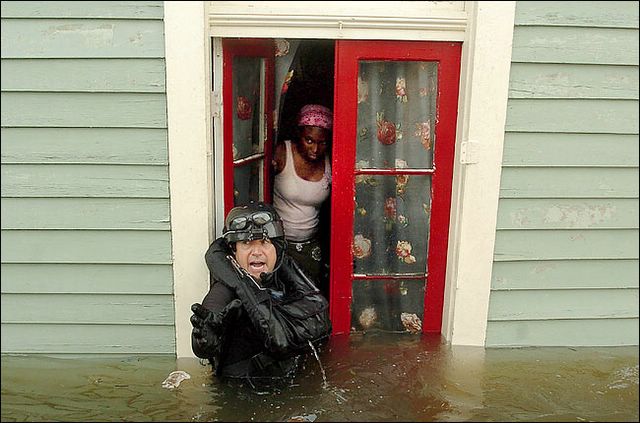
Mayor says 80% of city flooded
Katrina's death toll at 67; 1.3 million without power
Tuesday, August 30, 2005 Posted: 1212 GMT (2012 HKT)

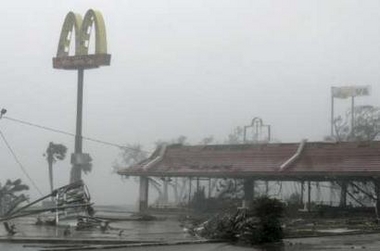
NEW ORLEANS, Louisiana (CNN) -- Rescuers worked through the night to reach hundreds of people stranded after Hurricane Katrina ripped across the Gulf Coast killing dozens of people, destroying countless homes and leaving more than a million people without power in three states.
And authorities said they would not be able to reach some of the hardest-hit areas until first light on Tuesday.
The storm is blamed for at least 67 deaths and that toll is almost certain to rise. Mississippi officials said at least 54 people were killed there, including 30 who were killed in an apartment complex near the Biloxi beach. Alabama reported two deaths. The storm killed 11 people last week when it made its initial landfall in Florida.

While Louisiana officials have not yet confirmed any deaths there, New Orleans Mayor Ray Nagin said there have been reports of bodies floating in the floodwaters.
"My heart is heavy tonight," Nagin said in the interview on CNN affiliate WWL-TV. "I don't have any good news to share."
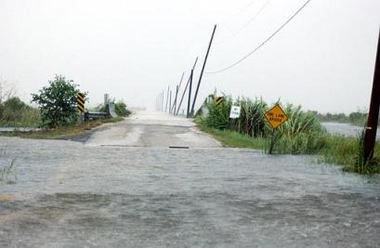
Nagin said that about 80 percent of the city was flooded and that some areas were under 20 feet of water.
Water poured into the city from Lake Pontchartrain after a two-block-long breach opened in a section of a levee that protects the low-lying city.
 Posted by Picasa

Rock Climber


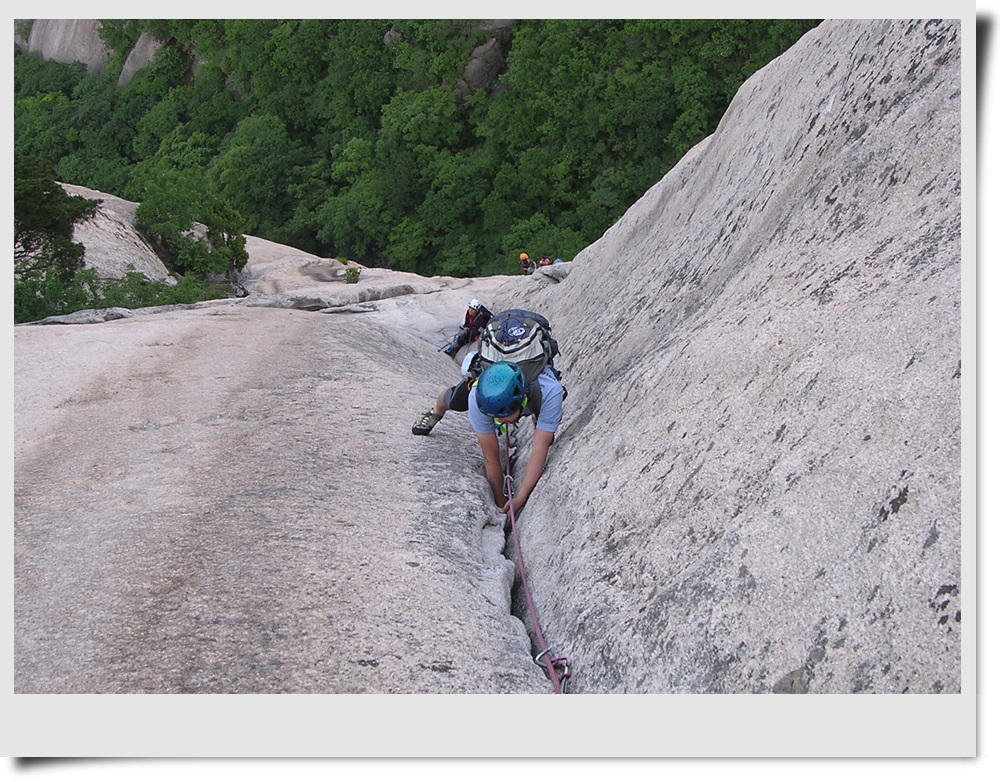
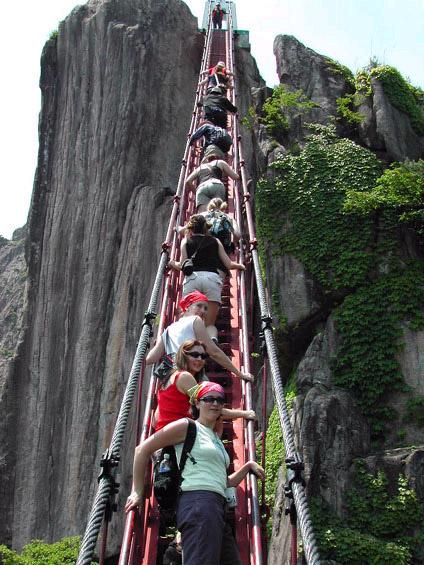
The first and third pictures are of my Korean friend Pete. The top picture looks especially hectic. It's quite a long, near vertical drop to the forest canopy. Go Pete. Posted by Picasa