Sunday, May 29, 2005
Oil Rallies For 5th Straight Day
July crude climbed 84 cents to $51.85 a barrel, moving upward on the news that Saudi King Fahd was seriously ill and hospitalized. Crude rose every day last week, for a gain of $3.20, after hitting a 3-month low in the prior week. The Energy Department on Wed. said U.S. crude inventories unexpectedly declined.


Sugar and Cotton Investments, as Oil Rises
By ROB CARRICK
Saturday, May 28, 2005 Updated at 3:17 AM EDT
From Saturday's Globe and Mail
Profile: A New York-based celebrity investor who wrote Hot Commodities: How Anyone Can Invest Profitably in the World's Best Market; also operates the $1.5-billion (U.S.) Rogers International Commodities Index Fund
What he's doing now: Buying sugar and cotton to benefit from high oil prices.
Forsake black gold for the stuff you spoon into your coffee and the material they make underwear out of? “If you want to invest in oil, the best thing to do is buy sugar,” Mr. Rogers said. “The price of energy is near its all-time high, while the price of sugar is 85 per cent below its all-time high.”
Your attention is now directed to Brazil, a major global sugar producer that is struggling with low sugar prices. As Mr. Rogers tells it, the Brazilian government is helping its farmers by encouraging the use of ethanol, a fuel that can be made from sugar and used to power cars. “You're going to see more and more sugar converted into ethanol, which will drive down the supply of sugar and obviously drive up demand.”
The case for cotton works in a similar fashion. Many synthetic fabrics are made from petroleum-based products, which are a lot more expensive today than cotton. That's why China and other countries are starting to replace synthetics with cotton, which is trading 70 per cent below its record high.
Mr. Rogers said that individual investors can easily trade sugar and cotton futures using a commodity broker, and that analyzing these familiar products is a lot easier than the dot-com stocks people were crazy for at the beginning of the decade. Oil trades on futures markets as well, but forget about that.
“Sugar, to repeat, is 85 per cent below its all-time high, so we're not talking about something that that has already been exploited,” Mr. Rogers said. “In my view, sugar is going to at least triple, quadruple, quintuple over the next few years.”
Name: Eric Sprott
Profile: Runs Toronto-based Sprott Asset Management, a family of mutual and hedge funds that includes Sprott Canadian Equity, the best performing fund in its category over the past five years and Sprott Energy, the top performing natural resources fund over the past 12 months.
What he's doing now: Investing in unconventional resource plays.
The view from way up high on Hubbert's Peak has a way of opening your mind as to what's an economical source of oil and gas. Marion King Hubbert accurately predicted in the mid-1950s that U.S. oil production would peak and then start a decline around 1970. Now, Mr. Sprott and others believe the same thing will happen this year with global oil production. From that vantage point, it's natural to look at sources of oil and gas that were previously dismissed as too expensive or too difficult to exploit.
Examples of these unconventional energy sources include oil found in tarry sand, gas and oil found in a kind of rock called shale and coal-bed methane, which is natural gas derived from coal deposits. In a world of low oil prices, these resources would go untapped. Today, they're one of Mr. Sprott's preferred ways of profiting from high oil prices.
“It's all economics,” he said. “We've known all along that these deposits are there, but there's been a question of how we get this stuff out of there economically.”
Mr. Sprott said the companies looking at unconventional sources of oil and gas include EnCana Corp., the fourth-largest Canadian oil producer as measured by the value of its stock. In fact, EnCana has been selling conventional oil and gas properties to focus on the unconventional.
But EnCana is not a stock that interests Mr. Sprott right now, much as he admires the company's strategy. “We at Sprott Asset Management should be able to find something with a little more bang for the buck,” he said. Along these lines, he's bought companies like Canadian Spirit Resources, which explores for coal-bed methane in Western Canada; and Ultra Petroleum, a Houston company with properties in the United States and China; and Quicksilver Resources, a Fort Worth, Tex.-based specialist in unconventional energy reserves that has operations in Alberta.
Name: Chip Hodge
Profile: Managing director in the bond and corporate finance group at John Hancock Financial Services in Boston, which is part of Toronto-based Manulife Financial. He oversees about $4.3-billion (U.S.) worth of corporate bonds from the oil and gas sector.
What he's doing now: Getting ready to buy on the dip because the underlying financials for oil companies are solid.
When technology stocks crashed after an unbelievable runup, many investors were surprised to learn that the sector was full of financial weaklings with minimal revenues and zero profits. Oil companies are quite the opposite, according to Mr. Hodge's analysis as a bond manager assessing how likely he is to receive his interest payments. “From a credit standpoint, a majority of companies are going to be in great shape all the way down to $35 oil,” he said. “The reason is that a majority of companies have got their balance sheets in good shape and they have been very disciplined in their investments.”
All right, the oil sector is financially healthy and largely well-managed from a financial point of view. The question is, when's a good time to buy? “To the extent that people get scared and trade out of oil when the price goes to $40 or sub-$40, those are the opportunities you look for to reload,” Mr. Hodge said.
An economic slowdown in the United States is one possible trigger for a pullback in oil prices. But Mr. Hodge thinks oil prices would snap back because of tight global oil supplies and rising demand from economic growth in China and India, as well as the United States.
Mr. Hodge believes that the biggest risk facing investors in the energy sector is not related to economics and oil's fundamentals as a commodity, but rather to managers at individual companies and their ability to handle success. In the past, he explains, oil companies tended to spend every available dollar in boom times on exploration projects that may or may not have panned out.
Saturday, May 28, 2005 Updated at 3:17 AM EDT
From Saturday's Globe and Mail
Profile: A New York-based celebrity investor who wrote Hot Commodities: How Anyone Can Invest Profitably in the World's Best Market; also operates the $1.5-billion (U.S.) Rogers International Commodities Index Fund
What he's doing now: Buying sugar and cotton to benefit from high oil prices.
Forsake black gold for the stuff you spoon into your coffee and the material they make underwear out of? “If you want to invest in oil, the best thing to do is buy sugar,” Mr. Rogers said. “The price of energy is near its all-time high, while the price of sugar is 85 per cent below its all-time high.”
Your attention is now directed to Brazil, a major global sugar producer that is struggling with low sugar prices. As Mr. Rogers tells it, the Brazilian government is helping its farmers by encouraging the use of ethanol, a fuel that can be made from sugar and used to power cars. “You're going to see more and more sugar converted into ethanol, which will drive down the supply of sugar and obviously drive up demand.”
The case for cotton works in a similar fashion. Many synthetic fabrics are made from petroleum-based products, which are a lot more expensive today than cotton. That's why China and other countries are starting to replace synthetics with cotton, which is trading 70 per cent below its record high.
Mr. Rogers said that individual investors can easily trade sugar and cotton futures using a commodity broker, and that analyzing these familiar products is a lot easier than the dot-com stocks people were crazy for at the beginning of the decade. Oil trades on futures markets as well, but forget about that.
“Sugar, to repeat, is 85 per cent below its all-time high, so we're not talking about something that that has already been exploited,” Mr. Rogers said. “In my view, sugar is going to at least triple, quadruple, quintuple over the next few years.”
Name: Eric Sprott
Profile: Runs Toronto-based Sprott Asset Management, a family of mutual and hedge funds that includes Sprott Canadian Equity, the best performing fund in its category over the past five years and Sprott Energy, the top performing natural resources fund over the past 12 months.
What he's doing now: Investing in unconventional resource plays.
The view from way up high on Hubbert's Peak has a way of opening your mind as to what's an economical source of oil and gas. Marion King Hubbert accurately predicted in the mid-1950s that U.S. oil production would peak and then start a decline around 1970. Now, Mr. Sprott and others believe the same thing will happen this year with global oil production. From that vantage point, it's natural to look at sources of oil and gas that were previously dismissed as too expensive or too difficult to exploit.
Examples of these unconventional energy sources include oil found in tarry sand, gas and oil found in a kind of rock called shale and coal-bed methane, which is natural gas derived from coal deposits. In a world of low oil prices, these resources would go untapped. Today, they're one of Mr. Sprott's preferred ways of profiting from high oil prices.
“It's all economics,” he said. “We've known all along that these deposits are there, but there's been a question of how we get this stuff out of there economically.”
Mr. Sprott said the companies looking at unconventional sources of oil and gas include EnCana Corp., the fourth-largest Canadian oil producer as measured by the value of its stock. In fact, EnCana has been selling conventional oil and gas properties to focus on the unconventional.
But EnCana is not a stock that interests Mr. Sprott right now, much as he admires the company's strategy. “We at Sprott Asset Management should be able to find something with a little more bang for the buck,” he said. Along these lines, he's bought companies like Canadian Spirit Resources, which explores for coal-bed methane in Western Canada; and Ultra Petroleum, a Houston company with properties in the United States and China; and Quicksilver Resources, a Fort Worth, Tex.-based specialist in unconventional energy reserves that has operations in Alberta.
Name: Chip Hodge
Profile: Managing director in the bond and corporate finance group at John Hancock Financial Services in Boston, which is part of Toronto-based Manulife Financial. He oversees about $4.3-billion (U.S.) worth of corporate bonds from the oil and gas sector.
What he's doing now: Getting ready to buy on the dip because the underlying financials for oil companies are solid.
When technology stocks crashed after an unbelievable runup, many investors were surprised to learn that the sector was full of financial weaklings with minimal revenues and zero profits. Oil companies are quite the opposite, according to Mr. Hodge's analysis as a bond manager assessing how likely he is to receive his interest payments. “From a credit standpoint, a majority of companies are going to be in great shape all the way down to $35 oil,” he said. “The reason is that a majority of companies have got their balance sheets in good shape and they have been very disciplined in their investments.”
All right, the oil sector is financially healthy and largely well-managed from a financial point of view. The question is, when's a good time to buy? “To the extent that people get scared and trade out of oil when the price goes to $40 or sub-$40, those are the opportunities you look for to reload,” Mr. Hodge said.
An economic slowdown in the United States is one possible trigger for a pullback in oil prices. But Mr. Hodge thinks oil prices would snap back because of tight global oil supplies and rising demand from economic growth in China and India, as well as the United States.
Mr. Hodge believes that the biggest risk facing investors in the energy sector is not related to economics and oil's fundamentals as a commodity, but rather to managers at individual companies and their ability to handle success. In the past, he explains, oil companies tended to spend every available dollar in boom times on exploration projects that may or may not have panned out.
Bird flu death toll five times what had been reported, China
28 May 2005
An official from China's agricultural department said the death toll from bird flu in the West of China is five times greater than official reports had stated. The number of migratory birds killed was much larger than people had thought, he said. He added that the reports refer only to the death of birds and that no humans have died.
Rumours are rife among experts and throughout the internet that there has been a massive cover-up. People are saying nobody really knows how bad the situation really is/was. Rumours abound that many humans have perished.
Officials now say more than 1,000 migratory birds have died after being infected with the H5N1 strain of bird flu. The H5N1 is the most lethal one. Official reports had talked about just 178 birds, all of them geese, perishing in Qinghai Lake - now, they say the real number is over 500.
China has not reported one human death from bird flu - even though nearby countries such as Vietnam have had 38 deaths. In total, the number of human deaths from bird flu in South East Asia has totalled 54.
Health experts say that in order to tackle a possible pandemic which could spread to humans and become a human-to-human transmissible disease, we need accurate, reliable information. If authorities are not able to provide reliable figures it is virtually impossible to know what to do and when and where to do it. A pandemic could kill millions and millions of people throughout the globe.
An official from China's agricultural department said the death toll from bird flu in the West of China is five times greater than official reports had stated. The number of migratory birds killed was much larger than people had thought, he said. He added that the reports refer only to the death of birds and that no humans have died.
Rumours are rife among experts and throughout the internet that there has been a massive cover-up. People are saying nobody really knows how bad the situation really is/was. Rumours abound that many humans have perished.
Officials now say more than 1,000 migratory birds have died after being infected with the H5N1 strain of bird flu. The H5N1 is the most lethal one. Official reports had talked about just 178 birds, all of them geese, perishing in Qinghai Lake - now, they say the real number is over 500.
China has not reported one human death from bird flu - even though nearby countries such as Vietnam have had 38 deaths. In total, the number of human deaths from bird flu in South East Asia has totalled 54.
Health experts say that in order to tackle a possible pandemic which could spread to humans and become a human-to-human transmissible disease, we need accurate, reliable information. If authorities are not able to provide reliable figures it is virtually impossible to know what to do and when and where to do it. A pandemic could kill millions and millions of people throughout the globe.
Saturday, May 28, 2005

Don't Be Happy, Worry
This morning didn't start off quite as I expected. I'd intended to go cycling wuth Mr Lee and the others at 7am, but I was nowhere near ready, even if they (my tyres)weren't flat.
I just saw a quirky ad on TV for HSBC. It's about knowing about different cultures. Scene, a golf course. In Japan, if you get a hole in one, you have to buy your companions expensive gifts. The western guy (Guyjin) sees the pin, then wisely shifts so his shot is heading for a copse of trees (so it will be impossible to hit a hole in one). With a small smile he takes a swing. The ball bounces off the trees, flies onto thye green and rolls into the pin. Now all his companions are smiling. Nice one.
Today I went to the Cannondale shop and bought a spare tube, saddle bag, tyre levers and all those odds and ends you're gonna need if you have a breakdown or puncture in the middle of nowhere. It's not very good if you have a breakdown and then you ask your cycling buddies to come up with a solutin out of their own stuff.
I usually have relied on CO2 gas to deal with these eventualities, but my gas and the gas nozzle, and all sorts of our equipment was thrown away with my Special Needs bag at the Ironman. I decided to go for a small handpump this time. I'll buy the gas and nozzle at a bike stall at the next race.
I did get an opportunity to meet a MTB pro (or seemed to be) in the store, and they were pretty friendly and interesting. I was grateful that they were able to help me with just about everything, and was surprised to see two black Ironman beautifies hanging on the ceiling between all the other MTB's. One of the bikes had, unusually, 650 inch wheels, which are a lot smaller than a conventional racing bike, and over long distances like the Ironman's 180km, easier to turn. It's impractical for me even to think about, since I have my Zipps, and they wouldn't fit. But you can dream, can't you...
I had lunch at Aroi Aroi, with one of my colleagues. Nice walk in the park afterwards.
Felt quite tired and disorientated today, but felt better after a late afternoon nap. After calling a friend in South Africa I felt even better. Am taking it fairly easily tonight. Will watch Magnum PI and the Aviator, read and try to get an eartly night.
Will hopefully be up early and cycling towards Imjingak if the weather is anywhere near half decent tomorrow.
I just saw a quirky ad on TV for HSBC. It's about knowing about different cultures. Scene, a golf course. In Japan, if you get a hole in one, you have to buy your companions expensive gifts. The western guy (Guyjin) sees the pin, then wisely shifts so his shot is heading for a copse of trees (so it will be impossible to hit a hole in one). With a small smile he takes a swing. The ball bounces off the trees, flies onto thye green and rolls into the pin. Now all his companions are smiling. Nice one.
Today I went to the Cannondale shop and bought a spare tube, saddle bag, tyre levers and all those odds and ends you're gonna need if you have a breakdown or puncture in the middle of nowhere. It's not very good if you have a breakdown and then you ask your cycling buddies to come up with a solutin out of their own stuff.
I usually have relied on CO2 gas to deal with these eventualities, but my gas and the gas nozzle, and all sorts of our equipment was thrown away with my Special Needs bag at the Ironman. I decided to go for a small handpump this time. I'll buy the gas and nozzle at a bike stall at the next race.
I did get an opportunity to meet a MTB pro (or seemed to be) in the store, and they were pretty friendly and interesting. I was grateful that they were able to help me with just about everything, and was surprised to see two black Ironman beautifies hanging on the ceiling between all the other MTB's. One of the bikes had, unusually, 650 inch wheels, which are a lot smaller than a conventional racing bike, and over long distances like the Ironman's 180km, easier to turn. It's impractical for me even to think about, since I have my Zipps, and they wouldn't fit. But you can dream, can't you...
I had lunch at Aroi Aroi, with one of my colleagues. Nice walk in the park afterwards.
Felt quite tired and disorientated today, but felt better after a late afternoon nap. After calling a friend in South Africa I felt even better. Am taking it fairly easily tonight. Will watch Magnum PI and the Aviator, read and try to get an eartly night.
Will hopefully be up early and cycling towards Imjingak if the weather is anywhere near half decent tomorrow.

Oil prices continue to rise despite peak output and new pipelines
Oil up $5 a barrel in the last week
By Paul Cochrane
Daily Star staff
Saturday, May 28, 2005
Oil prices continue to rise despite peak output and new pipelines
Analysis
BEIRUT: Oil hit $51.90 a barrel in midday trading yesterday, up $5 from the same time last week. Oil is once again heading skyward despite OPEC pumping almost flat out and the opening of a new pipeline linking Central Asia with Europe this week that should create an alternative supply of oil for the West. What is driving this latest spike? The first and obvious reason is that demand is still exceeding supply, particularly in the booming markets of the Far East. Second, the U.S. driving season is looming, with a long summer ahead and plenty of SUVs on the roads guzzling gas.
But is this week's rise a blip or are prices likely to continue to soar to April's peak of $58, or even surpass it?
The overall opinion of oil industry experts in a recent Deutsche Bank report was, hold onto your seats, oil will rise again. These claims seemed spot-on this week when oil started to climb amid speculation the European Union could slap sanctions on Iran unless the Islamic Republic suspends its nuclear program.
But by Thursday, the potential nightmare of sanctions on OPEC's second largest oil producer was scuttled by the U.S. lifting objections to Iran applying for WTO membership. Nevertheless, oil continues to rise.
Some analysts believe that if prices continue to push upwards and get into the heart-attack-potential $70 to $80 price band, demand will fall and prices will return to less eyebrow raising prices. On the other hand, others dismiss such predictions, believing oil prices will continue to rise precisely because demand is more likely to increase than diminish. To others analysts a major concern is an often overlooked aspect of oil supply transportation. Many oil companies have expansion and higher production output in mind, but with a backlog for oil tankers in the dockyards of South Korea and Vietnam, it might be years before the quantities of oil needed will get from A to B.
What could cause the price of oil to go down?
The significance of the U.S.-backed Baku-Tbilisi-Ceyhan pipeline is that it undercuts Russia's longtime grip on Central Asia's vast energy sources, and OPEC's quotas. What's more, Central Asia is awash with light crude which is far easier to refine and get to the gas station than OPEC heavyweight Saudi Arabian heavy crude.
But the pipeline will only ship 1 million bpd to Turkey's Mediterranean coast, only around 1 percent of global oil production. Equally, a planned $880 million trans-Balkan pipeline that intends to bypass the Bosphorous straits bottleneck, announced yesterday, will not become operational until late 2008 or early 2009. By then, that extra output may have only a minimal effect on oil prices.
In the near future, a lot will depend on whether OPEC is able to adequately build global stockpiles in time for the high demand winter season. But most OPEC ministers have said they do not see a need to change output policy when the cartel meets in Vienna next month. The most realistic bet seems the oft-quoted cardiac arrest-inducing prediction of $70 to $80 a barrel.
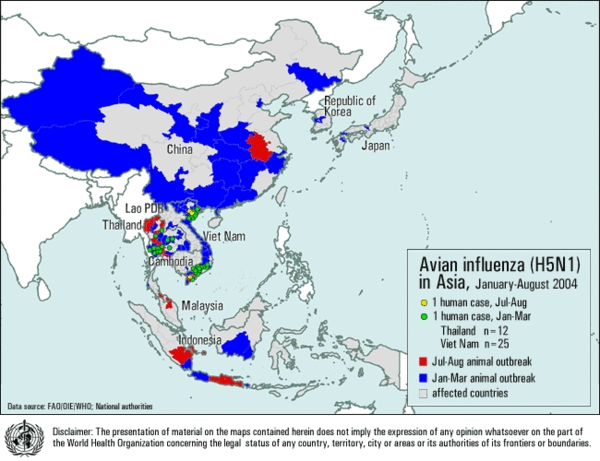
What You Need To Know About Avian Flu
The current avian flu outbreak in Asia is the fifth since 1997 to infect humans. This has raised a red flag for infectious disease experts, who fear the strain could mutate and spark a devastating flu pandemic -- a worldwide epidemic such as the so-called Spanish flu of 1918 that killed at least 40 million people. An editorial in a recent issue of the medical journal The Lancet warns that such a threat must be taken seriously. "In view of the high mortality of human influenza associated with this strain [of avian flu]," it reads, "the prospect of a worldwide pandemic is massively frightening."
Advertisement
Avian Flu Virus Here are some of the facts about avian flu and the risk that it poses to humans.
What is killing the birds of Asia?
Avian flu is caused by one branch of a family of microbes called Type A influenza virus. (A different branch typically causes flu in humans.) Until recently, scientists thought people couldn't be infected by avian flu viruses, but in 1997 bird-to-human transmission took place in Hong Kong, infecting a handful of people. The viral subtype responsible for the current outbreak is called H5N1, which originates in water fowl, primarily ducks. Ducks can usually withstand the virus -- making them ideal carriers -- but chickens have little resistance. When one chicken is infected, the virus can spread to an entire flock within hours -- and soon kill nearly all the birds.
How do humans get avian flu?
So far, all known cases of human infection can be traced directly back to contact with live chickens. Infected birds shed the virus in their feces; humans then breathe in the fecal dust. The virus is not passed on in the meat or eggs, so there is no danger from eating cooked chicken.
How deadly is avian flu to humans?
Very. In the 1997 outbreak, also caused by H5N1, 18 people were infected and six died -- a 33% fatality rate. By comparison, the SARS outbreak last year infected 8,098 and killed 774, a death rate of 9.6%.
Can humans infect other humans with H5N1?
Not yet, but this is the possibility that has the world's leading virologists racing to Asia. Viruses are notorious shape-shifters, able to constantly rearrange their genes and swap genetic material with other influenza strains. That makes it hard to predict when and if a deadly bug will emerge. Public health officials say historical evidence suggests there are three to four flu pandemics each century. In the past 100 years there have been three, and the World Health Organization warns that "another influenza pandemic is inevitable and possibly imminent."
Experts fear the next pandemic will start when an avian virus moves from a chicken to a person already suffering from human flu. The two viruses might then combine into a mutant strain to which humans would have no resistance. If more people get infected by birds, there's a higher risk that such a mutation will emerge. "Viruses are prone to evolve over time," warns Dr. Julie Gerberding, director of the U.S. Centers for Disease Control. "We are taking this very seriously."
Is there a vaccine?
No. The WHO had been working on a vaccine based on the strain isolated in Hong Kong in 1997, but the agency just announced that the virus causing the new outbreak -- though still H5N1 -- has mutated enough that vaccine development must start over. It won't be easy to make, either. Vaccines are usually produced in chicken eggs, but H5N1 is lethal to fertilized eggs. The WHO has also warned that the new strain may be resistant to some drugs that are used to fight influenza. So if this flu does spread between humans, public health officials will face new and epic challenges not only in containing the disease but also treating it.
By Catherine Arnst in New York

RAY SUAREZ: Throughout the past week, there have been new alarms and new calls to action about a possible flu pandemic. It all stems from a deadly flu strain passed from birds to humans. The strain, known as H5-N1, and more commonly referred to as Avian Flu, turned up again this winter in Southeast Asia, leading to new cases in Vietnam, Thailand and Cambodia.
So far, there have been 97 recorded human cases and 53 deaths since 2004. While those numbers are not so large now, the World Health Organization reports the virus is continuing to mutate in ways that makes it increasingly infectious to people. And today the scientific journal Nature devoted much of its issue to the subject, warning of a potential pandemic that could kill millions if preparations did not improve.
For a closer look at all of this, I'm joined by Dr. Anthony Fauci, the director of the National Institute of Allergy and Infectious Diseases. He wrote a commentary in today's issue of Nature. And Laurie Garrett -- she runs the global health program at the Council on Foreign Relations.
Dr. Fauci, one of the core issues, I guess, for understanding this disease is what we know about how it gets passed from birds to humans and whether humans pass it to other humans. Do we have a good handle on that yet?
DR. ANTHONY FAUCI: We know it has already jumped from birds to humans, and that's the thing that is the first part of the real concern, because this is a virus, the H5-N1, which the human society has had no prior experience with. So there's no residual or baseline immunity. It's a brand-new thing for them, which means that the protection that we generally get from year to year.
Like right now this season the regular seasonal flu was an H3-N2, was a little bit different than last year's H3-N2, a little different than the previous year, but we have cumulative experience. The H5-N1 is a major shift. As we call it, those little changes are drifts. And what happens is that you get chickens infected and this virus has adapted itself to jump from chickens to humans in Asia.
The biggest focus right now is in Vietnam. When it gets efficiency in going from human to human, and viruses tend to evolve, to go toward that which will help propagate it -- there have been now 97 infections, as you mentioned, and 53 deaths. So it's still inefficient in going from bird to human. There have been two well-documented cases of human-to-human.
So by mutation or adapting itself, it very likely could get better and better in its efficiency in going from human to human. Once that happens, Ray, then you have a really bad situation, because if it spreads widely, you have people who have no prior experience, so they don't have any baseline immunity to respond rapidly.
The other important point is that this is a very highly lethal virus; it's killed 53 out of the 97 documented cases. It's unlike what we see in the regular flu, which is less than 1 percent. So the potential for this being a really serious problem is there, and nothing that's happening is telling us that it's going in the other direction. It keeps going in the direction that is making us quite anxious. It's increasing its host range, and it's changing ways, there are more clusters that are not explainable. So we have a very serious situation here.
RAY SUAREZ: Laurie Garrett, what's the best scientific opinion if you survey about how much of the threat Avian Flu poses worldwide and Asia in particular?
LAURIE GARRETT: Well, certainly in the public health community and in the community of virologists that know a lot about flu, concern is very, very high. I was just at the World Health Assembly, which is the governing body of the World Health Organization, for a week of meetings in Geneva, and everybody was talking about flu.
It's the number-one concern on the minds of most global health experts right now. And there are a number of reasons why this year we're more worried than we have been in my lifetime. We've seen this H5-N1 strain, which is unlike any strain, as Dr. Fauci was explaining, human beings have ever seen before. So you don't have antibodies to it; I don't have antibodies to it.
As far as we know, nobody has antibodies to it. We've seen this thing go through a series of mutational changes over the last two, three years, and just very recently it's been confirmed -- actually just today -- confirmed by the Indonesian government that they've identified an outbreak of it in pigs in Indonesia.
This is very worrying, because what this means is that the virus may have found a way to infect another species of mammals, big difference from infecting birds, Ray. If it starts infecting pigs and other mammals, then it's a quick leap to whatever genetic change is necessary for this virus to evolve into the kind of flu that is incredibly contagious from person to person.
And it's important to understand, when we talk about contagious viruses -- and I know lots of people have heard of the so-called scary ones like Ebola and Marburg -- these are actually really hard to get compared to flu. This influenza virus can sit on a doorknob for six days and still be infectious to somebody who comes along six days later; someone rubs their hand on that doorknob and, as we all do, happens to infect themselves.
It is so infectious, so contagious that at the World Health Organization meetings I was at, people are really tearing their hair out trying to figure out how we could control it, how could can stop it from spreading all over the world. Our host of classic ways of dealing with public health problems of various kinds is very, very limited in this case.
RAY SUAREZ: Well, is there, Dr. Fauci, a public health approach to seal up something like a flu in a geographical area? Laurie Garrett mentioned Ebola and Marburg. Those haven't spread worldwide. Is there a way with a flu like this to just cordon it off?
DR. ANTHONY FAUCI: Yes and no. Because, as Laurie said very accurately, it spreads so rapidly that it isn't the kind of thing that's easily containable. But, having said that, good public health measures of identification, reporting accurately and in a transparent way, when you get the opportunity to isolate people, and the president himself signed a quarantine, an executive order to be able to quarantine and add pandemic flu to the list of quarantinable diseases.
But it's a combination of public health measures, coordination among nations, vaccine and drugs. Now, the problem that we're facing, we have assumed that this is serious enough that we are already in trials of an H5-N1 vaccine that we started in April. We've already completed the first two stages of it in healthy adults. We're going to analyze the data for safety and what's the right dose because, unlike the regular flu vaccine, where you know you can give one dose and get a good immunity.
Since we haven't seen this before, it is likely that we'll have to use a higher dose and/or two vaccinations. When this data comes, we'll move to the elderly and then we'll go to children. The problem is that the vaccine-manufacturing capacity of the world is only anywhere between 300 million and 450 million. There are six billion people in the world.
So we have a problem with capacity that even if we don't -- and it is likely we don't -- even though we're very concerned, Laurie and I and many others, that we'll have a problem soon, if we don't have it this year, this isn't something that's going to just disappear. This is here to stay. We will have a pandemic sometime. It may be this year, next year, the year later.
And what we're concerned about is that we've got to build up the capacity to have countermeasures in the form of vaccines and therapeutics as opposed to saying, "We got through this year; let's just go back to square one." We have a vaccine production industry that is in fact very, very fragile, and we actually discussed this on this show not too long ago when we were dealing with the shortages of flu vaccine from the previous winter.
RAY SUAREZ: So, Laurie Garrett, does the world end up on the horns of a paradox again where those countries that are most able to provide vaccine to their people are actually the places least in threat of having an Avian Flu outbreak, while the places that are most threatened are the least able to respond?
LAURIE GARRETT: It's worse than that, Ray. I mean, the problem is when you sit down with a global organization like WHO, 192 member countries, everybody passes a resolution saying, "We're very worried about pandemic flu; we're terribly concerned this could be the year that we see a flu that could take millions and millions of lives worldwide."
Well, then you pass a series of resolutions. You must stockpile drugs, you must try to make vaccine; you should have a national plan of action. All those are great to talk about in the context of a wealthy country like the United States or any of the European countries.
But what do you say to Chad? What do you say to Tanzania? What do you say to Vietnam? Poor countries can't muster up the kinds of plans we're talking about. And worse yet, in 1918, we did not have hundreds of millions of people with immune deficiency in the world -- immune deficiency either because they were elderly, cancer patients, or probably most significant because they had HIV disease and did not have access to drugs to treat the HIV disease.
We basically have the equivalent of a hillside of dry brush, when you think about Africa right now and the amount of HIV there, where you're lighting a match at one end and just watching that fire burn up that hill. That's what pandemic flu might be when it hits Africa.
RAY SUAREZ: Let me get a quick response on that point from Dr. Fauci. Are we getting ready enough in advance to help stave off some of the worst effects?
DR. ANTHONY FAUCI: There's no doubt this is the number-one priority of secretary Levitt in the Department of Health and Human Services rights now. We meet virtually daily about this. I mentioned the vaccine trial. We've stockpiled Tamiflu, which is the drug that this particular microbe is sensitive to. We don't have enough. It's 2.3 million treatment courses.
We need a lot more, and we'll get a lot more. So we're being very proactive about it. Again, being proactive is what we need to do, but this is such an enormous problem involving the entire global community, as Laurie mentioned, that we alone, even though we are far ahead of others in this regard, we alone are not going to solve the problem. It's got to be global collaboration.
RAY SUAREZ: Anthony Fauci, Laurie Garrett, thank you both.

Kunstler, Laughter and the Sith
I sent an email to James Howard Kunstler, having just finished reading The Long Emergency. I just suggested that South Africa may survive the Long Emergency (when energy supplies cause a long term global crisis) better than most. He responded, questioning Africa's political stability. More emails. I don't want to come across as someone all-knowing, I'm just offering my opinion, and frankly, I'm more interested to see what his opinion is of Africa. He barely touched on the continent in his book. Will provide more details of our correspondence soon.
I found myself laughing quite few times today, in class and afterwards, at dinner. I felt really fresh, probably from the run this morning and the swim.
I meant to go home and sleep, just felt pretty wasted, then they told me Sey was coming, so I hung around and then we all had dinner. All the teachers at one point started making jokes about the director. He is quite a selfish guy. It's evident, for example, in the sense that we have to clean our own classrooms. He's too snoep to hire cleaning staff. I know in my case he complained about my apartment being too expensive, aswell as my second hand furniture.
I'm not going to relate every joke - suffice it to say it was a fun end to another week.
I met a guy from Virginia, Lonnie, on my way across the street to my building. He says there's a pool nearby that stays open until after 10pm, and it's very closeby. That's ideal.
Did anyone read the comment by 'Canuck' under the post 50, 4? Unbelievable. I did a bit of ranting last night, I basically felt annoyed at how fractured and fucked up (sorry, no other way to say it) some of the westerners are towards each other here. I think it's easy to forget that we're not exactly the pick of the crop back home. Most of us are here because we're not exactly success stories. Some more or less than others of course. But we try to make it work, and we try, hopefully, to turn our lives around, or at the very least, make a living. We need to sometimes give ourselves, and each other a break. We can be supportive, and encourage each other to raise our games.
Here's a guy who stumbled upon my blog and decided to indulge in his own high and mighty repartee. It actually feels like a violation of privacy. I feel, for the most part, that only the people who I have given the website address specifically are bothering to take an interest, and that suits me just fine. I'd expect someone who googles their way onto the site not to really hang around. I tend to not hang around other people's blogs much, with a few exceptions. I think there is a way to restrict access to this site, and obviously if I want to, I can delete comments I don't like. But I'd like to be as transparent as I can be, and hopefully the site inspires more than it attracts cranks and people with chips on their shoulders.
But it brings up an interesting topic.
I see teaching in Korea, to just do that, as not nearly enough for me. I notice a number of people who seem content to teach and drink, and search for a mate. I need something else to make it interesting. So triathlon partially solves that problem. Reading (and researching), and writing (fiction and articles) helps too. I find the lack of space, in the countryside and elsewhere where you go to find it, and the sheer numbers of people, in swimming pools, in the the parks, difficult.
And it's stupid to walk around here thinking you're superior, you're right, and you're all that. Some guys (ja, not so much girls) are so starstruck with themselves it's laughable. Even in triathlon, it's possible to do quite well here, but you're an idiot if you win a race here and then think you're one of the world's best athletes. At best, here is a good place to build your confidence. If you get arrogant about achievements, or about even less than that, like being American or Canadian here, if you think that makes you special I think it shows a pretty weak personality. Being on TV, and getting a bit of extra attention because you're a foreigner, well, that's not going to happen back home. Enjoy it and make use of it. Good for you. But please don't strut your stuff and do the Winner's Walk and Talk, because back home, you're still a cautionary tale, and possibly even a loser. Part of the job here should be to develop the persona of someone who can hack it back home (aka in what is for us The Real World).
The purpose of coming to Korea, in my opinion, is to save money while learning about another culture, learning from the kids - their names, their quirks and cleverness, all the things that are another way of life, and who you are in this mixed up place, with all its mess and magic. Maybe most of all, learn a skill here, or educate yourself, or raise your game so you're in demand, you're wanted, valued and appreciated back home (as a worker, member of society and one's family).
Get the attitude right, make a plan to integrate into a decent job and life back home. Most of those who come here seem to come here to teach, to preach, to spew bitterness forth, and not to learn from their mistakes. I'd like to be counted as one of those who is learning how to live, how to give, and forgive the past so I can be powerful once more in the present.
I found myself laughing quite few times today, in class and afterwards, at dinner. I felt really fresh, probably from the run this morning and the swim.
I meant to go home and sleep, just felt pretty wasted, then they told me Sey was coming, so I hung around and then we all had dinner. All the teachers at one point started making jokes about the director. He is quite a selfish guy. It's evident, for example, in the sense that we have to clean our own classrooms. He's too snoep to hire cleaning staff. I know in my case he complained about my apartment being too expensive, aswell as my second hand furniture.
I'm not going to relate every joke - suffice it to say it was a fun end to another week.
I met a guy from Virginia, Lonnie, on my way across the street to my building. He says there's a pool nearby that stays open until after 10pm, and it's very closeby. That's ideal.
Did anyone read the comment by 'Canuck' under the post 50, 4? Unbelievable. I did a bit of ranting last night, I basically felt annoyed at how fractured and fucked up (sorry, no other way to say it) some of the westerners are towards each other here. I think it's easy to forget that we're not exactly the pick of the crop back home. Most of us are here because we're not exactly success stories. Some more or less than others of course. But we try to make it work, and we try, hopefully, to turn our lives around, or at the very least, make a living. We need to sometimes give ourselves, and each other a break. We can be supportive, and encourage each other to raise our games.
Here's a guy who stumbled upon my blog and decided to indulge in his own high and mighty repartee. It actually feels like a violation of privacy. I feel, for the most part, that only the people who I have given the website address specifically are bothering to take an interest, and that suits me just fine. I'd expect someone who googles their way onto the site not to really hang around. I tend to not hang around other people's blogs much, with a few exceptions. I think there is a way to restrict access to this site, and obviously if I want to, I can delete comments I don't like. But I'd like to be as transparent as I can be, and hopefully the site inspires more than it attracts cranks and people with chips on their shoulders.
But it brings up an interesting topic.
I see teaching in Korea, to just do that, as not nearly enough for me. I notice a number of people who seem content to teach and drink, and search for a mate. I need something else to make it interesting. So triathlon partially solves that problem. Reading (and researching), and writing (fiction and articles) helps too. I find the lack of space, in the countryside and elsewhere where you go to find it, and the sheer numbers of people, in swimming pools, in the the parks, difficult.
And it's stupid to walk around here thinking you're superior, you're right, and you're all that. Some guys (ja, not so much girls) are so starstruck with themselves it's laughable. Even in triathlon, it's possible to do quite well here, but you're an idiot if you win a race here and then think you're one of the world's best athletes. At best, here is a good place to build your confidence. If you get arrogant about achievements, or about even less than that, like being American or Canadian here, if you think that makes you special I think it shows a pretty weak personality. Being on TV, and getting a bit of extra attention because you're a foreigner, well, that's not going to happen back home. Enjoy it and make use of it. Good for you. But please don't strut your stuff and do the Winner's Walk and Talk, because back home, you're still a cautionary tale, and possibly even a loser. Part of the job here should be to develop the persona of someone who can hack it back home (aka in what is for us The Real World).
The purpose of coming to Korea, in my opinion, is to save money while learning about another culture, learning from the kids - their names, their quirks and cleverness, all the things that are another way of life, and who you are in this mixed up place, with all its mess and magic. Maybe most of all, learn a skill here, or educate yourself, or raise your game so you're in demand, you're wanted, valued and appreciated back home (as a worker, member of society and one's family).
Get the attitude right, make a plan to integrate into a decent job and life back home. Most of those who come here seem to come here to teach, to preach, to spew bitterness forth, and not to learn from their mistakes. I'd like to be counted as one of those who is learning how to live, how to give, and forgive the past so I can be powerful once more in the present.
Friday, May 27, 2005
Hey Hey, It's Friday
Went swimming after 12, and thought I'd hit the jackpot when I found only 2-3 pairs of shoes in the men's changing rooms. Since pairs of shoes represent human beings, I thought I'd find the pool empty. On the steps leading up to the pool I heard an infernal racket, and once I entered the pool area, dismay settled on me like a cloud of flies. The pool was a circus. I counted 15 people in my lane. This is in a 25m pool. This basically means when only about half the number in the lane are all swimming, they virtually fill the lane end to end.
I managed to get in a few lengths of freestyle. When I did a few butterfly everyone in my lane stopped swimming and formed a human gateway through which I passed. All eyes on me. Oh-kay-y-y.
I swam about 20 minutes, sat in the jacuzzi bath for a minute, weighed myself (80.8kg which is close to the heaviest I have ever been, not sure if I have ever been 81kg), and then skedaddled to Hwajeong. It's safe to say I'll never attempt swimming at Madu at 12 on a weekday again. I'll try iot in the morning and see if it's better. If not, I'll go back to Sung Ho Sports Centre.
I'm feeling pretty sleepy since I got up ar 7am (went to bed at midnight). Think I'll have an early night since the dinner plans that I have been holding out for all week have suddenly changed...and miss all the fun so that I can make sure I get a cycle in tomorrow, early. Dang. My pump is still at Corneli. Maybe I'll have to pop around.
This week flashed by even quicker than last week. Must mean I'm starting to enjoy my life here again. Touch wood.
I managed to get in a few lengths of freestyle. When I did a few butterfly everyone in my lane stopped swimming and formed a human gateway through which I passed. All eyes on me. Oh-kay-y-y.
I swam about 20 minutes, sat in the jacuzzi bath for a minute, weighed myself (80.8kg which is close to the heaviest I have ever been, not sure if I have ever been 81kg), and then skedaddled to Hwajeong. It's safe to say I'll never attempt swimming at Madu at 12 on a weekday again. I'll try iot in the morning and see if it's better. If not, I'll go back to Sung Ho Sports Centre.
I'm feeling pretty sleepy since I got up ar 7am (went to bed at midnight). Think I'll have an early night since the dinner plans that I have been holding out for all week have suddenly changed...and miss all the fun so that I can make sure I get a cycle in tomorrow, early. Dang. My pump is still at Corneli. Maybe I'll have to pop around.
This week flashed by even quicker than last week. Must mean I'm starting to enjoy my life here again. Touch wood.
Run Run Run
Ran 34 minutes. Boy, it's sweltering outside. I ran without underwear (do you really need to know!) and it was just a greasy sluggish experience. June will be even stickier. Will have to run before the sun gets up if I can manage it. My heart rate monitor is all over the place. I think the power supplies to construction sites interfere with the signal.
Will go swimming now and hopefully not be too hung over for a cycle tomorrow.
Incicidentally, think life is tough??? I spoke to a 16 year old girl yesterday, in my last class. She told me she goes to school at 8am, after school she goes to piano and other schools, I teach her at 7:30 until 8am, and then she catches a bus to a grammar school for 2 more hours of school, and then finally gets home at around 11pm.
Will go swimming now and hopefully not be too hung over for a cycle tomorrow.
Incicidentally, think life is tough??? I spoke to a 16 year old girl yesterday, in my last class. She told me she goes to school at 8am, after school she goes to piano and other schools, I teach her at 7:30 until 8am, and then she catches a bus to a grammar school for 2 more hours of school, and then finally gets home at around 11pm.
On The Rocks

Report: Antarctic Ice Sheet Thickening
Fri May 20, 8:25 PM ET
TUCSON, Ariz. - Part of the Antarctic ice sheet is getting thicker, slightly slowing rising ocean levels, according to a new report co-authored by a University of Arizona graduate student.
In the past 10 years, the warmer temperatures over the eastern part of the Antarctic ice sheet have allowed that air to gather more moisture. Snow has been falling and causing part of the ice sheet to thicken � slowing the rise of the sea level by a tiny amount.
"The interior of the east Antarctic ice sheet is the only large terrestrial ice body that is likely gaining mass rather than losing it," said Curt Davis, an engineering professor at the University of Missouri-Columbia, who co-authored the report.
"This study suggests that the interior areas of ice sheets also can play an important role. In particular, the east Antarctic ice sheet is the largest in the world and contains enough mass to change sea level by more than 50 meters."
Fifty meters is about 165 feet, more than enough to drown the world's islands and coasts, many of which are just a few meters above the current sea level.
The researchers used satellite images and elevation changes they saw in cored ice samples. They said their work pertains only to the interior, eastern part of the Antarctic ice sheet. Other parts of the sheet may be contributing to rises in sea level, not mitigating them.
UA graduate student Markus Frey said that with results that only document what's happened in the past 10 years, it's impossible to tell whether the trends will continue, and whether they've been caused by natural climate variation or human-caused global warming.
The rise in sea level that would accompany melting of the polar ice sheets is widely regarded as one of the most serious potential consequences of global warming.
During the past century, warmer temperatures have caused melting of the Greenland and Antarctic ice sheets and mountain glaciers, which has translated into a rise in the oceans. The trend is expected to continue. The effects have the potential to impact coastal communities all over the globe.
"At first it will affect islands in the Southern Pacific and coastal areas," Frey said. "It also means the frequency of floods will increase. The Netherlands, Florida, places below sea level can get flooded more often. Storm tides would reach farther inland. It depends where you are. It's already happening."
You're Getting Warmer
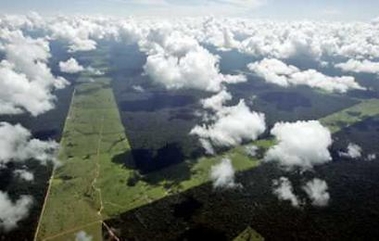
By Philip Pullella Thu May 26,10:50 AM ET
ROME (Reuters) -
FAO said in a report that food distribution systems and their infrastructure would be disrupted and that the severest impact would likely be in sub-Saharan African countries.
"There is strong evidence that global climate is changing and that the social and economic costs of slowing down global warming and of responding to its impacts will be considerable," said the report by FAO's Committee on World Food Security.
Many scientists fear rising temperatures, blamed mainly on heat-trapping gases from burning fossil fuels, will melt ice caps, raise sea levels by almost a meter (three feet) by the end of this century and bring more floods, droughts and storms.
Global warming would increase the amount of land classified as being either arid or insufficiently moist in the developing world.
In Africa the amount of this type of harsh land could increase by as much as 90 million hectares by 2008, an area nearly four times the size of Britain.
Changes in temperature, rainfall as well as an increase in the number of so-called "extreme weather events" such as floods will bring with them potentially devastating effects.
The world suffered 600 floods in the past two and a half years, which claimed the lives of about 19,000 people and caused $25 billion in damages, excluding December's devastating tsunami in southeast Asia that killed more than 180,000.
FAO said scientific studies showed that global warming would lead to an 11 percent decrease in rainfed land in developing countries and in turn a serious decline in cereal production.
"Sixty-five developing countries, representing more than half of the developing world's total population in 1995, will lose about 280 million tons of potential cereal production as a result of climate change," FAO said.
The effect of climate change on agriculture could increase the number of people at risk of hunger, particularly in countries already saddled with low economic growth and high malnourishment levels.
"In some 40 poor, developing countries, with a combined population of 2 billion ... production losses due to climate change may drastically increase the number of undernourished people, severely hindering progress in combating poverty and food insecurity," the report said.

Thursday, May 26, 2005
50, Day 4
Can't believe it's the end of Thursday. I woke up this morning thinking it was Wednesday. I intended to swim, but my upper body was sore from pullups. Will try again tomorrow. I am organising the entries for 2 triathlons, which provides some incentive to get some exercise.
School was interesting. Plenty of eye candy at school, and also other candy in the hands of grubby little fingers. Best avoided.
I was a bit more laid back at school today, and it seems to make a bit more sense to do it since the whole school seems to be a glorified baby sitting insitution, and learning English is purely incidental. It goes against my grain to be so lax, but then I am not going to be The Evil Lord in every class.
In one class there was a little boy wearing a green shirt, and in my best Evil Emperor imitation I said, "I've been looking forward to this, my little green friend."
My lost key did not turn up, but a mother did, with some dakkok...or something...rice cakes. I am still so bloated from the odds and ends I ate today...from bananas to popcorn.
I've just returned from watching Revenge of the Sith in the cinema. An audio-visual feast,but the cinema was only a quarter full.
At the end of the movie the guy next to me clapped. There was a whole bunch of western guys that I'd never seen. I tried to make conversation but each time was interrupted. There's a disproportionate number of westerners here who don't know how to communicate. They either talk you to death, or their eyes glaze over when you say something. I have to admit, my eyes also glaze over when small talk reaches a new low, so perhaps I really belong here too! At least the Koreans appear genuinely interested, even when they can only fathom a fraction of what you're saying. Occasionally of course, there's the odd good western soul who is semi intelligent, and a good listener, but I have yet to meet him.
I called two Korean guys to arrange double dates for my colleagues. The one is busy and the other said I should call him again because he's not sure if he'll be available. Not quite the reaction I expected. I guess sometimes when you do someone a favor unexpectedly it doesn't appear to be one.
I was thinking of mentally setting a goal of doing just 6 months here, and then going back to South Africa when winter hits here, in other words, November. A lot may happen in the interim, but I feel it's an option. I'd like to start up some kind of venture in South Africa, but failing that, how about 6-9 months here, followed by 3-6 months there, year on year until I get my act together. I feel I can't stomach another winter here, or even just a protracted length of time. I need something different again. I do need to phase Korea out completely within the next year or 2. For my own sanity and also just to honor and respect my own talents and dreams.
Now I'm very sleezzzzzz...
School was interesting. Plenty of eye candy at school, and also other candy in the hands of grubby little fingers. Best avoided.
I was a bit more laid back at school today, and it seems to make a bit more sense to do it since the whole school seems to be a glorified baby sitting insitution, and learning English is purely incidental. It goes against my grain to be so lax, but then I am not going to be The Evil Lord in every class.
In one class there was a little boy wearing a green shirt, and in my best Evil Emperor imitation I said, "I've been looking forward to this, my little green friend."
My lost key did not turn up, but a mother did, with some dakkok...or something...rice cakes. I am still so bloated from the odds and ends I ate today...from bananas to popcorn.
I've just returned from watching Revenge of the Sith in the cinema. An audio-visual feast,but the cinema was only a quarter full.
At the end of the movie the guy next to me clapped. There was a whole bunch of western guys that I'd never seen. I tried to make conversation but each time was interrupted. There's a disproportionate number of westerners here who don't know how to communicate. They either talk you to death, or their eyes glaze over when you say something. I have to admit, my eyes also glaze over when small talk reaches a new low, so perhaps I really belong here too! At least the Koreans appear genuinely interested, even when they can only fathom a fraction of what you're saying. Occasionally of course, there's the odd good western soul who is semi intelligent, and a good listener, but I have yet to meet him.
I called two Korean guys to arrange double dates for my colleagues. The one is busy and the other said I should call him again because he's not sure if he'll be available. Not quite the reaction I expected. I guess sometimes when you do someone a favor unexpectedly it doesn't appear to be one.
I was thinking of mentally setting a goal of doing just 6 months here, and then going back to South Africa when winter hits here, in other words, November. A lot may happen in the interim, but I feel it's an option. I'd like to start up some kind of venture in South Africa, but failing that, how about 6-9 months here, followed by 3-6 months there, year on year until I get my act together. I feel I can't stomach another winter here, or even just a protracted length of time. I need something different again. I do need to phase Korea out completely within the next year or 2. For my own sanity and also just to honor and respect my own talents and dreams.
Now I'm very sleezzzzzz...
Moscow in trouble

Moscow in trouble over blackout
May 25 2005 09:38:08:123PM
Moscow - Managers at Russia's electricity monopoly, United Energy Systems, are to face criminal negligence charges over the power outage that hit Moscow and outlying regions on Wednesday, the general prosecutor's office was quoted as saying by Interfax.
"A criminal charge has been filed" for negligence, a spokesperson for the prosecutor said.
Russian President Vladimir Putin has also lashed out at the management of UES, saying its bosses should pay more attention to daily management.
UES' politically powerful head Anatoly Chubais has apologised for the electricity cut, which caused chaos in Moscow's transport system and is believed to have started with a breakdown at an ageing power plant in the south of the city.
The massive power outage caused chaos in Moscow on Wednesday, stranding around 20 000 people in underground metro tunnels, disrupting traffic above ground and leaving large sections of the Russian capital without electricity.
Traffic lights went out, creating enormous jams, trolley buses and trams ground to a halt, while mobile phone networks crashed.
More than 20 medical establishments switched to generators and one of Moscow's stock exchanges suspended trading.
Amid soaring temperatures and sticky weather, 1 500 people were reported to have been stranded in lifts, while many thousands struggled to get into overcrowded buses, or flag down the remaining taxis.
The blackout, blamed on an accident at an ageing Soviet-era power plant in the south of the bustling metropolis, hit four southern districts.


Subscribe to:
Posts (Atom)