Wednesday, August 23, 2006


The End of Road (Rage)


What possesses drivers to purposely want to injure someone who has offended them?

Over the weekend, a bunch of us were cycling on the N1 just outside Bloemfontein. We had covered just over 50km, and had just crested a hill after a long drag. On our left was a slipway to a big Engen 1-Stop. As we cycled past the slipway that brings these vehicles back on the N1, a gold Mercedes suddenly appeared from behind, swung left, right in front of us narrowly missing those of us in front.

It then sprinted off towards one of our guys who had ridden ahead to buy water at the shop. The driver drove right by Hennie, then stopped the car thirty metres in front of him, half on the shoulder and half on the gravel, and put his car into reverse. We heard a crunch of gravel and saw a cloud of dust fly up as the Mercedes angrily gained on our friend. Four of us, including me, then stood up on our bikes to move onto this scene, not really knowing what to do, but knowing our buddy probably needed our help.

He must have seen the four of us advancing on him, because he suddenly came to a stop within a metre or two of our friend, and seconds later we would have been right at his door – and then, with a final hand gesture out the window, the guy screeched back onto the road and roared off.

“That was ugly. That was really ugly,” was all I could say. Obviously at that point we had another 50km or so to ride on the same highway, but now with the knowledge that madmen like the one we’d just witnessed were haunting these same highways. It’s a terribly unpleasant thought.

One of the guys wanted to call the police, but the Mercedes had no number plate – it had been placed in the rearview window. We could see it was a GP plate, and it was headed to that province, that’s all. With the benefit of hindsight, I’m sorry we didn’t call the cops. After all, how many vehicles are there on the road that meets this description?

- Gold boxed shape Mercedes Benz (a sort’ve old style), with no number plate.

The driver, as far as I could see, was a white man, middle aged or older, with grey hair. I can’t be sure because I saw him from the rear and slightly from the side, and it happened very quickly.

It’s also not the first time we cyclists have experienced such unconscionable behavior. But it is one of the worst cases I remember seeing. We do often notice drivers who narrowly miss us (that means the passing car rips the hairs on your arms as they whisk by), and then confirm it was done on purpose by either hooting or shaking a fist angrily at their rearview mirrors.

This attitude of thinking a road is designed only for cars is a dangerous one. We have a culture of driving our cars and expecting everyone and everything to get out of the way. What would the average person do if came across a baby that happened to crawl its way to the middle of the road? Just drive over it because it doesn’t belong there? Of course not.

So here’s a guideline. Most of the time drivers of cars do have right of way. You have the roads to yourselves. Enjoy. But when something on the road is a slow moving thing, and especially if the machine involved, if any, is delicate (I’m thinking a pram, a bicycle or a pedestrian pushing a shopping cart), then they ought to have the right of way. Not because they are stronger or faster or better equipped, but because the person in the car is. We drivers can afford to be more graceful to other (usually very temporary) road users.

Once when I was young (and a dumb driver) I overtook on a blindish rise and was immediately faced with an approaching car. A do or die situation. The oncoming car did not change his trajectory. He did not move onto the shoulder to make space for me. He kept right on going, so at the last moment I dived to the right shoulder and this guy passed on my left, between me and the bus. Yes it was my fault, but what is going through the head of a driver who simply expects to always have the right of way, come hell or high water?

For those people who have a bone to pick with us cyclists…well, let me start by saying: you win. If you make the slightest impact with a cyclist, the smallest glancing blow, it’s almost guaranteed that the cyclist will be killed, and you might have a small bloody dent in one of your panels.

I don’t side with cyclists who blame car drivers for everything. I don’t think there is any point in cyclists blaming drivers and vice versa. We can both be more considerate, so let’s be more considerate. Cyclists can also consider the road users behind them who have to patiently drive slower behind them. A lot of the time we do consider other road users. Believe me; we have to because our lives depend on it. We’re well aware of the reckless disregard for life so many South Africans appear to have on the roads. Why guys?

We drive too fast, we drive drunk, and we don’t seem to realize that when we climb into a car we’re putting ourselves at high risk for premature death. The chance is thousands of times greater that we’ll die in a car wreck than be gobbled up in a shark attack. Yet most of us seem to have a giddy sense of fear when we swim alone or quite deep in the sea. Why no similar impulse when we get behind the wheel?

Please, drivers, bear in mind that the effort it takes to steer your car around a cyclist is minimal. You shift your steering wheel an inch and then back and that’s it. It’s true that cyclists do sometimes wander over the road, but there are a lot of hazards to avoid. The number of potholes alone is shocking. The risk is greatest when a cyclist maneuvers wide – sometimes because he or she has no choice – and just then a driver is either daydreaming or making a point to show the cyclist his place on the road, and then gets the near-miss wrong.

When cycling over 100km the shoulders get very tired, and the body starts to cramp.
When you see cyclists on the open road, the best rule of thumb is to treat them like a car. Move to the other lane. Please don’t hoot before you pass us, as that rattles us, especially since turning to look at you may cause us to drift slightly to the right when doing so.

You’re welcome to hoot or wave after you’ve past us. I can guarantee you; most of us will smile and wave back.

Prizefight


The moon was high and magnificent in the August night- DH LAWRENCE

What a day. The flashes and the pulses. The classes were swarms and uncontrollable snakes writhing in and out of doors, a clamour that I tried to shut out in my subterranean place, filled with fatigue and sensual dreams.

I posed for two photos, one with the grade 11's, a class with some of the most despicable young people a school has ever scene (including creatures like Kamogelo Nakedi, suspected of rape - this he confided to me - and his name has also been mentioned in the staff room under suspicion of being the school's expert at pickpocketing and stealing cellphones - as I wrote out a detention form), and Thuli Jobo - name alone should suggest how hysterical and irritating she is). I didn't smile for that photo because I can't pretend to gush over that tribe of pubescent monsters.

I did smile for the photo of the under 18 hockey girls.

At the end of the day I spoke to the headmaster, asking him whether it was clear whether I'd be working at the school in the 4th term. He said: "It's not looking very promising."
I asked if I would be allowed to remain in the hostel and he said, "No."

Given the paragraph above this one, I had mixed feelings. Looking for a job in this country is hard work. I feel I am ready to leave my present vocation. I also feel I will be able to maintain a fairly modest life and income since I am already earning a steady stream from my writing.

That said, I got this email today from Isobel (from Blake Friedmann publishers):

Dear Nick,

Thanks for sending this information – it was good of Carle to suggest you contact me. However, I take on very few new clients and looking at the description I can tell this isn’t one for me, so I wish you better luck elsewhere. The Writers and Artists Yearbook has lists of agents you can consult.

All the best

Isobel


and my response:

Hi Isobel
Thanks for getting back to me. I realise the description is filled with references to 'God' (which is a boring and controversial subject at the best of times) but the story itself is far more subtle. I hope you at least opened the document and read a paragraph or two.

Nick


I also spotted the September edition of GO! and alas, my Tour de Free State story is not in it. I called Andrea Weiss who told me she was sick, and then she stuttered for a moment when I asked why I had received no replies to emails, sms's etc. She said the article has been moved (again) to the October edition. At least it's not dead in the water.

Fransa and I also walked into Heartland offices. The secretary (basically a woman who seems to hang around there) had headphones over her ears, and after scurrying off we checked behind the laptop she was working on to see that she was playing solitaire. When she returned I asked: "Are you busy?"
"Yes, very."
"Oh, with poker?"
"No, SOLITAIRE!" she said severely.

Lucille appeared, more in control of herself than usual, and attempted an explanation of their position. I walked out of the office (which has been divided in half) with a scrap of paper and their lawyer's name. Jaco (my lawyer) says it is only a matter of days before we get our summons and can then seize computers etc. I also called Quentin who said, "Speak to my lawyer." These are people who gave me a contract asking me to do work, and then when I invoiced them, simply made promise upon promise, default after default. How can you expect to run a business like that, much worse work for such a silly circus. Even my job, mad as it is, makes more sense.

Maria also came to do some spring cleaning. Took a snapshot of some dark pink blossoms dripping with rain at 108 when I dropped her off.

Mr Smuts gave us our first lecture on Sons and Lovers. Quite disturbing how closely Mrs Morel resembles my mother. And after finding the first 20 pages of DH Lawrence dull, Mr Smuts has highlighted enough brilliance in his work for me to find it worth a second absorption.

I feel like I am in an extended prizefight. I feel like patience is the virtue I need most, but it is a type of patience that is characterised by endurance. It's actually worse than that. It's a constant delaying of a reward that becomes maddening, and what Satre (or someone) described as: being nauseated by the futility of existence.

I also discovered that my view of God seems to be something like William Blakes. A connected, cohesive, natural view, not an exclusive inorganic one infused with rituals.

Meanwhile, the prizefight continues. It's a fight where your own strength sometimes counts against you, because, after all, the longer you can endure the blows you're receiving, the longer the long term damage, and the more incidental the prize money becomes. And then the question emerges: what are we doing here, with our lives? What is the meaning of it all? Is it grubbing for money?

Tuesday, August 22, 2006

Fasten Your Seatbelts

Air travel is about to become a lot less comfortable

7.5 million people visited South Africa in 2005. South Africa has seen tourism growth of almost 10% in the last year (behind Turkey at 20% and China at 12%). France saw by far the most tourists of any country, almost 80 million, flooding through, with Spain coming in second at over 55 million tourists.*

Many people who travel to South Africa will fly long haul, since we’re at the ass end of Africa, and about as far from anywhere as a country can be. We’re all treated like possible terrorists come check in time, and cowering over meals with tacky plastic cutlery, so the new restrictions on hand luggage will make air travel to this country (and other far flung destinations) even less appealing.

Both times when I returned to South Africa (after year plus stints abroad), I had to board my prodigal flights with a sound excess baggage strategy. In both cases I packed a bicycle, knowing that you can throw in a sleeping bag, an extra pair of running shoes, that big anorak, and a few precious paper packs and a kickboard at no extra charge. Well, it worked on flights that had a special provision for ‘sports equipment’.

But it didn’t work on my last SAA flight which I thought would be according to Cathay Pacific’s (possibly different) provisions, since SAA don’t do the Hong Kong to Seoul section. This meant dumping my heavy desktop tower at the terminal and a bulging backpack (despite being given an additional 20kg grace by a contact I had at the airport).

In both cases I remember dressing in my heaviest clothes – coats, with heavy boots, and cargo pants, pockets bulging with a lonely planet or a few CD’s. Yes, I went to the trouble to strip my baggage down to the bare minimum – tossing away plastic CD cases, getting rid of piles of coat hangers, bedding, furniture and accumulated kitchen equipment. I was allowed – just – to bring a huge flastscreen on board (I’m looking at this text on it now), which magically fitted into the overhead compartments. This is flying backpacker style.

I wonder what people like me did at Heathrow airport (and other airports worldwide), when everything from tubes of toothpaste, to cell phones, iPods and laptops had to be dumped if they couldn’t be squashed into baggage-to-be-stowed. Hand luggage – for globe trotting backpackers, who carry their homes on their backs – is often quite heavy.

When you’ve already had a cellphone stolen out of hand luggage that you decided to stow at the last moment (at Johannesburg airport), it’s tough to have to pack valuable gadgets away. Imagine not being able to travel with a cellphone and an iPod? Imagine the torture, waiting for your bags at the carrousel, unable to tell family or friends your ETM, estimated time of manifestation, and unable to listen to Green Day singing:
‘This is the dawning of the rest of our lives…”**

Meanwhile, airlines from far flung destinations (SAA, Qantas and Emirates) are feeling the pinch of high fuel prices. It’s likely that even long haul flights will become less and less luxurious, and budget airlines (like Kulula) will take over the role that was so long the domain of national carriers. Singapore Airlines, which my girlfriend flew (and loved) to Asia, and which I flew (and loved) a few times to Singapore, is probably the world’s best airline, but I’m concerned. They’ve ordered a fleet of some of the world’s biggest airplanes. It’s these giant jumbos that will be the first to fall out of the sky when oil prices jump even higher. Qantas has already seen its profits crash 30%.

David Bullard discusses this subject with much wisdom and tongue in cheek (in his Out to lunch column). He points out that being unable to carry liquids on board presents a few problems. Ever notice how thirsty it gets on those long haul flights? Now, instead of being able to carry on a bottle of water or booze, we have to rely on stewardesses to bring us that glass of water at 2 or 3am when everyone is asleep.

The good news is traveling light is the best way to travel. Now the art of traveling light is no longer an optional field of expertise. The emphasis in the future will be to travel and absorb, not invade and consume.

*World Tourism Organisation
**From Green Day’s Holiday, American Idiot album.

OK Day

I gave out tests to almost all classes (anticipating that I would feel a bit breakable today). The day went by very nicely thank you. Going to give out Business Economics tests and try to keep them busy with filing tomorrow.

I cycled 105km yesterday, and ended strongly (in contrast to the previous weeks vomit session).

Went to Vasco's afterwards and had an excellent lunch with Fransa. Delicious grub!

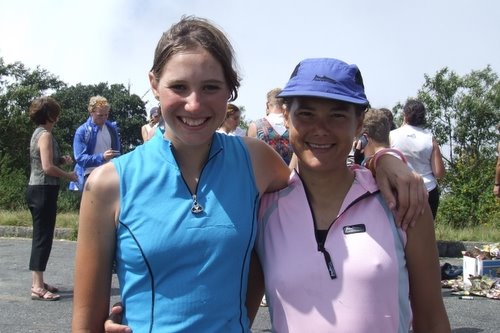
On Saturday I cyled 45km of hills followed by a tough 9km run. It's nice training with a dedicated group.

Today I ran with a running squad - 1000m warm up + 5x 1000m at threshold pace. Did all of them in 4min ballpark.


Kunstler:

Message from oil man Jeffrey Brown in Dallas (westexas@aol.com), among our most trusted correspondents:
"Based on EIA crude + condensate numbers through May, world oil production is down by 1.3% since December. However, as I have been predicting, production from the top 10 net oil exporters is down more--3% since December. Since domestic demand in the exporting countries has to be satisfied first, and since domestic consumption in most exporting countries is rising quite rapidly, the effective drop in net exports from these 10 countries is probably more than 5%. In other words, net exports are probably dropping about three to four times faster than world oil production is falling."

Saturday, August 19, 2006

The Orange Man Cometh


Cycled about 50km today, mostly hills, with 4 or 5 others riders. Then ran 9km through Langenhovenpark. It's one of those bright, sunny, almost windfree days.


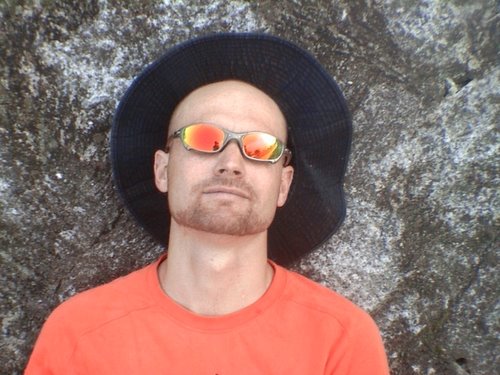
(Look how small this guys arms are...like a T-rex!)

Had a salmon salad afterwards, and some ice tea at the universities coffee shop.

Tomorrow we are riding the OFM route again (107km).

It's good to be training again. Puts classroom hell behind me.

What's in a name?


A lot more than you’d think
by Nick van der Leek

Once again there have been calls for new names for all manner of things in our country. From our most important airport, to Potch, to the university I am attending.

I don’t think it is unimportant to occasionally think about names, particularly when it is possible that a place (or person’s) name has undeserved associations, or has become unfashionable or irrelevant. But one has to be careful. Prince did this and then he became known as: ‘the artist formerly known as Prince.’

It seems juvenile to be concentrating on reinventing names over and over again. The country made sweeping changes, so why are we still bothered with it? We have a cricket team named after flowers, and a soccer team with a name their supporters understand. I wonder though, if we changed the name of the Springbuck rugby team to the zebras or the elephants, if this would not make them – psychologically more than anything else – more or less of a threat in international rugby? Would elephants do better in a scrum? Would zebras become a running rugby team?

How successful would Virgin be if Branson had called his record company Island or Gallo? Not bad names, but can you imagine Gallo Atlantic, Gallo Mobile, Gallo Banking, or Gallo Active? Same with Steers. Imagine if it was called Pickles. Can I have a pickles burger please? Actually, hang on, please cancel my order.

And I think Tom Cruise’s real surname is Mapother or something similarly clumsy. George Michael is actually George something-very-different. But the names work in both cases because we get a cool and clear impression of the person from the name.

Where I teach I ask my students to call me ‘Mr. Nick’, and not ‘Mr. van der Leek.’ I have 2 reasons for this. The first is because it’s shorter and simpler, and the second is that I am not Afrikaans, and so, don’t want to be associated with the negative bias that many Africans in the Free State seem to have of the Afrikaner. I’d rather avoid it altogether. Happily, some students now call me ‘Sir Nick.’ Perhaps in time I will be promoted to ‘Saint Nick’. Saint Nick is, after all, the patron saint of children (and perhaps my name played no small part in shaping my fate to become a teacher.

And what about names that are either unpronounceable or embarrassing to pronounce? I know a photographer whose surname is (I promise you) Slettevold. I’m not sure if I have recommended her that often, because when I did drop her name there was always that uncomfortable silence afterwards. Perhaps there are more Sotho students now at the University of the Free State, and perhaps it is fair to change the name to University of Mangaung. When I spoke about this, my black friends kept telling me how to pronounce Mangaung because I was getting it wrong. So I said to them:
“If you were from overseas (and there are more and more students from Hong Kong, the Philippines, Korea, Europe and Africa choosing to come and study here), do you think you’d choose to study at a place that you couldn’t even pronounce?”

In South Korea for example, many Korean brands and shops have English names simply because people see English as advanced, and Koreans aspire to western things. Many of these western sounding names do becoming success stories. Toyota very nearly was exported from Japan as Toyoda, and I dare say, Toyoda would have been about as successful as Peugeot (an equally unpronounceable or troublesome brand name).

A name is a lot more important than people realize. Today we give everything names, including our thinking systems (existentialism, nihilism, emotional intelligence, or feminism, or post modernism), our common mindsets (consumerism), and our myriad mental ailments. While in the past you were either ‘ill’ or had a ‘fever’ or were ‘under the weather’, now a vast arsenal of names are available for precise diagnosis. Instead of merely ‘having a cough’ it is now specifically an ‘upper respiratory tract infection’ etc.

If this doesn’t seem particularly noteworthy, consider then that the advances made in science and biology, where every class of living thing has been categorized and sorted into a hierarchical family system, genus with genus, species with species. Stars, craters on the moons, asteroids and planets have all – as far as possible – been either named or numbered. And of course this obsession to ‘name’ something, as though ‘naming’ was the same as knowing, has spread into our own social systems. Now, the first thing we want to know when we meet a person is who they are. “Who is he?” “He’s John.”

Is that who you are? In many cases, it’s enough to suffice. “John will now present the latest reports.”

Our stereotypes are also based on names. Here are some names we give people that will quickly determine whether we might want to associate with them or not:
Passionate pompous confident arrogant fat friendly silly introverted awkward artistic fit fatherly aggressive anti-terrorist elegant criminal slob, rolling in it and weak.

Some of the most far reaching stereotypes have to do with our perceptions of race, gender differences and class. When you describe someone as a rich white woman, that is entirely different than saying: a confident, but slightly awkward person. It’s in this way that ordinary terms becomes names, categories, that we use to quickly label and categorize each other.

Being so dedicated to nomenclature is, naturally, a recipe for becoming ignorant of subtlety, and in the end, of never finding out who or what something or someone really is (in terms of true nature), but only what it is called.

In the end, the names we choose (for ourselves, each other, places and products) still limit our understanding of all these things. So we ought not to get stuck on names. We should choose them carefully, to be sure. Names should be inclusive, not exclusive. When you think about it, almost every religion is actually an expression of an exclusive type. “Oh, he’s Jewish.” “Yes, and she’s a Catholic.” “They’re Buddhists.” In almost every case, you will immediately either feel allied to this group, or have a built in sense of being excluded (alienated from them).

This culture of nomenclature tends to inculcate the dividedness we see in society. We are still a bunch of tribes swarming through the cities, and sticking to our own symbols and stuff.

Our thinking has become characterized by naming things, and when we make the names more important than what they actually are, we invest in cages and categories, boundaries and boxes for people and things. When we focus as much as we do on the names we have for ourselves, and others, we ask the universe to impose limits on ourselves and others. When you ask for limits, they are yours.

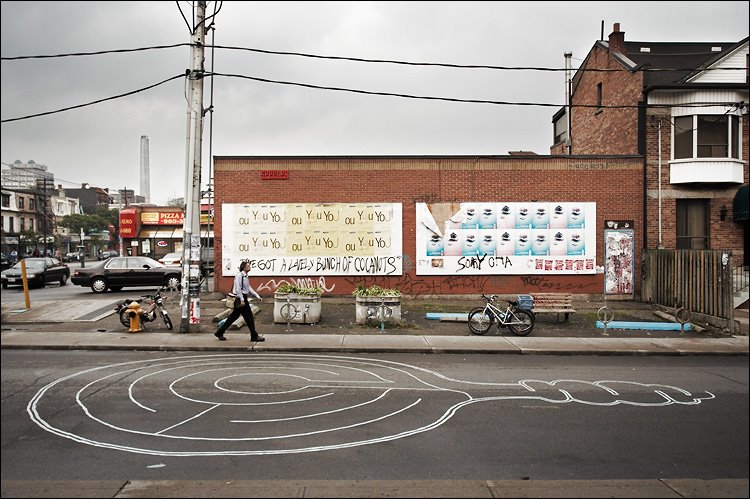
Image above courtesy of topleftpixel.com

Do we really have a soul?

Is the human soul a non-physical energy field?
by Nick van der Leek

Nobel Laureate, Francis Crick, has made some of the most penetrating discoveries regarding the workings of the brain (at a neural level). And, in collaboration with James D. Watson, Crick first discovered the molecular structure of DNA (in 1962). The focus of this article is on Crick’s ‘scientific search’ for the soul.

I don’t know about you, but I don’t recall having anything resembling a personal life before I was born. I didn’t exist on another plane; I didn’t fly through the universe in search of home planets as Superman did. I don’t remember being a snail, or a frog, or a Japanese princess. Perhaps I did exist as disparate cells floating in other people’s bodies, but I didn’t exist with my current identity and integrity until, I suppose, the moment of my conception. Hands up anyone who had a different experience?

Consciousness is the alternative description for the ‘soul’. It’s not an exact synonym, of course – certainly not in the same way that words like ‘essence’ and ‘spirit’ are interchangeable for the word ‘soul’. But I am not interested in a vague definition of the word ‘soul’. I am concerned with Crick’s more scientific approach.

The best place to start when attempting to unravel, to demystify the soul, is to start at the source. Where then, is the seat of the soul? According to Crick, it is not in the heart, not in any of its chambers. Specifically then, where is it?

Consciousness, what some refer somewhat mystically to as the soul, resides – wait for it – in the brain. The brain, says Crick, ‘does a fantastic job in a small space… [using] relatively little energy to do it.’ I can hear you asking: What? Are we nothing more than a pack of neurons? Crick’s book ‘The Astonishing Hypothesis’ presents this case with persuasive eloquence. And that’s exactly what I believe to be the case. Knowing that the seat of the soul (or consciousness) merely resides in the brain is not to be dismissive either of the nature of consciousness, nor of the brain. In fact, both are enormously complex, and both, especially the latter, have evaded most of our efforts to develop even a simple understanding of it.

Yes, with our brains as instrument, we have penetrated the universe with our understanding, but the most complicated of all things appears to be the physical machine of the mind that we must use to measure and interpret everything. I am sure that even the keenest minds, though they may whiz through rocket science and swirl effortlessly through the complicated convolutions of chemistry and astrophysics, or nimbly skip through the machinations of molecular biology, all our best minds stumble and fall in the minefield that is neuroscience.

Crick’s approach is astonishing because it is a ‘reductionist approach’. This means that a complex system (like the ability to see, or word processing) can be explained by the behavior of underlying parts and their processes. In a system with more than a single level of interactivity, we may see processes that repeat. In the same way that a single electronic bit (a one or a zero) is quite dumb, so is the individual neuron (or firing of it) in our brains. It is when we consider the whole system, the parallel networks at play, that this dumb unit begins to flourish and thrive and sing and become all that it can be in a streaming symphony of energy.

Now let’s refer to our question again: Is the human soul a non-physical energy field? If we consider that our brains are filled with swarms of energy firing in interactive patterns, then the statement is not as unrelated to the brain as we may have first supposed. Imbedded in the brain are in fact deep residues of information. Much of the brain comes into the world with all its parts assembled. But as we all know, it takes time (experience) to tune the brain into doing a ‘precision job’. Consider Jane Austen, who required a superior intellect to produce her excellent novels. All 6 novels were only produced in the last few years of her life, once she’d achieved the pinnacle of her intellectual ability (to process our deep emotional subtleties in the structures of language).

In the same way that weavers have an imbedded knowledge of how to weave nests, and swallows can fly around the world without a map or an air traffic controller, and salmon can swim to the exact spot where they were spawned, we humans have a different gift. The gift of language. It may seem unexceptional to us, but apes do not even come close to acquiring the basics of language acquisition, no matter how intensive their training.

Language in itself is an interesting aspect to consider when approaching the concept of consciousness. A language system, Crick suggests, ‘is not essential for consciousness [but] this is not to say that language may not considerably enrich consciousness.’ And further, Crick points out that ‘Self consciousness…the self-referential aspect of consciousness is probably a special case of consciousness.’

Also interesting is that the structure of our brains has developed in indirect pieces, with evolution promoting structures that work with the most ease more likely to be selected. The final design, Crick suggests, might not be a clean one, but this accumulation of gadgetry appears to work better (in all the complex situations of life that we find ourselves in) than would what Crick calls ‘a more straightforward mechanism…designed to do a job in a more straightforward manner’. Interesting, isn’t it?

Crick then goes on to pursue the implications of our visual awareness on consciousness. That is far too complicated for me to even attempt to reveal here (and I doubt if I could). What I would like to illustrate is this: when you draw a magnet under iron filings, they rise up, and flow according to the fields of stimulus. This magic-seeming reaction is the perfect metaphor for the neural fireworks going on in the brain. Imagine an internal city with its lights off, galaxies of unlit stars. And beyond the rim of the cornea, all images that pass across our pearly sensors draw these galaxies into illuminated clockworks of spinning fireworks. And this is only the beginning of it. Comets stream and icicles melt into sensations and sensibilities.

And somewhere in this firing of neurons, correlating to whichever stimulus in which ever quadrant of the brain, are the trains of our thoughts. Imagine them, spinning snakes of electric light, flashing over DNA-like tracks networking all the spheres and structures within our skulls.

I took apart the tower of my computer once. I was surprised at how little was inside: a thick tangle of wires, a small fan, a wafer card with its circuits, the microprocessor and two small black boxes with their silver mercury disks inside. The hard drives spin as they write their data. In the end, all this amounts to is flashes on a screen, words, and letters, like this word. In comparison, the brain and our consciousness is a far more magnificent expression of the universe, and all of its charming intensity. The universe, I believe, has been re-engineered over millennia, in the stars and networks that swim in our heads.

Computing for dummies

How to burn a CD, change the size of a JPEG file and other useful tips
by Nick van der Leek

For those of you who know your way around computers, this ought to serve as a quiz. If you know (and have experience of) all seven of these suggestions (and software) then consider yourself an advanced user. 5 or more, intermediate. 3 to 5 makes you a beginner, and less than 3: well print out this page and keep it.

Creating shortcuts

You’ll need a shortcut to open those files or launch programs that you use everyday, or a few times a week. If you find yourself needing to search for a file, then you really need to create a shortcut for your desktop. (The desktop is the screen you’re left with when all other windows are closed). How you create is a shortcut is simple. Right click on the folder, or on the program icon. A box will open up, and you need to go to the ‘Send to’ row (probably 4th from the bottom). Click on ‘Desktop (Create Shortcut)’ and Bob’s your uncle.

Changing screensaver or desktop

To change your desktop (the appearance of your screen with no software programs or documents running) is equally simple. Right click with your cursor on the desktop background, and click properties. Click on ‘Desktop’ and then go to Browse to select the new picture from your picture files. If you don’t have any, you can do a google search (set to images) for something appropriate. Beside ‘Desktop’ is ‘Screensaver’, and here you can set the time it takes for the screensaver to kick in, and you can select from a number of screensavers. The screensaver I have uses my ‘My Pictures’ file to roll through a continuous slideshow. If you have enough pictures, this can be very entertaining, especially for people visiting or friends, who might comment on pictures of themselves of other people. And to the right of screensaver is the ‘Appearance’ tab. Here you can change the size of the icons on your screen. I have a big screen, so I like my icons to be fairly small.

Open with...

Ever get frustrated that when you click on an image or a movie file it keeps opening using the wrong program? To remedy that, you once again right click, and go to ‘Open with’, and then select the program you want. Sometimes you set the same program to open by clicking a ‘default’ box. When the ‘Open with’ option doesn’t appear, you sometimes need to press ‘shift’ and then right click.

Burning to a CD

Once again you save your file, then right click on the file name, folder, or icon and then click on ‘Send to’. Select the option for CD drive (it should be ‘D’ or ‘E’ drive. Make sure you have a writable CD in the drive. Once the file has bent sent, a balloon ought to pop up asking you to write the files, or else you can simply click on the appropriate drive and follow the instruction: “Write files…” on the left, at the top.

Clonedvd

This is a useful tool for saving DVD’s onto your harddrive, and (or) cloning your DVD’s. I think you can download this software for free off the internet, but if not, there are plenty of alternatives, like Nero Showtimes and others.

The versatile VLC media player

If you find some of your movie files work on some of your software, but not on others (for example if you see pictures but no sound), try using the VLC media player. It tends to be able to play anything, and chances are, the files it can’t read, almost nothing else can’t.

Changing size of JPEG

Well this is bizarre. Perhaps it’s the lateness of the night because I haven’t been able to solve this one. I did this recently but now I can’t recall how I did it.
I do know how to reduce the resolution of an image when exporting images out of a photoediting suite called ‘Picasa 2’ – an excellent package. When you hit export you have the option of:
Using the original size
Or resizing to X number of pixels (I’d recommend 500 or so)
And I almost always use this method to change resolution. However, for those users who don’t have or use Hello’s Picasa, the question is: how to reduce the resolution of those 1 meg or more images?

When you want to email images (to reporter.co.za for example) and your connection is slow (or the person you’re sending to has a slow download rate), you might want to send lower resolution images (low res). Do you know how to do this? If you do, or if you have any other shortcuts or useful tips, share them with us.

Feedback - at least


Hey Nick,


Unfortunately we won't be able to run an interview with Jean Neethling just yet, however, I'll most definitely contact you if we decide to feature her later.


good for now
Dylan Muhlenberg
Features Editor
GQ/ GQ Car
021-480-2370
___________________________________________________

Hi Nick

Apologies for not getting back to you – your original mail got buried
among the hordes, but I’ve had a look at it now. Thanks for the opportunity,
but I’ll pass. We’ve had our eye on Jean Marie, but from a pure sport point
of view she’s not big enough yet for us to do a profile on her.
However, in the next 6 months or so we plan to feature her in our
“SI Sportwoman” series, but those interviews and pictures
we set up and do ourselves.

Best regards

Steve

Friday, August 18, 2006

What's in a name?


A lot more than you’d think
by Nick van der Leek

Once again there have been calls for new names for all manner of things in our country. From our most important airport, to Potch, to the university I am attending.

I don’t think it is unimportant to occasionally think about names, particularly when it is possible that a place (or person’s) name has undeserved associations, or has become unfashionable or irrelevant. But one has to be careful. Prince did this and then he became known as: ‘the artist formerly known as Prince.’
It seems juvenile to be concentrating on reinventing names over and over again. The country made sweeping changes, so why are we still bothered with it? We have a cricket team named after flowers, and a soccer team with a name their supporters understand. I wonder though, if we changed the name of the Springbuck rugby team to the zebras or the elephants, if this would not make them – psychologically more than anything else – more or less of a threat in international rugby? Would elephants do better in a scrum? Would zebras become a running rugby team?

How successful would Virgin be if Branson had called his record company Island or Gallo? Not bad names, but can you imagine Gallo Atlantic, Gallo Mobile, Gallo Banking, or Gallo Active? Same with Steers. Imagine if it was called Pickles. Can I have a pickles burger please? Actually, hang on, please cancel my order.

And I think Tom Cruise’s real surname is Mapother or something similarly clumsy. George Michael is actually George something-very-different. But the names work in both cases because we get a cool and clear impression of the person from the name.

Where I teach I ask my students to call me ‘Mr. Nick’, and not ‘Mr. van der Leek.’ I have 2 reasons for this. The first is because it’s shorter and simpler, and the second is that I am not Afrikaans, and so, don’t want to be associated with the negative bias that many Africans in the Free State seem to have of the Afrikaner. I’d rather avoid it altogether. Happily, some students now call me ‘Sir Nick.’ Perhaps in time I will be promoted to ‘Saint Nick’. Saint Nick is, after all, the patron saint of children (and perhaps my name played no small part in shaping my fate to become a teacher.

And what about names that are either unpronounceable or embarrassing to pronounce? I know a photographer whose surname is (I promise you) Slettevold. I’m not sure if I have recommended her that often, because when I did drop her name there was always that uncomfortable silence afterwards. Perhaps there are more Sotho students now at the University of the Free State, and perhaps it is fair to change the name to University of Mangaung. When I spoke about this, my black friends kept telling me how to pronounce Mangaung because I was getting it wrong. So I said to them: “If you were from overseas (and there are more and more students from Hong Kong, the Philippines, Korea, Europe and Africa choosing to come and study here), do you think you’d choose to study at a place that you couldn’t even pronounce?”

In South Korea for example, many Korean brands and shops have English names simply because people see English as advanced, and Koreans aspire to western things. Many of these western sounding names do becoming success stories. Toyota very nearly was exported from Japan as Toyoda, and I dare say, Toyoda would have been about as successful as Peugeot (an equally unpronounceable or troublesome brand name).

A name is a lot more important than people realize. Today we give everything names, including our thinking systems (existentialism, nihilism, emotional intelligence, or feminism, or post modernism), our common mindsets (consumerism), and our myriad mental ailments. While in the past you were either ‘ill’ or had a ‘fever’ or were ‘under the weather’, now a vast arsenal of names are available for precise diagnosis. Instead of merely ‘having a cough’ it is now specifically an ‘upper respiratory tract infection’ etc.

If this doesn’t seem particularly noteworthy, consider then that the advances made in science and biology, where every class of living thing has been categorized and sorted into a hierarchical family system, genus with genus, species with species. Stars, craters on the moons, asteroids and planets have all – as far as possible – been either named or numbered. And of course this obsession to ‘name’ something, as though ‘naming’ was the same as knowing, has spread into our own social systems. Now, the first thing we want to know when we meet a person is who they are. “Who is he?” “He’s John.”

Is that who you are? In many cases, it’s enough to suffice. “John will now present the latest reports.”

Our stereotypes are also based on names. Here are some names we give people that will quickly determine whether we might want to associate with them or not:
Passionate pompous confident arrogant fat friendly silly introverted awkward artistic fit fatherly aggressive anti-terrorist elegant criminal slob, rolling in it and weak.

Some of the most far reaching stereotypes have to do with our perceptions of race, gender differences and class. When you describe someone as a rich white woman, that is entirely different than saying: a confident, but slightly awkward person. It’s in this way that ordinary terms becomes names, categories, that we use to quickly label and categorize each other.

Being so dedicated to nomenclature is, naturally, a recipe for becoming ignorant of subtlety, and in the end, of never finding out who or what something or someone really is (in terms of true nature), but only what it is called.

In the end, the names we choose (for ourselves, each other, places and products) still limit our understanding of all these things. So we ought not to get stuck on names. We should choose them carefully, to be sure. Names should be inclusive, not exclusive. When you think about it, almost every religion is actually an expression of an exclusive type. “Oh, he’s Jewish.” “Yes, and she’s a Catholic.” “They’re Buddhists.” In almost every case, you will immediately either feel allied to this group, or have a built in sense of being excluded (alienated from them).

This culture of nomenclature tends to inculcate the dividedness we see in society. We are still a bunch of tribes swarming through the cities, and sticking to our own symbols and stuff.

Our thinking has become characterized by naming things, and when we make the names more important than what they actually are, we invest in cages and categories, boundaries and boxes for people and things. When we focus as much as we do on the names we have for ourselves, and others, we ask the universe to impose limits on ourselves and others. When you ask for limits, they are yours.

From: "Dave Southwood" <dave@travelafricamag.com>
Subject: Re:
Date: Thu, 17 Aug 2006 19:10:28 +0100
To: "Nick v d Leek"

lets read it and see... Difficult because it relies on public transport not just footing it, did you go via West Africa or East, East is the easy route , so West would have the interest factor, unless you went VIA Somalia, a short side visit to Mogs(Mogadishu) last reporters who went there never came back. Airports safe though, 50 kms from town.

let me know, will read it and give you my thoughts..

Hats/Gloves Off


The Pride and Prejudice test today was an experiment in obfuscation and obtusity. If you don't know what they means (I'm not sure I do), the test was extremely vague in what it was asking. Imagine choosing an errant passage in a book, where no specific reference is made to anything (I mean, no place name, no person's name). Then you ask your students to write an essay on it. I believe I managed, but for some students whose first language is not English (and this might be a third language subject), I think it was a very cruel test.

The lecturer (once again Prof Fat Factory) also asked us to write about the 'hero' of Pride and Prejudice which invites an interesting dilemma. Austen obviously has her focus on Elizabeth - her hero, but the word is actually a masculine form (heroine is feminine). It's similar in that sense to the word 'actor' which can mean either a male or female.

So once again not impressed with this oversized woman and since I bumped into Prof Greyling, I am more determined than ever than have her account for her sins. He (Greyling) has been a bit wimpish on this subject. I haven't felt he is dealing with it at all, which somehow doesn't surprise me...but I won't reveal I say so, right here, or right now.

Meanwhile Manuella suffered a mugging (losing keys, cards etc) and wasn't able to give us access either into her office or out of it. She also missed yesterday's tut. But she's a better figure of a woman than someone who is large and unprofessionally large at that, all day.

Take it or leave it

Yip, we’ll take it. Am going to give an edit and get back to you with new version by early next week for you to check. Not interested in Ryk’s sister right now, thanks. Suggest you try Sports Illustrated?

Thursday, August 17, 2006

Testing Times

There were no lectures yesterday even though 2 were scheduled. Quite frustrating as I could have used those 2 hours to study for tonight's test.

Also had a guy come in to fix my computer. That little errand cost me R220.

More threatening behaviour in class today. If I wind up dead, please make sure a boy called Justin Maritz has an alibi. Based on his aggressive behaviour, I wouldn't be surprised if he has some plots brewing in his brain.

The Chinese school called me today asking if I want a job there. Given the strain that I'm experiencing here it's certainly an option to consider.

Austen On Marriage

Wedded bliss depends on the ability to avoid the false premises of marriage
by Nick van der Leek

I am not expert on marriage, except that I am the product of a marriage, I’ve observed plenty of marriages, and I have been asked to make a few speeches at the beginning of a few others. I do consider Jane Austen to be an expert on the subject, and it is interesting to note that neither she – an authority on the subject – nor her sister Cassandra, bound themselves into such a union.

There’s also no evidence to suggest that Jane Austen was disappointed in love. Now I know those who enthusiastically (and without qualification) endorse the marriage contract will immediately argue that Jane Austen was of another age, and anything she had to say about the institution then is simply inappropriate today. Wrong.

Austen is the author of six of arguably the best novels in the history of the English language. She herself describes her area of expertise as being the width of the ivory stick on a piano, and uses this limited space to adorn the details and nuances of life in immaculate detail and with perfect subtlety. Her humility on this point should not diminish our perceptions of the quality and value of her expertise.

It is in Pride and Prejudice (and these two terms capture perfectly some of the principal qualities at work when people, of any age, seek a mate) that Austen balances the gender issues at play when human beings seek partners for life.
She provides 5 examples of marriages in her novel, 3 of which are flawed (including the marriage of her principal characters’ parents, the Bennets, and the marriage of her sister, and the marriage of her best friend) and two which are not. The ‘false premises’ of the three flawed marriages are noteworthy.

The first of these is a marriage based on passion – which may be a passionate lust or greed. I have attended at least one wedding where this was evidently the reason behind the union. In Pride and Prejudice, Lydia and Wickham’s passion leads to an almost disastrous situation, which is salvaged thanks to the patronage and support of some wealthy and well meaning people? Despite these interventions, one wonders how long such an alliance, that begins so shakily and impetuously, will last.

The second false premise is based on prudence. This means marrying for good reason, or in popular parlance, ‘a marriage of convenience’. In her novel, Elizabeth’s best friend marries the pompous, passionless and exceedingly polite Mr. Collins (a preacher), because she, Charlotte, is getting old and doesn’t want to have to fend for herself. It is not long before she has to engineer space between herself and her husband, a man whom she does not respect nor love. Once the comfort of home becomes secondary, the business of dealing with a person who constantly offends, and who cannot command one’s affection becomes an inescapable reality and a primary focus that must also be constantly avoided.

I am aware of at least one alliance that bears all the characteristics of the one mentioned above. It seems to me to be based on what is acceptable in a worldly sense, but what is (what must be) personally very difficult to endure.

The third false premise is a lapse of judgment, which is commonly associated with the very young impetuously and rashly rushing to the altar. In Austen’s book, the Bennets (Mr. and Mrs.) fit this category, and Mr. Bennet finds himself suffering more than 20 years later with a wife who suffers from constant outbursts of silly, nervous energy. After all, in the very first chapter he says, “You mistake me, my dear. I have a high respect for your nerves. They are my old friends. I have heard you mention them with consideration these twenty years at least.”

I also know of people close to me who fall into this category, and they were the first to divorce. It is an open question, when one has discovered one’s error (in getting married) whether (or for how long) one ought to remain obstructed from bearing out one’s true nature and intentions, or whether one makes the most of an imperfect state of affairs, possibly for the sake of children or possibly out of a stubbornness to not admit to the world that mistakes were made.

Marriages that do work depend on a careful matching of two people with a similar sense of pride, and appreciation of each person’s tastes and sensibilities. All this requires cautious and lengthy consideration, and a deep sense of respect for the other’s universe.

My advice is quite simple. If you’re patient and mature enough to read (and understand) a classic on the subject of marriage (like Pride and Prejudice) – if you’re capable of reading it from the first word of the first page, to the last word of the last, and have absorbed its centre, then you’re ready to know what you’re getting yourself into, and what you’re in for. It’s a big deal, probably the biggest deal of your life. If you manage to not screw up (getting or being married), you ought to be fine. But I agree with Austen: the odds are against us.

Wednesday, August 16, 2006

Class Conscious

Oprah said something interesting today. That class can often be determined based on peoples':

-weight
- teeth
- dialect

While in the past, being a heavy weight tended to be a predicter of wealth (and opulence), now the reverse is true.

That said, I feel like I am in the middle ground because though I had extensive orthodontics my teeth are still skew, I'm getting heavier - it seems - every year (but very aware of it and working against it) and as for dialect, well I think that's fair. I seem to speak with unaccented English. Today one of my kids asked me: "Sir, can you speak Afrikaans." More years in this town and I may pick up the dreaded Bloemmie English accent.

In Prof Raftery's class today an Asian girl sat in the seat in front of mine. I asked her something about tutorials (since I hadn't prepared mine), and then found out she is South Korean, went to Saint Michael's (same school as my sister). I asked her (Sophie) if I could interview her, so I can at last demonstrate to Koreans (and Asians) who have never set foot on the African continent (and obviously never laid eyes on any in situ Africans either).

Sophie has just sms'ed me now to say that I am welcome to interview her 'any time', so watch this space.

Also heard the news today that since Miss Myburgh will be taking over my grade 11 pupils (who become matriculants next year), that leaves me with no one to teach, and yes, you guessed it, possibly no job at all. I spoke to the Principal about this and he seemed reassuring enough until he got to his last sentence, which was: "The Department does intend to shed at least 1 post."
So there are some implications there. On my way out I mentioned that I'm very 'open' to teaching English.

Now the wisdom of not buying a car (and being responsible for 10-20 odd instalments of R1000 each) has really manifested itself in my mind.

I also called my lawyer today and asked him to begin the process of suing Heartland (for more the R7500 they owe me) since they are now 'officially' in default.

Before my first class today I had a word with a pretty young teacher next door who seemed a bit out of sorts. Shortly after asking her if she was okay, she burst into tears. She said she just couldn't face the class she was about to teach. I hope this illustrates the collective situation we teachers are in.

I need to swim again soon. After swimming to Jean Marie, I feel like I miss the feeling of the water moving over me. After all, it is a kind of flying.

Quote: put your heart into it and your body will follow

Opportunity Knocks


Hi Nick

Juliette informed us about this awesome opportunity that was offered to you. We'd like to do a write up on you for our weekly newsletter.
Please could you supply us with a recent photo of yourself as well as give us a brief bio (a small paragraph would be perfect, it doesn't need to be too long).

Much appreciated and congratulations!

Kind regards

Tegan
On behalf of the www.reporter.co.za team


-------------------------------------------------------
From: Juliette Saunders
Sent: Friday, August 11, 2006 2:00 PM
To: 'Nick v d Leek'
Subject: Rhodes conference


Hello Nick
As discussed telephonically, Rhodes has offered to sponsor a reporter.co.za contributor to attend this conference in September.

I believe you'd be the best person to represent the cause of citizen journalism, because of your time in Korea where onmynews is so strong but, more particularly, because you have been reporting news and interviewing people of interest for our website - so you would be well-positioned to actively participate in the conference.

I'd hope it is interesting enough for you to actually report on it for reporter.co.za too.

Best regards
Juliette Saunders
on behalf of reporter.co.za

PS Rhodes will follow up with you on the sponsorship details, but here is the info they've put up on their website.
Join us for the first African citizen media and blogging conference on 14 and 15 September 2006
The event is hosted by the New Media Lab as part of Highway Africa 2006 and will take place in the Africa Media Matrix Building on Rhodes University Campus in Grahamstown, South Africa.

Web Link
http://dci.ru.ac.za/

"Matthew Ravenscroft"

Hi Nick,
we occasionally need a photographer for model shoots on Saturdays and
some evenings. Are you experienced in this field? Our studio is based in
207 Surrey Ave, Ferndale. Pls bring a cv if you are interested. You can
discuss with Chantelle.
Also view web site on www.ivok.co.za
Hope to hear from you soon.
Regards
Matt

Tuesday, August 15, 2006

World Full Of Fat People


World now has more fat people than hungry ones: expert
by Lawrence Bartlett
Mon Aug 14, 5:22 AM ET

The world now has more overweight people than hungry ones and governments should design economic strategies to influence national diets, a conference of international experts have heard.

The transition from a starving world to an obese one had happened with dramatic speed, US professor Barry Popkin told the annual conference of the International Association of Agricultural Economists on Monday.

"The reality is that globally far more obesity than undernutrition exists," Popkin said, adding that while hunger was slowly declining, obesity was rapidly spreading.

There are more than a billion overweight people in the world and 800 million who are undernourished, he said at the Gold Coast convention centre near Brisbane. The world population is estimated at about 6.5 billion.

"Obesity is the norm globally and undernutrition, while still important in a few countries and in targeted populations in many others, is no longer the dominant disease."

The "burden of obesity", with its related illnesses, was also shifting from the rich to the poor, not only in urban but in rural areas around the world, he said.

China typified the changes, with a major shift in diet from cereals to animal products and vegetable oils accompanied by a decline in physical work, more motorised transport and more television viewing.

But all countries had failed to address the obesity "boom", the University of North Carolina professor said.

Food prices could be used to manipulate people's diets and tilt them towards healthier options, he suggested.

"For instance, if we charge money for every calorie of soft drink and fruit drink that was consumed, people would consume less of it.

"If we subsidise fruit and vegetable production, people would consume more of it and we would have a healthier diet."

University of Minnesota professor Benjamin Senauer used a comparative study of lifestyles in the United States and Japan to show how the costs of food and transport play a role in the problem.

Japan has one of the world's lowest rates of obesity and the US one of the highest.

"The average Japanese household spends almost a quarter of its income on food compared to under 14 percent in the US," Senauer said.

While a direct tax on food in the US to reduce obesity would not be politically acceptable, agricultural subsidies which resulted in cheap food could be reduced.

But other factors such as exercise also played an important role and again economic influences were involved, he said.

"Japanese cities are based on efficient public transport -- and walking. The average American commutes to work, drives to the supermarket and does as little walking as possible."

The average Japanese man walks four miles (6.4 kilometres) a day while almost a quarter of US adults may only walk between 1,000 and 3,000 steps a day, Senauer said.

While the relative cost of calories and fat had decreased over time, technology had eliminated much of the need for physical activity during work.

For most Americans, getting enough physical activity now required a conscious commitment to exercise and often cost money, such as the price of a round of golf or membership of a gym."

"Obesity and overweight bring with them significant risks of chronic disease and premature death and adjusting domestic policy to encourage a less sedentary lifestyle is literally a matter of life and death," he told the conference.


Copyright © 2006 Agence France Presse. All rights reserved. The information contained in the AFP News report may not be published, broadcast, rewritten or redistributed without the prior written authority of Agence France Presse.


Copyright © 2006 Yahoo! Inc. All rights reserved.