Wednesday, August 09, 2006

Pause you who read this


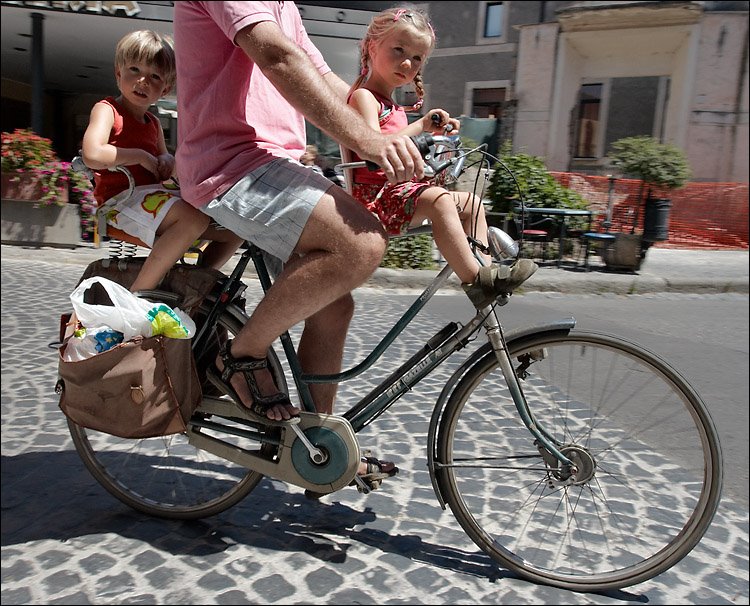
Image taken in Siena, Italy, courtesy of topleftpixel.com

That was a memorable day to me, for it made great changes in me. But, it is the same with any life. Imagine one selected day struck out of it, and think how different its course would have been. Pause you who read this, and think for a moment of the long chain of iron or gold, of thorns or flowers, that would never have bound you, but for the formation of the first link on one memorable day. - Charles Dickens, in Great Expectations

I went to the National Hospital today. Elbe called me just before 10 (fortunately not earlier, because I went to bed late) and so supervised brats emptying two huge piles of dirt onto the hostel gardens for more than 2 hours. Lunch was good, but marred by another brat kicking his toe into a volcano of bloood. So I drove him to hospital and spent most of the afternoon there waiting for the piece of skin to snipped off and the volcano banadaged.

I've also written a letter to the Head of the English Department, as I've not been given much help, outside of class, from my lecturer, Prof Raftery, regarding everything from the timetable (which differs from the official timetable) to study notes to other things I've required her assistance with. I've found her dismissive approach improper, so feel I want to make sure it is addressed. It annoys me a lot to have to make the effort to attend class, get study materials, and find no one is there, and nothing has been made available.

That said, I am actually enjoying Pride and Prejudice and Great Expectations a great deal. These books are classics because they incisively reflect the human condition, and they speak to me about mine.

Here's more Dickens:

On consumerism/capitalism:
We spent as much money as we could, and got as little for it as people could make up their minds to give us. We were always more or less miserable, and most of our acquaintance were in the same condition. There was a gay fiction among us that we were constantly enjoying ourselves, and a skeleton truth that we never did. To the best of my belief, our case was in the last aspect a rather common one.

On suffering:
" . . .suffering has been stronger than all other teaching, and has taught me to understand what your heart used to be. I have been bent and broken, but - I hope - into a better shape."

On being someone of substance (rather than appearing to be):
. . . it is a principle of his that no man who was not a true gentleman at heart, ever was, since the world began, a true gentleman in manner. He says, no varnish can hide the grain of the wood; and that the more varnish you put on, the more the grain will express itself.

On being dishonest to ourselves:
All other swindlers upon earth are nothing to the self-swindlers, and with such pretences did I cheat myself. Surely a curious thing. That I should innocently take a bad half-crown of somebody else's manufacture, is reasonable enough; but that I should knowingly reckon the spurious coin of my own make, as good money!

In a word, I was too cowardly to do what I knew to be right, as I had been too cowardly to avoid doing what I knew to be wrong.

On humility and changing our hearts:
Heaven knows we need never be ashamed of our tears, for they are rain upon the blinding dust of earth, overlying our hard hearts.

I do not know the American gentleman, god forgive me for putting two such words together.

Minds, like bodies, will often fall into a pimpled, ill-conditioned state from mere excess of comfort.

No one is useless in this world who lightens the burdens of another.

On Memories:
If any one faculty of our nature may be called more wonderful than the rest, I do think it is memory. There seems something more speakingly incomprehensible in the powers, the failures, the inequalities of memory, than in any other of our intelligences. The memory is sometimes so retentive, so serviceable, so obedient; at others, so bewildered and so weak; and at others again, so tyrannic, so beyond control! We are, to be sure, a miracle every way; but our powers of recollecting and of forgetting do seem peculiarly past finding out.
Jane Austen, Mansfield Park

On Friendship:
We have all a better guide in ourselves, if we would attend to it, than any other person can be. Jane Austen, Mansfield Park

Moving Forward


I expected today to be a bloody one. With about 5 hours sleep (just could not reach system shutdown last night, so many thoughts pouring through my head), I didn't expect patience to be one of my virtues today. When has it ever been? Actually, in some areas I think I am supremely patient. If you think of swimming: it's a sport that requires consistent concentration and resistance to the cold, fatigue, and mental boredom. It may be a mental alloy, a fusion of patience and endurance.

Although I've been tempted once again to quit my job at Brebner (in lieu of being given another two month contract tomorrow), I'm not sure I have the luxury to do that. To just up and go. Certainly not if it's my intention to buy a car. And definitely not if I have to pay it beyond my termination date.

Today we did filing in all classes. I expected it to be a nuclear disaster, since Mrs Martins always seems to swoop down and find a fault and then explode, but somehow 99% of the files were in order, with virtually zero files missing or problems. There were some students who reacted to the filing imperative (from Mrs Martens) by immediately blaming me that their files were lost, only to find them after a few minutes. The silence Mrs Martens was able to achieve in 3 of 5 classes was impressive, but achieved only after some equally impressive explosive bellows (that even had me cowering in a corner). 2 classes even she found unteachable, and abandoned them to me (adding: "Good luck. I don't know how you do it.")

In effect, she took over most of my 'maintenance of order' duties today, which I really needed. Another day like yesterday and I can't see how I would not have slid back into being sick (sopre throat and cough). Today I got a chance to rest my voice, and think up a few strategies.

In the last half hour though, I lost it with the grade 11's, throwing one school bag out a window, and frogmarching another out the door. What happens is when you catch them, they spend 5 minutes debating and vehemently arguing how innocent they are, which makes the chaos even worse. So I've made it clear - the pace at which people are going to be sent out, and arguments are going to be dismissed, is going to increase by a huge factor.
I must have done a Martinesque job, because the kids were fairly quiet at the end of the 3rd or 4th tirade, and I managed to excite myself to a state of angry quivering. The words of another teacher come back to me now (we spoke earlier in the morning, and she runs): "Don't let them steal your soul."

It seems like the ultimate (and logical) result of time in the classroom, is the teacher becoming angry. What else can happen if you have students continuously provoking each other, and the teacher's job - to communicate in order to create an environment of learning - is constantly being threatened by disorder, and hysterical and circuslike noise.

I managed to sleep for an hour after lunch, then studied Great Expectations. I've just written the test, from 6pm to 7pm, and I think I may have gotten a distinction for it. You know, I don't remember ever reading Great Expectations. Even now when I go through scraps of text I don't recognise it. But I do have small red marks in the book, and I remember, when I saw the movie, going: "That's not what happened."

Prof Raftery is a by-the-book lecturer that manages to really piss me off. If you ask her anything, she manages to be abrupt and curt and annoying, simply because her bookish and straightlined thoughts are supposed to be never interrupted. I think she's one of those academics that is wholly academic. Everything about her is, and so is her lifestyle. She's very overweight, and a feminist, and inflexible - and together this describes I think a very theoretical approach to everything, which she has engineered to be fairly conceited. Meaning, if it doesn't suit her, she'll dismiss it. Not very mature.

Notice how attacking I am? I get that from teaching. My emotional patience becomes threadbare, but not, I hope, my sense of social justice. (see email below).

I'm also - but bear in mind I'm quite sleep deprived as I write this - determined to exact an appropriate justice on some people I know. I've already found information (eg www.b-e-g.co.za) which points to some large scale corporate fraud going on.

For starters do a google search on: fraud south africa ivan penny ref and you get this;


THE FINAL REPORT OF T
OMMISSION OF INQUIRY
THE AFFAIRS OF
THE MASTERBOND GRO
AND INVESTOR PROTECT
IN SOUTH AFRICA


Re: page 25 (0f 283)


Business Day : 7 September 1999 : (Refcorp staggers under cash
problems)


"Controversial venture capital company REF Finance and Investment
Corporation (Refcorp) is staggering under major cash flow problems that
could lead to its liquidation.


Former employees who did not wish to be named have said they have not
been paid for more than two months and that this was just the tip of the
iceberg. The company is apparently also about R4m behind on

pay-as-you earn(PAYE) tax remittances to the Receiver of
Revenue.

Five directors have left the company over the past couple of months for a
variety of reasons which included the nonpayment of salaries.


One employee said the problem with Refcorp was not so much the listed
entity but the underlying, non-listed companies that were draining the
parent’s accounts, balance sheet.


The Johannesburg Stock Exchange (JSE) is believed to be investigating
Refcorp and has already interrogated some former directors.

Refcorp was warned by the JSE last week for failing to submit annual financial
statements
within six months of the financial year-end. Refcorp deputy
chairman Ivan Penny pleads that the group’s financial director had to go on
maternity leave three weeks sooner than expected and that results would be
released soon.


http://icms.iac.iafrica.com/pls/cms/iac.page?p_t1=1539&p_t2=0&p_t3=0&p_t4=0&p_dynamic
=YP&p_content_id=387980&p_site_id=83

David Romero, who headed Refcorp, a key investor in the laughably named Noble Minerals, is probably one of the worst managers of expectations. Minority shareholders lost their money within days of Noble's listing as the price sank to 1c from a R2/share maiden listing.

and: http://www.dispatch.co.za/2005/03/12/Easterncape/crook.html

Financial adviser says he is not a crook
By Eddie Botha Business Editor
EAST LONDON - Hannes Brink, the financial adviser who is blamed by more than 50 investors for their R10 million losses, says he is not a crook.
Instead Nimrod Financial & Tax Consultants CC's Brink has fingered as the culprits his former partner, David Romero, head of finance company REF Equity Finance, into which the funds were invested, and Ivan Penny, an REF director.


Earlier this week the Daily Dispatch reported that the National Prosecuting Authority in Pretoria had confirmed that an investigation into the financial scheme was almost complete.
Many investors, among them pensioners, have lost their life savings in the scheme, and subsequent to this week's report many more called the newspaper to say that they too had lost large amounts of money.


The Daily Dispatch first reported about the failed scheme in 2001 when Amalinda pensioners Carl and Rosemary Hill, who invested and lost R100000 - their life savings - approached the paper.

Yesterday Brink, who now lives in Nelspruit with his common-law wife and business partner Linden Kelly, denied any responsibility.

When contacted in Pretoria he first said that the target of the investigation was REF Equity Finance, the unlisted company in which he invested the funds.
Later, in a second telephone call to him, Brink said that he was not aware of a current police investigation into the failed investments.


He said, though, he had given investigators copies of all the documents - "but that was three years ago. I have not heard any word from them since then".

Brink said he had merely acted as an agent for the investment company.
"They (the investors) bought the shares (in REF) through me."


Brink said he would be willing to give evidence if required to do so, adding: "I have also lost between R600000 and R700000 with REF.

"The problem lies with the people who handled the portfolio, Romero and Penny," he said.
"I have done nothing wrong."


Brink added that he did not understand what the sudden fuss was about - over events that took place six years ago.

He said he had sold the Ntoni Game reserve, which he had owned in the Cradock district, to King William's Town businessman Eddie Goetsch, the owner of the Buildrite hardware group.
REF also bought a 50 percent stake in Ntoni.


At one stage when Romero wrote to Eddie Leach - a retired contractor who lost over R210000 in Brink's scheme- to explain the delays in dividend payouts, he used stationery with the stamps of Nimrod and Ntoni.

REF was suspended from the JSE Securities Exchange in 2003 for failing to produce financial statements.

According to a Business Day report in the final quarter of last year shareholders had been trying to contact the company since its suspension - but telephone calls and e-mails went answered.
The report also said that United States-based businessman Albert de Lint had written to Trade and Industry Minister Alec Erwin asking him to warn South African investors to steer clear of Romero, saying: "We must conclude that investors will soon face the reality that there won't be funds to pay them back."


http://www.suntimes.co.za/2000/09/10/business/companies/
comp17.htm

Furthermore, Gullan and Gullan allege that Noble's previous corporate adviser, REF Finance and Investment Corporation as represented by David Romero and Ivan Penny, was "unable to pay over approximately R6.25-million of shareholders' funds which they collected on behalf of the company".

The report says Romero and Penny, a director of Noble until February, signed an acknowledgement of debt to Noble in their personal capacities and as directors of Refcorp and other related companies.

The theme is about deceit, and I don't believe it's fair that innocence is punished, and deceit should go unrewarded. I don't intend to prosecute this case myself, but once I have all the evidence that seems necessary, I suppose the South African Revenue Service and maybe Corporate Fraud offices somewhere can take over.

What makes me think prosecuting this case is necessary? I think we ought to live as fully as we can. I also think those who prevent us from doing so, ought to feel the full brunt of life - it's big waves, its bad weather, its bitter winters. Wealth ought not to buy justice. Innocence or goodness ought to guarantee it. I know enough about the law to know that if you ardently pursue it, and if you know it as well as it can be known, the law can only stand with you against those who oppose you.

Meanwhile, it's 8:14 pm and I now have to cycle through the cold and dark to a warm room, and the bubbleblue light of the TV. The picture above represents to me a sort of Paradise Lost, but then, I suppose it depends on where you are. Sometimes though, it depends on who you are, and who you choose to be.

Latest News


The latest casualties brought the number of people killed in Lebanon to at least 643, while the Israeli death toll was 100.
The clashes followed one of the bloodiest days of the four-week conflict. At least three Israeli soldiers and 49 Lebanese died Monday — including 15 in a rocket attack in a Beirut suburb just hours after Arab League foreign ministers wrapped up a crisis meeting that threw their full diplomatic weight behind Lebanon.


It set the baseline demand for the Security Council: a full Israeli withdrawal or no peace deal is possible. The message was given in an emotional address by Lebanese Prime Minister Fuad Saniora and carried to the U.N. by Arab League envoys.

Saniora's government voted unanimously to send 15,000 troops to stand between Israel and Hezbollah should a cease-fire take hold and Israeli forces withdraw.

The move was an attempt to show that Lebanon has the will and ability to assert control over its south, where Hezbollah rules with near autonomy bolstered by channels of aid and weapons from Iran and Syria. Lebanon has avoided any attempt to implement a two-year-old U.N. resolution calling for the disarmament of Hezbollah, fearing it could touch off civil unrest.

The coming days should offer signs on whether a cease-fire plan has a chance.


Email to Jim Kunstler


I wrote this in response to the anti-Jewish (hatemail) Jim posted on his blog, www.kunstler.com yesterday.

Hi Jim

Those anti-Jewish comments are nasty.

I missed your latest blog update so I am guessing you found them quite hurtful. I would have been hurt by them.

I did find myself (before this) wondering if you were Jewish based on your comments on Israel which seemed to me, less objective and spot on than your other-worldly comments. I don't necessarily support Israel or not support them. I think it's a really tough situation to invent a country in an area surrounded by (its) enemies on all sides, and expect things to go smoothly. Hezbollah's acts are nasty. Israel has a right to defend itself (everyone does), but I think when you wipe out 10 times the number of your own casualties, and you call Hezebollah targets bridges and roads and everything else, you're showing the same blatant disregard (disrespect) for life (and your adversaries God) that your 'enemy' is guilty of. It's a lose lose situation. Yes, I can't offer a better solution, other than the idealised: just learn to get along. I'm not sure if we humans of capable of accepting each other with our differences intact.

But your support for Israel seemed a bit more qualified (meaning overqualified - not in the sense of being restricted - in my opinion) than I thought was justified, and perhaps I haven't understood your reasons as well I need to. But that led me to think you had your sympathies in this area (and many people do). A lot of Christians (in the west, including my girlfriend) support Israel as being a sort of de facto 'God's country/God's people', which for me is absurd. What a country does, not what it stands for (or says it stands for), ought to be the measure we use to judge it.


I suppose that's an idealisation for how we ought to treat each other to, and it almost never happens. What does happen, the opposite. We believe what people (leaders) and countries say, not necessarily what they are.

I personally don't support overwhelming force, whether from the USA or Israel or anywhere else. I have been guilty of using overwhelming force in my classroom today. When the little terrorists (am I in trouble now for using that term) had worn my patience down sufficiently, I tossed a schoolbag out the window and handily shoved one student out the classroom. I feel bad about it, but I felt I was forced to do that to maintain order.

I think we human beings are capable of being incredibly intolerant when we choose to. And I think bias is part of the human equation too.

We have to accept our own, and think about accepting bias in others. Extreme bias though should be excluded from this equation, but who decides what the boundary is between extremism and normalism? It's probably not who that decides as much as when, and the context.

Nick

Monday, August 07, 2006

Tough Day At The Office

I can feel I'm not 100% well, because it's back to bellowing for 45 minute packages of time, and I'm just not capable of doing that at this point. Did well in my first class, but after doing battle with a Cacophony in my second class, gave up and let them read the next two pages on their own.

Although Wednesday's a holiday I've been informed I'm on 'full hostel duty' - meaning I can apparently not go anywhere or do anything. Must control shouting misbehaving brats all day. Yay. That cancels the braai I was invited to.

I also thought I'd have some relief as one of my Grade 10 classes has been phased out. Unfortunately, instead of free periods I have to give disciplinary (PT) periods in those empty blocks.

Quite discouraging so far!

Prudhoe Bay Cut In Half

BP shuts down major Alaskan oil field
By MARY PEMBERTON, Associated Press Writer
3 minutes ago

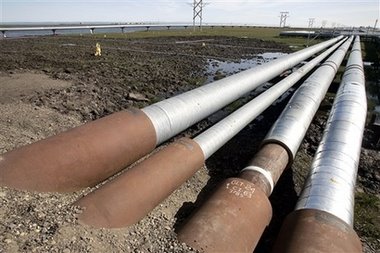
ANCHORAGE, Alaska - Oil giant BP has indefinitely shut down the nation's biggest oilfield after finding a pipeline leak, removing about 8 percent of U.S. oil production and stroking fears that already high gas prices will shoot up further.

Steve Marshall, president of BP Exploration Alaska, Inc. said Sunday night that the eastern side of Prudhoe Bay would be shut down first, an operation anticipated to take 24 to 36 hours. The company will then move to shut down the west side, a move that could close more than 1,000 Prudhoe Bay wells.

Once the field is shut down, BP said oil production will be reduced by 400,000 barrels a day. That's close to 8 percent of U.S. oil production or about 2.6 percent of U.S. supply including imports, according to data from the U.S. Energy Information Administration.

The shutdown comes at an already worrisome time for the oil industry, with supply concerns stemming both from the hurricane season and instability in the Middle East.

A 400,000-barrel per day reduction in output would have a major impact on oil prices, said Tetsu Emori, chief commodities strategist at Mitsui Bussan Futures in Tokyo. A barrel contains 42 gallons of crude oil.

"Oil prices could increase by as much as $10 per barrel given the current environment," Emori said. "But we can't really say for sure how big an effect this is going to have until we have more exact figures about how much production is going to be reduced."

But Victor Shum, an energy analyst with Purvin & Gertz in Singapore, said he expected the impact to be minimal since crude inventories are high.

"So while this won't have any immediate impact on U.S. supplies, the market is in very high anxiety. So any significant disruption, traders will take that into account, even though there is no threat of a supply shortage."

Light, sweet crude for September delivery was up $1.23 to $75.99 a barrel in mid-afternoon Asian electronic trading Monday on the New York Mercantile Exchange.

Marshall said tests Friday indicated that there were 16 anomalies in 12 areas in an oil transit line on the eastern side of Prudhoe Bay. Tests found losses in wall thickness of between 70 and 81 percent. Repair or replacement is required if there is over an 80 percent loss.

"The results were absolutely unexpected," Marshall said.

BP officials said they didn't know how long the Prudhoe Bay field would be off line. "I don't even know how long it's going to take to shut it down," said Tom Williams, BP's senior tax and royalty counsel.

BP America Chairman and President Bob Malone said Prudhoe Bay will not resume operating until the company and government regulators are satisfied it can run safely without threatening the environment.

"We regret that it is necessary to take this action and we apologize to the nation and the State of Alaska for the adverse impacts it will cause," Malone said in a statement.

The shutdown comes six months after the North Slope's biggest ever oil spill was discovered on a Prudhoe Bay transit line. Some 267,000 gallons of oil spilled.

While BP suspects corrosion in both damaged lines, they can't say for sure until further tests are complete. Workers also found a small spill, estimated to be about 4 to 5 barrels, which has been contained and clean up efforts are under way, BP said.

BP, a unit of the London-based company BP PLC, puts millions of gallons of corrosion inhibitor into the Prudhoe Bay lines each year. It also examines pipes by taking X-rays and ultrasound images.

A prolonged Prudhoe Bay shutdown would be a major blow to domestic oil production, but even a short one could be crippling to Alaska's economy.

Alaska House Speaker John Harris said it was admirable that BP took immediate action, although it's sure to hurt state coffers. "This state cannot afford to have another Exxon Valdez," said Harris, R-Valdez.

The Exxon Valdez tanker emptied 11 million gallons of crude oil into Prince William Sound in 1989, killing hundreds of thousands of birds and marine animals and soiling more than 1,200 miles of rocky beach in nation's largest oil spill.

Draft: Nerves of Neethling (Part 1)

Nerves of Neethling

Many of us, when we think of swimming, have sunny memories, touched with globs of ice-cream, smears of sun block and watermelon smiles. Swimming and childhood are mixed together, like silver bubbles in chlorine clear water. But for professional swimmers, a swimming pool is quite different. It’s cold and hard. There are lines on the bottom of the pool that they see in their dreams. It’s living and breathing in the sterile light of a bathroom (especially in winter), silver surfaces everywhere, for hours on end. Above all it is about endurance. Enduring the cold and coming out smiling and strong. What are the rewards? Jean Marie Neethling provides some insight into what it takes to become a fish.

By Nick van der Leek

Jean Marie ushers me into a sunny room. There’s a lot of blue in the room, and Jean Marie herself is wearing blue jeans and a blue Billabong jersey. I’m surprised to see Ryk’s face flash at me through hers. I sit in a sunbeam and fumble in my bag for a tape recorder while a green parrot starts climbing up the white sleeve of my tracksuit.
I press RECORD and the red light illuminates.

“What was your idea of swimming, before Ryk came back?”
“I got used to swimming while I was younger. He (Ryk) would be at the pool (at a gala) every Saturday. I just watched him swim, and it seemed like a big deal because he was very serious. If he didn’t swim well he’d be in a bad mood, and he was tired most of the time. There was a lot of dedication. He didn’t really go out that much. But I was very young so I could understand that he was in America for swimming. That was my idea of swimming.”
“Was your perception of swimming negative then?”
“Well, I was six when he went to the states. And I realized he was taken away from us because of the swimming. But it was my brother that made me swim.”
“Was that before he’d had a breakthrough with his swimming? I mean, did he achieve some success and then say, ‘C’mon, you also need to start swimming.’”
“No, he just loves swimming. I can’t think that anyone loves swimming more than him. He loves everything about swimming. I think he just wanted me to love it as well.”
“Because I know he went through a–”
“A dip. In 2000. That was actually the time he told me. I was 9 or 10 years old. It was just after Sydney [Olympics]. He thought that was going to be his breakthrough but then he came 8th. So he stopped swimming for 9 months, and gave his gear away. But he always said, ‘I don’t want to grow old and say ‘what if? What if I could have made it to the next Olympics?’”

To be continued

Getting Out

Went to the Neethling's home at about 11:30, and then went cycling at about 3pm. 33km. Felt okay. Nice windless, sunny winter's day.

Had a nice coffee and sandwich at House of Coffees with Fransa later in the afternoon.

Looked into Heartland's office and some furniture is gone, and the computer at the front desk also seems to be gone. Evacuating to avoid their debts? Have called my lawyer to check when their lease expires.

Back at school today...so taking a deep breath...

Saturday, August 05, 2006

Reading Between The Lines


I went for a walk today. (Jean Marie sms'ed to say she is sick). Since I was all dressed up, I went somewhere. Walked to the Mall, bought a paper and guzzled a chicken mayo sandwich, then went to watch a movie called The Squid and the Whale. A bunch of teenage girls chose this movie to watch together (one of them celebrating a birthday). Big mistake. It's a very intimate look at a family, with plenty of icky scenes, and when it's not icky it's downright uncomfortable. A good film in the sense that the director rendered a personal experience in a genuine way, but one is entitled to ask oneself: "Why?"

A friend called me, and during a long chat mentioned that another friend had asked about me, and she'd relayed that: Nick is well, his teaching is going well. He's still cycling. He's being paid for his writing and writing a lot, and he's still with his girlfriend.

Although it's accurate, for me it feels like that statement lacks a few technical details to be factually correct. If you refer to the paragraph on top, it's possibly the icky details we need to forget about, and just focus on the plain truth. Sometimes that's enough.

Am contemplating 2 projects at the moment:
1) Collaborating with Jim Kunstler (and other writers) on a fictional (but based on fact) future scenario - being as technically precise as possible, in drawing up a 10 year picture for the future. It will probably sound like sci fi, even though it will be an attempt to render reality in the not distant future. I think we're in for Future Shock, so it ought to be a shocking, ground breaking story.

2) Giant are needing a new design for cycling clothes, so want my design idea rendered this week so they can possibly use it. Have already called Adele and Yolande to discuss concepts.

Headlines That Should Worry You

Shiite Rally in Baghdad Supports Hezbollah By DAMIEN CAVEFollowers of Moktada al-Sadr denounced Israel and the U.S. for igniting violence throughout the Middle East.

"Iran is the enemy that best fits the definition of the adversary Bush has defined. This is the poster child of what he thinks the U.S. should be going after."ROBERT MALLEY, director of the Middle East program at the International Crisis Group.

Risks Escalate as Israel Fights a Ground War By GREG MYREThe plan to destroy Hezbollah from the air has proved wanting, and now, nervously, Israel is pushing a major ground offensive.

Friday, August 04, 2006

Going forwards or backwards?


Photos courtesy topleftpixel.com


Court ruling

A seven year old boy was at the centre of a courtroom drama last week when he challenged a court ruling over who should have custody of him.The boy has a history of being beaten by his parents and the judgeawarded custody to his aunt.

The boy confirmed that his aunt beat himmore than his parents and refused to live there. When the judgesuggested that he live with his grandparents the boy cried out that they beat him more than anyone.The judge dramatically allowed the boy to choose who should have custody
of him.

Custody was granted to the Springbok rugby team this morning as the boy
firmly believes that they are not capable of beating anyone.

No More Clear Skies


Wael Hamzeh/European Pressphoto Agency
Israeli jets renewed air strikes on Beirut's southern suburbs a few hours after Hezbollah's chief threatened to strike Tel Aviv if Beirut was hit by Israeli raids.

Heart Condition

I'm so bored! But I've gotten through some of Pride and Prejudice (the DVD is a better investment of time), and also managed to get through a lot of VCD's I bought in Korea and never managed to watch - like Sleepy Hollow.

I also got a call from Jean Marie Neethling. I can hear by the sound of her voice that she is a very determined young lady. We agreed to meet tomorrow, after her swim. I'd like to interview her when I am healthy (for both our sakes), but she is going to Brazil next week.
If you refer to the very first posts of this blog - images of Amanda Beard - I'd love to do the same with Jean Marie. I think that will only be feasible in summer though, as the diving pool (at the stadium) is probably a green ice block at the moment.

I've also managed to write a very worrying piece called 'Eating Cake' which I am reluctant to post because people might think I'm suffering from depression, or about to slit my wrists.

Tomorrow night Fransa and a few others are getting together to watch the rugby. Should be fun. Hannes is flying to Jo-burg today too, so will be at his place some of the time, catching up on DSTV and picking up the latest on BBC. Continuously exposing oneself to the news is really not healthy.

Have 2 days to fully recover before school on Monday. It doesn't feel like it's enough, but I have really had enough with being stuck indoors. I'm looking forward to being back in the land of the living...and I can't wait to be back in the gym or outside exercising.

[2 of my Grade 10's approached me today and said they miss me. They've been transferred to a new teacher, and they say the noise is now unbearable, and the new teacher has absolutely no control over the class. I couldn't help a quick smirk.]


Eating Cake
Why we’ll soon be eating bread

I’ve posted an article called ‘Spoilt for choice’. It was written to reflect on the extravagant menu – of all things really – we have at our disposal. This decadent lifestyle we feel we are so entitled to will not continue for much longer, simply because it cannot. When a crowd of hungry peasants appeared, complaining, at the palace gates, Marie Antoinette wanted to know what was wrong. Someone explained that they didn’t have any bread, and her famous retort was, ‘Let them eat cake’.

In the same way today, we will be seeing more and more of the middle class wiped out by all manner of catastrophe, and one catastrophe will necessarily unleash another. None of this seems possible now, when we’re just beginning to get settled into luxurious lifestyles, and looking forward to 2010, when our country will be the focus of the world.
I think the party will be well and truly over quite some time before then.

Unfortunately, the habits we have in South Africa are the same the world over. We’re spending more than we are earning. But even if we did save (in South Africa) it wouldn’t matter. This is because the worldwide measure of value, the dollar, is a hallucinated, experimental money system. Oil is calibrated in dollars, and worldwide, we look to the dollar for the evidence of value. The question more and more are asking is: what is the real value of the dollar, since it is backed by nothing but confidence (or a lack of)?

Those voices crying out in the wilderness, when the European Union was being formed, cried out that a system that ties the world together, binds it for good and ill. We’ve seen the good. Being attached to America has helped countries – like China, Korea and Japan – and their economies stand up and grow. A disconnected system may prosper less, and prosper more slowly, but it cannot infect its neighbors, and a crash can be stopped at the borders. Not any more. We’re in this together, and the demise of the American Empire (a nice way of saying The Extinction of the Dollar) necessarily means financial crises to all. Those notes in your pocket are infected. To check, turn on your television or do an internet search. The price of whatever currency you own is calibrated in dollars. If the dollar value becomes meaningless, so does your money.

Let’s explore this alarming epithet a little further. Whether you believe in the economics espoused here or not, believe this: no money system can ever last. None have, and none will. All are flawed, and all have to be reinvented. This is because of tactics like usury/interest and the rest, which finally invalidates money as having value, especially when the value owed exceeds the money one has borrowed to begin with. On Thursday the 7th of August, South Africa and several other countries raised their interest rates. This is the beginning of a global slowdown that is rapidly gaining momentum. At the heart of this is a charging oil price. My confidence in predicting an imminent worldwide recession (and then, stagflation) is based on the absolute certainty that oil prices are never going to be cheap again. In fact, prices will continue to rise faster than most expect. The implications of this are simply devastating.

In the USA debt is at $66 trillion. To pay it back means every man, woman and child has to repay $200 000. It’s not going to happen.

The world is in a collective trance. Some already realize we’re in trouble, but, since no one else is panicking, they continue on as though nothing is wrong. Then the next group has a revelation, and does the same thing. Like H5N1 (which is still boiling out there – and how do you stop hot water from boiling?) the collapse of the US currency is a matter of when, not if.

A worthless dollar will mean a bear market. That’s also due, we’ve only managed to hold it off due to massive amounts of liquidity in the stock market. Lots of that liquidity has come in the form of hallucinated money – second mortgages, money generated from consumption generated from credit (in other words, not savings, not real value). In a bear market, value returns to its source. We’ll be in a bear market before 2010, and for at least 5 years after. I’m not sure whether the world in 2010 is going to be that interested in watching television or playing soccer. They might be trying to find ways to keep the lights on and putting food on the table. That’s right. The world.

I don’t expect even small groups to awaken in the light of this statement, or others made above. People will desperately pursue their delusions (like ethanol and hydrogen, or suburbia and hybrids). We’ll find ‘solutions’ that turn out to be temporary mitigators. We’ll all be surprised that things are much much worse than we could have imagined, and then it’ll get even worse. I expect a lot of disorder and desperate acts as people cling to their suburban investments, and vote new idiots into power. People will do anything to hold onto their investments, and resuscitate them, but it won’t do any good.

What will make this environment even more difficult to contend with will be the background of bad weather and illness associated with one financial and energy crisis after another. People still have a vague concept of what Global Warming or Climate Change portends. It portends the relocation of serious diseases, and it portends extreme weather: droughts, floods, storms, bitterly cold fronts and blistering heat waves. All these will converge (at increasing intensities) to stress human populations, and nature will hit us again and again, in a kind’ve human targeted global culling the likes of which we’ve never seen. The attrition is likely to gain momentum as we move deeper into the 21st century, and as resource wars become more common.

Some writers have suggested that countries will sink into themselves, that the world will become much larger again, and we’ll eventually see pre-Industrial systems redeveloping. Most of these will be local, and based around agriculture. How people will respond to the transition to farm worker is anybody’s guess. Communities will revolt, but where the transition is more peaceful, we may see the emergence of simple cottage industries. If the transition is orderly, we’ll be able to maintain some of our modern technologies, like computers, and cellular networks, but they’re likely to be fragments of what we’re used to today.

People who find themselves working as farm laborers may never figure out what happened, or why. Even if there is an awakening, and I doubt there will be, the great tide that is crashing ashore cannot be stopped. At best, instead of finding someone to blame, all we can do is invest locally, and be creative with our imaginings. We can also stop ourselves now, from continuing to invest in resources that have no future. Suburbia is one. Buy a home in a small, walkable community that is connected to a living, healthy system. You should also get used to not needing a car for everything. Buy a bicycle, and if local (natural/usable) resources don’t exist, develop them.

Specifically, let’s imagine ourselves (if we are the Middle Class) approaching the palace gates of our country (which one imagines is possibly the Parliament buildings). Someone might explain on our behalf that we don’t have any electricity, and we might imagine a statesman striding out into the light and proclaiming, ‘Well, here are free tickets to the 2010 World Cup.’ Do we let him live?


Thursday, August 03, 2006

Upper Side/Lower Side

I expected to go to the doctor and request a Sick Note, and nothing more, and be back at school working today. Instead, the doctor put me on a course of antibiotics and some immune boosters. I actually feel worse today than yesterday. Dizzy and lightheaded and still not feeling strong. I've been diagnosed with Upper Respiratory Tract Infection.

I'm at the school's computer lab now, cycled here, and the effort up the first hill had me out of breath for the rest of the way (less than 1km).
That means my fitness levels are back to 0.
I'm despondent about that.

I've also had no feedback on a range of issues:

1) The legal guy I have appointed to sort out the Heartland checque says 'no one is ever in the office' when he goes there. I think there's a real threat that they are going to shut down their offices and leave without paying any of their debts (except to themselves of course).
2) Shape magazine and others have been very coy - maybe the excuse is the next issue is due now - in accepting my latest contributions
3) go! has decided to delay publication by a month. Since this is a vital breakthrough, it's not nice to have to 'wait-and-see'whether or not they do a last minute u-turn as GQ did in May.

What the above boils down to is me doing consistently a lot of work and getting no reward for it, no obvious reward, except the hope of a reward, and that hope being strung out and delayed continuously. It's quite frustrating.

I'm also not well enough to be at home being productive. Have needed to really rest up. I think these antibiotics are doing the job of killing biota in my organism - both the good and the bad.

I think August is going to be a month of regrouping, and rebuilding. Feel like I have been stretched out by people and projects I've undertaken that just have not given the sort of return that does the original investment justice. I also feel like I need a holiday. After all the work I've put in (during regular work ours and beyond), having no reward to show for it leaves one even more exhausted and unmotivated.

I'm sure once I have my health again, I'll be brimming with reckless motivation. The sort of irrational motivation that gets you to do things that you realise, in retrospect, was insane. But, in this world, it seems like overwhelming force (when it comes to work and output) is the only way to get somewhere meaningful.

It's not just me that's under strain. My girlfriend is too, and it seems as though it's not just a few individuals or groups : the world is in transition, heading to a new phase of austerity. We're seeing it in the weather, in economic trends of slower growth (and inflationary pressures) and in explosive outbursts in the Middle East. It may not be an accurate assessment, it just seems like we have gone up a notch in 'discomfort levels'.

Because in the end it all comes down to a single number. I notice this number is quoted last (in Financial Bulletins). I notice the headlines seem to find ways to avoid facing it. Today that number is 76. It's this number, that is going to determine just about everything.

I also have another number. Jean-Marie Neethling's phone number. I'll call her later this week or next week for an interview. I'm curious to talk to her. She's a champion, and she's only just started her ascendency. I've got my eyes set on the same Upper Slopes. Down here it's just plain freezing.

Wednesday, August 02, 2006

5 (disturbing) Global Trends

The five major trends reshaping the world economy
By Laurie Osborne, Editor

Everything is predictable. Yet, we have no idea what will happen. That is the curious paradox of our world. We all know we’re going to die. But none of us knows just how or when or where. As Woody Allen says, don’t tell me when I’m going to die, just tell me where…I’ll avoid the place.What is predictable is that big trends will run their courses. What is unknowable is how, when, and where. Earlier this year we identified 5 major trends that were reshaping the world. ‘The 5 E’s’ we called them.We stopped writing about them because we could never remember what they were. Here, we attempt an update:

Major economic trends: E1 - the rising cost of EnergyEnergy… is the world running out of oil? No. There is plenty of the stuff. At today’s oil prices, every producer in the world is busy adding capacity. Non-importers are busy trying to reclaim old wells; squeeze oil of sand, or tar or rock; or find substitutes. In the U.S. ethanol is becoming a major swindle. It takes more energy to produce a gallon than you can get from it.
And it costs more to make a gallon than a gallon is actually worth. But it’s the kind of boondoggle that Congress likes, since it gives a way to spread other people’s money around under cover of national emergency.The emergency is said to be that the U.S. economy depends on cheap oil. To some extent this is true. The typical family spends all that it earns – and a little more. It resides far from its work, drives a big SUV and lives in a house that needs large inputs of energy. As the price of energy rises, the amount of money the family has left over goes down. It must either spend less – which would cause an immediate recession – or go deeper into debt – which would cause a worse recession eventually.

Oil is unquestionably getting more expensive. And – with no further house price gains against which to borrow - American consumers are probably beginning to cut back on their discretionary spending. Walmart, where the lumpen go shopping, has seen its stock go down to the lowest level in 5 years. Middle-American sit-down restaurants – Red Lobster, Outback Steakhouse, Appelbee’s, etc – are seeing the worst fall-off in sales in industry history. Retail stocks, generally, are down. Builders are down. Transports are going down. All of which looks to us like the beginning of a consumer-led economic slump.

But the big trend we’re talking about is Energy. And energy, we believe, is getting more expensive – putting in jeopardy the lifestyles and finances of the people who hold it most dear – Americans. Part of the reason for this is obvious. More people use more energy every year, whereas the earth’s supply of ready fuel – which took millions of years to lay down – is being rapidly used up. In India, or China, energy is a feature of capital development and economic growth. In North America, it is a consumer necessity. But where Asian economies earn the money to pay for energy…the typical American – like the typical Brit -- faces higher energy costs with no way to pay them. Result: his standard of living will go down.

Major economic trends: E2 - the Experimental monetary system

The second Big E we’d like to discuss is our Experimental monetary system. It bears on the price of energy, of course, and on everything else. It is quite possible for the price of gasoline to go up, for example, even with no change in the supply/demand equation for energy itself. This is because the price is measured with a tape that stretches. As demand rises for energy resources, producers begin to see their oil and gas as precious assets. Sellers begin to ask what they are getting in return. Worldwide, oil is calibrated in dollars. But what is the dollar calibrated in? More and more oil producers are beginning to ask. And the answer is that the dollar floats in the air like a willow leaf.

If the winds are favorable, it stays up. If it gets caught in a downdraft, it falls.We say that this is an ‘experimental’ financial system, because nothing like it has ever existed. Not that this is the first experiment with lighter than air money. No, the U.S. Treasury did not invent pure-paper money. In the modern era, it has been tried many times – but never with happy results. And never, ever on such a grand scale. Now, practically every currency in the world is backed by dollars. And the dollar itself is backed by nothing. In fact, the whole world’s financial system rests on the shoulders of a single currency – which everyone knows is a shirker.

Typically, paper currencies are backed by gold…sometimes by gold and/or silver…and occasionally by land or something else that is presumed to have real value. The reason for this is obvious: if you open up a central banker you find that he has the same internal organs as everyone else. Thus, is he just as susceptible to influence and temptation as the rest of us..

Historically, people were reluctant to take a currency that did not have sufficient precious metal backing. They didn’t trust it. They figured that the people in control of it would succumb to the temptation to print up too much money, so that each bill would lose some of its value. They knew central bankers could create as many pieces of paper as they wanted. They could also default on their promises. Lie. Cheat. Steal. They could do anything. But they couldn’t create gold. And gold doesn’t lie. It is what it is. It doesn’t sneak out of town. It doesn’t cook the books. It doesn’t go up in smoke.The U.S. dollar was back by gold, albeit imperfectly, until 35 years ago.

The 15th of August 1971 the Nixon administration cut the last vestigial link between the dollar and gold. We recall the era nostalgically. We were on a transcontinental road trip and we remember driving into Albuquerque, NM, in the middle of a gasoline price war. Every gas station we passed quoted a lower price until we had arrived almost in the middle of town and there found regular gasoline for 25 cents a gallon.

We cannot remember ever seeing it so cheap – before or after. Now, it is 1,200% higher. And we do not believe the change is solely a function of shifting consumer preferences or declining stocks of oil. In other words, gasoline is not a dozen times higher simply because there is less of it available or more people using it. In fact, output is higher than ever. It’s more expensive largely because it’s measured in dollars…and the dollar has been stretched out by inflation.

As the quantity of dollars increases, each one represents a smaller piece of the world’s wealth. The science of modern central banking is really nothing more than trying to figure out how to surreptitiously inflate the currency. When people catch on, the magic no longer works. Instead of increasing production, in response to greater apparent demand (more dollars), businessmen merely increase prices. Stagflation it is called. We won’t dwell on it here.

We only bring it up to show that this experimental monetary system is unlikely to be a permanent money system. No money system is ever permanent. And one not firmly attached to things of real value – such as gold –cannot be expected to last long. Thirty five years is already a record. Our guess is that it has only a few years left. In other words, this is a trend that is going to continue until it comes to an end. And the end it comes to will be the same as all such experiments. The world’s dollar-based monetary system…with the dollar floating on nothing but air…will collapse and be replaced with something else. When, how…at what cost?

We don’t know… but judging from the way in which the quantity of dollars, debt, and derivatives has increased over the last 10 years, we guess that the change will come in crisis…within 10 years…and accompanied by much pain.

Major economic trends: E3 - where are we in the Economic cycle?

Now, let’s talk about the next Big E – Economic Cycles. Here we are talking about the normal ebb and flow of prices, as well as the big epochs in economic history. Temperature changes from day to night and from winter to summer, for example. There are also extraordinary periods that can last decades…or thousands of years….like Ice Ages and times when the ice melts. Nicholai Kondratief described economic patterns of as waves of growth and decline that lasted about as long as a human life. His work was mostly bogus, but the patterns are real.

We know that from boom to bust in the stock market is usually a period of about 18 years. The bull market began in 1982…or 1975…depending on how you look at it. It ended in 2000, as much as a quarter of a century later. The bear market that began in 2000 was held off – but not reversed -- by the biggest flood of liquidity in human history. But that bear market is still waiting to fully express itself. And it will probably carry stocks down to about 5,000 on the Dow…or lower…before it is over. And it probably won’t be over until 2015 or so.

We know that the bond market has similar patterns of boom and bust that last a very long time. Bonds fell from after WWII until Paul Volcker took charge at the Fed and managed to bring inflation under control 30 years later. Then began a long bull market in bonds – with falling yields and rising bond prices –that either came to an end in June of 2003…or is still going. Looking at the chart, we think that bull market in bonds is over after lasting almost a quarter of a century. If we’re right, we could be looking at falling bond prices for the next 2 decades.

One of the great illusions that begs correction is the idea that the Fed can control market cycles. It cannot. It can influence them…but then, only in a bad way. For example, after the boom/bubble of the 1990s, U.S. markets badly needed a rest. Consumers needed to catch their breath…and pay down their debt a little. But after the terrorist incident of 9/11 the feds had the vision of Japan’s 10-year slump haunting their sleep. They panicked and put out so much new liquidity that it stopped the correction in its tracks. Instead of paying down debt, consumers contracted more. And instead of allowing the markets to take a rest, it set them off on a 5-year wind sprint, leaving consumers more exhausted than ever.

Now, they have their tongues hanging out and their pockets turned inside out. And now, the U.S. faces not only a bear market in stocks and an economic slump…but the worst economic problem a country can face: the destitution of the masses. A bear market is when money goes back to its rightful owners. No one cares, particularly, when speculators, punters, players, and gamblers are the ones taking losses. But it is another thing entirely when the middle and lower classes are wiped out. That is what happened in Germany in the 1920s. It is what happened in Argentina just a couple years ago. It is what happened in France prior to the French revolution. You’ll remember, a crowd of hungry peasants appeared at the palace gates. Marie Antoinette wanted to know what they were complaining about. ‘They have no bread,’ explained an attendant. ‘Well, let them eat cake,’ was the witty remark that leaped to her lips…

Later, the mob leaped at her throat.Globally, central bank policy is still loose. Rates at the world’s major central banks are still 2 percentage points below their 15-year average. But cycles cannot be held off forever by manipulating central bank lending rates. Real rates – adjusted for inflation – have a life of their own. And cycles have lives of their own too. None lasts forever. And it appears to us that the bullish cycles that have boosted housing prices, stocks, bonds and investor and consumer confidence are now either over or ending. For the next 15 or so years we should be seeing falling prices for stocks, bonds, housing, and other financial assets. And it wouldn’t be too surprising if we also saw a revolt of the masses…who will be hit especially hard. What form it will take…where it will lead…and when it will come…we have no more idea than anyone else. Major economic trends:

E4 - the Exodus of money from West to East

Let’s go on to another of our Big E’s – The grand Exodus of money and power, from West to East. One of the biggest trends in economic history was the rise of the West – centered roughly in Manchester, England, and Manchester, New Hampshire – beginning in the 18th century. Then, in the 19th century, all of Europe and European outposts in the New World spurted ahead of the rest of the world.. By the end of the 20th century, the average worker in Western Europe or America earned about 20 times a much per hour as a similar worker in China or India. But the averages masked the new trend. Wages in India and China are rising sharply. Those in America and Europe are stagnant.

Yesterday’s Financial Times tells us that real hourly incomes in America are lower today than they were 5 years ago. In India, they have almost doubled. Meanwhile, China is growing faster than at any time in the last 10 years – with a GDP growth rate over 11%. India is not far behind. Both economies are graduating hundreds of thousands of new chemists and civil engineers, whereas American universities turn out young people trained in sports therapy and theatre design. And while both economies are plagued by the usual assortment of bullies and bureaucrats, their parasites are much cheaper than ours…which, along with low wages, gives them a tremendous advantage.

Is the Chinese economy dangerously exposed to a slowdown in U.S. consumption? Yes. Is the Chinese economy laden with contradictions, obfuscations and swindles? Yes. Are the Indians burdened by inefficient transportation and nerve-fraying business frustrations? Yes. But if they had not these sorts of problems they would already be rich. Instead, they are still poor, but definitely on the upswing compared to the West. Will this trend end soon? Certainly, it will see some setbacks and countertrends. Prosperity is a matter of more than just money. It will take time to knock down all the obstacles. But why should it end? We can think of no reason.

At least at the bottom, pressure from Asia should hold down wages in the West for another 20 or 30 years. And buying from Asia should push up prices for things that Asian labor cannot produce: food, raw materials, Old Masters painting, antiques, and gold, to name just a few. Major economic trends:

E5 - the decline of the American Empire

And finally, we come to the last of the Big E trends, the one for which this conference was conceived – the Empire. We Americans don’t like to think of our country as an Empire. Instead, we imagine it as a kind of proto-democracy…with people coming together in local schoolhouses in town meetings where important issues are discussed. We are too modest for empire, we say to ourselves. Besides, empires need emperors, and we don’t have an emperor, we have an elected president, and a society that believes in individual liberty, not collective glory. And empires need people in funny hats. And we Americans don’t wear hats…except maybe baseball caps that advertise where we went on our summer vacations.

What’s more, America is a democracy…where the people decide what kind of government they want. And no one ever ran for high office on an Empire platform. So, we couldn’t have an empire.But it is a strange and wonderful world we live in. And sometimes we get what we did not intend and what no one in particular ever wanted. If you look at the next presidential press conference you will find the American eagle on the lectern. The eagle is, of course, a symbol of empire – it comes from the Roman era, when the eagle was on all the Roman standards. And if you listen to the president’s remarks you will find he spends a lot of time talking about war in exactly the same places where the Romans did their fighting – the edge of the empire, Mesopotamia, where Roman soldiers died by the thousands taking and retaking ancient Babylon. And there, too, where the soldiers of the British Empire washed up again, on the same river banks…done to death by the same desert tribes.And at the end of the conference, especially when some new offensive has been announced, you will hear how liberty and modesty die, to the sound of thunderous applause.

America began as Rome did, humbly. It began as an idea – that anyone who wanted to could come to this New World and make do as best he could. You needed no passport, no visa, no blood test, no police record. You just showed up and you were on your own.The rot set in almost immediately and before long it led to a war between the states to determine who got to tell whom what to do. Then, the country tried to develop itself into the kind of nation-state that had proved so successful in Germany and France. A pledge of allegiance to the flag was developed. A system of social security…and many other collectivist programs were put in place, in imitation of Bismark’s social welfare programs in Germany. Whatever you were before or hoped to be in your private life was set aside in favor of being 100% American.

Foreign-sounding names and customs were viewed with suspicion. The only foreign language taught in the schools was English.But all the while, the empire was developing too. In WWI, the British were exhausted by the expense of the war. Woodrow Wilson foolishly took the English bait – a lead role in the imperial theatre in exchange for military help. Naturally, all the European powers stabbed the naïve yankee in the back as soon as he landed in Le Havre. And then they set the stage for an even worse war later. In the next war…and then the Cold War…America played a bigger and bigger role in the world, Finally, with the fall of the Soviet Union there was no one left on stage.

The U.S. was left as the only hegemon, the world’s only superpower, a country with such a huge military advantage over the rest of the world that it practically had to play an imperial role whether it liked it or not.Of course, we have to ask ourselves: what happens to empires? The list of defunct empires is about as long as the list of defunct currencies. They all go away, in other words.The Roman Empire lasted for nearly a millennium, it is true. But it did so by reinventing itself…almost by becoming an entirely new empire from time to time. There were civil wars, mass murders, coups d’etat, rebellions, insurrections, revolutions.

Blood ran in the streets of Rome on many occasions – long before the city was sacked by barbarians. When Octavian took over from his great uncle Julius Caesar in 43 BC, for example, he had 130 senators killed. That may sound like a good idea to many of us today. In ancient Rome it was almost common. But it would be a major change in Washington today.Octavian also had as many as 3,000 leading citizens knocked off. Cicero, who had mocked him, tried to make a getaway. The old man was being carried in a litter when he was overtaken by a centurion on the 7th of December 43 BC. He was reading Euripedes’ ‘Medea’ when the guards caught him. He put down the book it is said, stuck his head out the window and said: “Here, veteran, if you think it is right, strike.’ The centurion cut his head off.

What we know about Empires is that they become decadent, just like everything else in life, and eventually die. And they die in predictable ways. Typically, they become too expensive to operate…and attract too many parasites, hangers-on, and hustlers. The costs rise while the output – in terms of what you get for the money – goes down.

Weakened, they either collapse from the inside …or are defeated from the outside.In America’s case, we don’t see any external enemies ready to bring the empire down. But on the inside, we see big problems. Rome may have lasted nearly a thousand years, but Rome didn’t have the Federal Reserve system, the dollar, or the U.S. Congress. Between the three of them, the country is probably broke already. The measure of indebtedness - $65.9 trillion – far surpasses our ability to pay it – more than $200,000 for every man, woman and child in the country. Either these debts are repudiated in some way…or some form of revolution is likely to occur.

Most likely, they are greatly reduced by inflation…as U.S. standards of living fall and millions of households go broke. Of course, we can imagine much worse. Superpowers may not go so gently into that good night. We just have to wait and find out.Everything is predictable. But we have no idea what will happen next. That is what makes the world so entertaining and makes our business so much fun.

The World Waits

Thomas L. Friedman of The New York Times wrote recently: "Israel is facing in Hezbollah an enemy that is unabashedly determined to transform this conflict into a religious war - from a war over territory - and wants to do it in a way that threatens not only Israel but the foundations of global stability."

From a distance, we are now asking, "What in the world can be done?"

World War III: Who started it?

and Who’s to blame?
by Nick van der Leek

To some, World War III refers to the Cold War. Although it was an invisible under-the-radar war, it was nevertheless real, and so were the casualties. There was also a winner and a loser, but, understandably, it’s not popularly seen as a World War. What we’re seeing now in the Middle East is closer to our concept of multiple worldwide forces meeting each other with various weapons, and overwhelming force, on an expanding battlefield.

The writer James H. Kunstler has written about this subject on his blog (www.kunstler.com) this week, and his views, once again, are right on the button. He puts the date for the start of World War III at 11 September 2001. It is basically a war waged overtly between the Muslim and Christian religions, but laid over that is a framework of geopolitical ambition. In plain English that means a country like Kuwait may sink horizontal wells into Iraq, or the USA may invade Iraq to police its oil (geopolitical ambition), but the invasions are rationalized by more general explanations of ‘good’ versus ‘evil’.

If that is true, what are we to make of Hezbollah vs. Israel? Hezbollah can be accused of plenty of mischief, but it is difficult to see them as the aggressor when their casualties are 10 times more, and whole towns have been demolished or occupied by Israeli forces.

Israel argues that it warned civilians to leave, but let me ask you, if an invading army asks you to evacuate your home and your village, leaving all your belongings, would you? Could you?

Israel does seem to be guilty of overreacting, and doing so with impunity. Israel is a regional superpower, and we’ve seen that demonstrated time and time again. It’s a concern when a building is targeted with precision guided missiles, and 50 civilians are carried out, half of them children (who may have been unable to travel long distances). And it’s a concern when a UN building is targeted and destroyed. Kunstler says that Hezbollah intentionally hide their missiles under human shields, and I tend to agree.

Having said that, I’m not sure Israel can call the level of its retribution justified. I’m sure if you have zero respect for the god of your adversary, and you see your adversary as subhuman, it is easier for both sides to kill the other without the burden of guilt. There’s a dangerous echo of this sort of attitude throughout history. The Nazi’s saw themselves as the ‘master’ race, and so could justify killing everyone else to expand their ‘living space’. In the same way, this oh-so-human-habit of calling oneself ‘good’ and one’s adversary ‘evil’ (or varying degrees of bad) simply provides the license for that epitome of war: specialized slaughter and mass murder.
Is Israel’s lesson from World War II to ‘do severely unto others before it has been done unto you?’

While Israel is guilty of making at least two big failures – so far – in its missile targeting, they are generally believed to be seeking out and destroying military targets. Hezbollah are just firing blindly into urban settlements in Israel. Hezbollah are also backed by other terror organizations, and a country, Iran, whose stated intention is to ‘wipe Israel’ off the map. Given this context, it’s easier to see Israel as defending its right to live where they do, and to do so decisively.

Although it’s a moot point, the decision to create a state of Israel after World War II, in an area surrounded on every side by traditional enemies of the Jews, was always going to lead to war. As weapons become more sophisticated (to make up for squabbling communities that have not evolved in their consciousness) the risk becomes greater and greater that war, in this area, will become altogether more destructive. We all know this, but we’re now at the point where these weapons can and will be brought into being.

As Kunstler suggests, we now have a weapon-ready alliance of states that are either part of a so-called ‘axis of evil’, or might volunteer to be. North Korea, Pakistan and possibly Iran are Nuclear Convenience Stores, or soon will be. Israel and its patrons already have nuclear weapons.

What perpetuates the conflict is that it is so difficult to even imagine a solution that works. The end game scenario has to be Israel obliterating, once and for all, all the enemies it has in the Middle East. Or, it is the final destruction of Israel by its enemies. Both these scenarios are unbearable to contemplate. The third option, which is that Jew, Muslim and Christian learn to respect and tolerate each other (and at least theoretically acknowledge the other’s right to worship a God different to their own) feels like special pleading that will never come to fruition.

Until humanity is capable of truly pursuing this third option, we’ll be lost in wars and the wiping out of ourselves and each other’s Gods in the name of our children. I wonder, will we humans ever grow up and become truly civilized?

Meanwhile Israel has killed 20 Hezbollah guerillas in their most recent maneuvers in Lebanon, bringing the total to about 200 Hezbollah dead (and about double that number in civilian deaths). Iran has until the end of this month to comply with a UN backed US resolution to dismantle its nuclear programme. Iran immediately rejected this resolution, saying it is a peaceful programme. Once again, there are geopolitical issues at play here, and laid over these will be the propaganda of who is ‘good’ and who is ‘evil’.

It’s the Iran Question that will decide the where, and the how of the next phase of World War III. The when ought to be sometime soon, possibly as soon as September.

[for related information, click on the title of this post]

Heat Waves

Forget global warming, we’re getting cooked!


46 degress Celcius and more than 100 dead (including a 20 year old) in central California. 21 people dead in France (15 000 died in France and 20 000 in Italy in 2003), putting the toll so far at 80. According to the New York Times, 16 500 dairy cows have died in the heat in California (the state produces 12% of America’s milk supply). The remaining cows are producing 20% less milk because they are panting and under strain.

Some morgues in California are full to overflowing with dead bodies. In some cases bodies are ‘double-stacked’. The intensity of the heat and duration has been blamed for the carnage. Even a walnut farmer is reported to have said that the intense sunlight ‘burns them inside the shell’. Fruits like peaches and plums are ripening unevenly.

Searing heat waves are withering the world from California and Canada to Italy, France and Germany

Meanwhile a consultant for the oil industry, and member of the George C. Marshall Institute, Bill ‘O Keefe, has said these heat waves are part of a ‘natural cycle’ of highs and lows.

Thanks Bill. Tell that to the cows and walnuts. A lot of people, in Europe and America, are beginning to wonder if these severe heat waves have got anything to do with Global Warming. The short answer is: “Duh.”

The good news is that fossil fuel depletion will cause us to turn increasingly to hybrids – these are both more fuel efficient and cleaner cars. They’re also very expensive for the time being. The not so good news is that wild weather (extremely hot or cold) inevitably leads to the overloading of electricity grids (as is currently happening in New York). In summer, especially if it is a hot summer, air conditioners work overtime. This puts enormous strain on a nation’s ability to meet total energy demand. Given the antiquated state of international power supply infrastructure (in the USA, China and SA, to name but a few), extreme weather is the last thing we need.

When I lived in South Korea, my last summer there was the most unbearable. When stepping out of one’s apartment, it felt like stepping into a sauna – that’s including the steamy humidity. It had that same unbearable I-can’t-take-it-for-another-moment heat of a sauna or an oven. I defied these conditions last year (in July) when I did a half Ironman in almost 40 degree heat and very high humidity. I had to lie in a stream of water at one point (during the race) to cool off, and after finishing the race I stood in the transition area – basically a parking lot, and overheated. I lay under a nearby airplane (it was set in an open-air military museum in the Iron Triangle area of Korea, close to the border) and fought to remain conscious. Finally, I recovered some of my strength and made a beeline for an SUV, and the air conditioned comfort inside.

I remember commenting to a friend afterwards: “If the temperature in this country gets just a bit higher, people are going to start dying here in droves.” That might not be very accurate. The Koreans are used to hot food, and they often sauna for fun. But the point is, it appears to be getting hotter in Korea too, and we had blackouts while I was working in that country too. My last summer there was definitely the worst of 4. Before I left, air conditioners had sold out, and there were long waiting lists for air conditioners. I knew a Korean family who decided that summer, for the first time, to order an air conditioner, and there weren’t any left. The school where I worked – which was by no means a new school – also had three or four air conditioners installed in classrooms that particular summer. I had mine going right through the night, or else it was too muggy to sleep. I did this despite the fact that my electricity bills were costing me a fortune. I had to: it was simply too hot and unbearable outside to allow the apartment to become an oven.

What’s amusing – in a macabre sort of way – is that people are still going: “Could this be global warming?” Hurricanes, the most powerful and numerous in history, are sweeping our oceans, and we’ve still got ‘experts’ telling us that we’re seeing ‘natural cycles’. I don’t claim to be an expert. When it comes to the weather, I don’t think anyone is. But it’s clear that we are seeing a trend of warmer weather. According to NASA, 2005 was – worldwide – the warmest year in a century. So far, the first half of this year is the warmest half-year since records began in 1895*. We’re seeing a number of disturbing signs, and these signs are forming a pattern and we’ve got some disturbing statistics (like sea levels rising 1.5mm per year).

We’ve also got a lot of local people saying: “I have never seen this sort of thing before.” The trend (among humans) has been to sort’ve ignore the threat, since it appears not to be imminent. Of course, over a period of time, 1.5mm adds up. Sea levels are up 20cm now, since 1900**.

The bad news is, even in the face of catastrophic climate change, fossil fuel depletion will force us to look at some nasty, highly polluting alternatives. We’ll do this once we’ve discovered wind and solar is amazing, but just doesn’t give us nearly as much as we need, and the “Great Solutions” to all our problems turn out to be abysmal flops (like hydrogen and biofuels). South Africa needs to become less dependent on imported oil (as does every other country), and they’ll attempt to achieve this by upping their synthesis of coal to oil. That will mean plenty more pollution. I just hope we’re not going to waste each other’s time, staring at the gray havens, going, “Global warming maybe?” It would be a lot more practical to build something like the atmosphere processors we saw in the movie Aliens, to make the most of what writer James H. Kunstler predicts will be the Dim Ages.

Meanwhile, as we adapt to an oven for an atmosphere, the tipping point fast approaches (and here, fast means possibly within a decade) for the inverse of these conditions: an Ice Age. Does that mean we’ll see more skiing resorts in South Africa? We’ll have to work hard to find the bright side in this difficult period of our common human experience.

*According to the American Data Centre for Climate Study**From a Reuters article in Die Volksbald, Sake: Hittegolwe – aardverwarming of nie?

Tuesday, August 01, 2006

Risk vs Reward

There came a time when the risk to remain tight in the bud was more painful than the risk it took to blossom. - Anais Nin

Getting to know: Korea

Don’t believe what people say about Korea.

The chances are, your experience is going to be quite different, better or worse, and there’s no way to predict which it will be. So don’t believe what you’re about to read as though it’s gospel.

I can still vividly remember the day I arrived. The airport, huge caverns of glass and white steel beams, seemed like stepping through the arrival hall to Heaven. Except that it was subdued. No harps. And the people manning the information and other kiosks were somewhat smaller, and had quaint mannerisms from another age. Bowing, smiling and if caught off guard, chopping their hands across their chests in a defensive gesture that meant “I don’t understand you/I can’t help you/I don’t speak English.” On the other side of the glass door is Korea. Here’s what I found.

The metaphor of the airport extended across a countryside that I was, seriously, struggling to see through a haze of smoke. That smoke is what I saw the day I arrived, and the day I left. Pollution is Korea’s worst attribute. It’s chronic.

Under the heavy grey bags in the sky was the biggest city I had ever seen. It went on and on, skyscrapers sprawling over hillsides like unfallen dominoes on a rippled carpet. Wow. Did all this happen without my even knowing about it? It was a knock to my western sensibilities, especially my arrogance and vanity, that a great city could build itself and emerge anonymously in a supposedly connected, globalised world. How is it possible, I wondered, that all this happened, and we don’t even know about it? The size of the city impressed me, and the first inklings of the cold, impenetrable, unfriendly thing that capitalism is – in a foreign country – clawed at me.

I arrived in Korea on the 2nd of January, and the jolt from South Africa’s seemingly endless summer to Korea’s icebox is severe.
I stayed in a comfortable villa provided by my school in a street that remained covered in ice for days on end.

It’s not uncommon to feel completely lost in the beginning. Not only are your options for two-way communication limited (Koreans have their own script, and most don’t understand English), but everything pretty much feels different, starting with food. My first meal in Korea was a pizza, and a damn expensive one at that (about R90 for a small pizza that didn’t taste that great). I soon experimented with their staple food – Kimchi – which is a reddish (sometimes greenish) mish of rotten cabbage soaked in salty water and spices. Yuck, and it didn’t smell too good either.

But very soon, all these impulses began to change. You can buy English newspapers, you’ve got a wide variety of English television and movies to watch, and there are massive bookstores (with English sections) and art galleries all over Seoul. The people are friendly and polite, and often the former. But Koreans have been isolated from the world, and after getting to know them, this naivety soon emerges in their tendency to stereotype. They see white people on television, movies and music videos, and not often, walking around their cities or parks in real life, so there’s a fanciful perception that all white people are celebrities, and in the beginning, its easy to feel like one.

Like all things in Korea, sticking to a first impression (of something or someone) is never wise. Soon it turns out, western men are admired (especially if they are Americans), and white women are generally perceived to be Russian prostitutes. I once had a drunk Korean man proposition an Afrikaans girl I was having dinner with.

Kimchi grew on me, so that within a week or two I was unselfconsciously chomping the stuff, even developing a preference for crisp and crunchy gerkin-like side dishes.
Korea is also a fascinating mixture of the ancient (not just old) and modern. You can see this in Seoul where some of the original gates to the city (like Dongdaemun) squat under tall skyscrapers that drip with liquid crystal screens. That’s another thing. The Koreans see the outside of their buildings as advertising space. Since everything is covered in script and lights, nighttime in the city is bright and festive, if slightly overdone, and then, perhaps after a year or more, it becomes a gaudy monotony of brilliance.

I don’t have enough space here to mention all the idiosyncrasies.

If you haven’t sensed it yet, Korea is essentially a dichotomy. The fact that this also manifests as a poor, paranoid North Korea and the rich and calm South Korea is no accident. The separation of the peninsula probably explains the schizophrenia that the population is imbued with. While coming across as calm and reserved, they can become – especially after a few bottles of Soju (Koreas version of Saki) – extremely belligerent or kind, aggressive or friendly. I once stepped into a shoe shop and got thrown with a shoe – by the store owner – who was annoyed with a customer who had returned a pair. I think these are symptoms of years and years of repressing the emotions, and suddenly, the society has become much freer. There’s always a whimsical flip side to anything unpleasant in Korea: it’s not unusual to see girls, even young women, holding hands.

Outwardly, the Koreans seem to be very conservative, yet there are massage parlors (identifiable through the spinning red and blue candy poles) all over the place, even adjacent to church and school buildings. PC Rooms are just as common. Because young girls live with their families (including grandparents), the urge to experiment with the opposite sex has led to vast amounts of ‘Love Hotels’ sprouting in cities to cater specifically to lovelorn impulses (that cannot be entertained in the confines of the home).

Being a paternal society, and since Korean men are somewhat chauvinistic (all men in paternal, hierarchical societies probably are), Korean women tend to find the alternative fairly appealing, in foreign men. These are mostly American GI’s and the thousands of expat English teachers and corporate visitors to Korea. Alliances develop either as a result of Korean women seeking to better themselves (by learning English), or by finding that the rules, such as they know them, don’t apply to their foreign friends, who seem to treat them better. Or it is a combination of these. For every Korean man – western women marriage, there are at least three times as many marriages that are the other way round: Korean woman – western man. Korean men may pretend not to be disturbed by this trend, but on Saturday night’s, when the beer is flowing, the fists do sometimes emerge.

Korea, above all, is a fascinating country. As soon as you feel you know the country, something happens to spoil that theory. It is the 11th biggest economy in the world, and has some of the world’s best internet connectivity and electronics. You’ll get the first new generation notebooks and cellphones here, and they’ll be cheaper than most other countries.

Horrors: eating dog, trend to abort female fetuses (now outlawed), spitting

Pleasures: Pretty, bashful girls, spicy food, the 24 hour markets, hiking Bukhansan mountain near Seoul

Bargains: cellphones, laptops, iPods

Avoid: Itaewon (although one person’s sleaze is another’s spice),
skiing on weekends, silkworm pupae and beef blood soup

Places to see: Sorak mountains

Verdict: Every westerner ought to spend some time – keeping an open mind – in the East (and vice versa).

Advice: Know when to leave. If you’re there to work, 3 years is a good average.

The Times They Are A-

Change is definitely upon us. I can feel it. Can you?

I have just paid R100 (and still owe R20) for three DVD's I returned one day late to Crazy-Cow video store. I told the girl (because she was just that) in charge that if I have to pay such a stiff fine (implying I had the dvd's a day more than I did) it's unlikely I'll take out any more dvd's. I explained I was sick and unwilling to walk in my pajamas to the video store. She insisted on cash, so I paid the Cow (the store), all the cash I had on me. Silly thing.

Christi (from Fietstoer fame) also called, wanting to go jogging. She tells me it's over between her and Ben, and she's now 'single'.

More news: Fransa seems to have kicked the smoking habit, but hasn't heard from St Michael's about a Warden post there.

Meanwhile there's a lot of nervousness in the markets. I'm glad I haven't bought a too-expensive car yet, because I'd be panicking about interest rates round about now.

I'm still feeling like I have glue in my throat. Feel dizzy and sticky, and slept most of today. I expect I will rest again tomorrow, and be back at school, 85-90% recovered by Wednesday.

Kunstler: World War III

July 31, 2006 Got that old 1914 feeling yet? This time the guns of August will be different. Back then, the armies of Europe marched almost gaily off to what they thought would be a civilized little contest lasting a few months -- sort of like Franco-Prussian War Two -- and found themselves bogged down in the mechanized slaughter of the trenches for four years. Fifty thousand British troops died on the first day of the Battle of the Somme. Total casualties for both sides at the armistice of 1918 were 37 million.

This August, 2006, an aggrieved and energized Islam is mounting a holy war, a Jihad, against its infidel enemies, starting with the Jews of Israel and the Great Satan (America), and wishing to move along as far as Spain now -- according to the recent tapes of al Qaeda's point man, Ayman al-Zawahiri.

The current offensive, led by Islam's Shia branch with headquarters in Iran, has stated its objective of "wiping Israel off the map." And yet world opinion affects to be shocked that Israel is fighting Iran's forward troops, Hezbollah, as though for its life.

Now world opinion is further shocked that dozens of children have been killed in Israel's targeted bombings of Hezbollah missile emplacements at Qana, Lebanon. This is what happens when a fighting force uses little bodies for sandbags, which is what Hezbollah does when it hides its rocket launchers behind its most defenseless civilians. Israel has at least admitted to the tragic outcome of its actions there. Meanwhile, world opinion has failed to notice something: Israel's weapons are at least targeted at military objectives, even when tragic errors like this one occur. Hezbollah's Katyusha rockets are not targeted at all, just fired blindly across the border to land wherever they will, on hospitals, grandmothers, kids, whatever.

It's interesting because it illustrates the fantastic childish irresponsibility issuing from the sponsors and partisans of Hezbollah. Israel, they say, made war on them for no reason. They don't seem to remember crossing over into sovereign Israeli territory two weeks ago, killing eight IDF soldiers while kidnapping two others, and following up with the first missile barrage of what is now over 1500 Katyusha strikes. Lebanese children and women get killed, along with innocent UN observers, but that has nothing to do with Hezbollah planting missile launchers thirty yards away. The Lebanese prime minister, Fouad Seniora complains that his country is being brutalized, but fails consistently to explain why his government won't control the war-making activities of a vicious paramilitary operating freely within Lebanon's borders.

This world opinion can't face the reality of Islamic extremism. World War Three probably started on September 11, 2001. The responding campaigns by the US in Afghanistan and Iraq have proven to be inadequate efforts at political containment via the nostrum of "democracy." The Iraq campaign especially has backfired because the US pretended it was about something other than guaranteeing our continued access to Middle East oil. The ironic result a few years from now may be that oil fields of Shia-dominated southern Iraq will come under the direct management of Iran. Whoops.

Another evolving reality may also be the end of the conceit that the US controls Israel. Right now, the US is desperate to keep the Islamic world from exploding by reigning in Israel. But Israel is equally desperate to not be "wiped off the map." Israel may keep fighting in Lebanon longer than America wants it to.

Israel's own public management of its war against Hezbollah has been shaky. They sent Vice Premier Shimon Peres on CBS's "Face the Nation" Sunday morning, and the old guy's accent was so thick that his reasonable explanation for all this was barely comprehensible. (Meanwhile, Lebanese PM Seniora's mendacious complaints were delivered, at least, in clear English over on CNN.) Beyond this is the state of the war itself. This beast of world opinion seems to say that a failure by Israel to utterly vanquish Hezbollah will be a victory for that group and its sponsors.
For all the havoc it has created in Lebanon, Israel's military behavior appears less confident than it has in past conflicts with Islamic armies. So far, obviously, it has not overcome Hezbollah's despicable but effective use of civilian human shields to protect its military assets. Israel appears to have dithered for two weeks about the use of ground troops. The Katyushas keep raining down.

I'd guess that Prime Minister Ehud Olmert has another week to stop the Katyushas, or else his government will fall and be replaced by the harder-line Benjamin Netanyahu (previously PM 1996 - 1999).

But Jihad, meanwhile, is on a roll -- or thinks it is, and that is not a fine distinction for so delusional a movement. Events of the past two weeks have evidently emboldened Iran. They will push harder in Baghdad, they will keep fresh rockets coming to Hezbollah. They will manufacture new sob stories of victimization for the masses of the so-called Arab Street. And they will keep toiling away in the labs to make an atomic bomb -- if they haven't already purchased one or two from North Korea.

One wonders what the leaders of the non-Shia Islamic nations are really thinking about all this, Egypt, Saudi Arabia, Jordan. They despise Israel, too, and they have their own political fanatics, but they may be troubled by the specter of maniacs like Mahmoud Ahmadinejad and Hassan Nasrallah running this third world war on their side.

America has been reduced in the current affair to something only a little better than a nervous bystander. America's growing exhaustion and its inability to control events is on display for all to see. So is the foolish intransigence of our easy-motoring, suburban sprawl-building economy, which has made us psychologically the vassals of the Islamic oil-exporting nations. We're doing nothing to prepare for the day when all that oil stops coming through the Strait of Hormuz. Most of the American public not only has no idea what trouble we're in, but they're strangely proud of their cluelessness -- as they kick back and wait for "the market" to "come up with something."
But if the guns of August 2006 really do set something bigger off, and the oil fields go up in flames, or the shipping lanes get shut down, or if any number of other things that can go wrong do go wrong, America will have a whole lot more to think about than Nascar and Jennifer Anniston's love life.